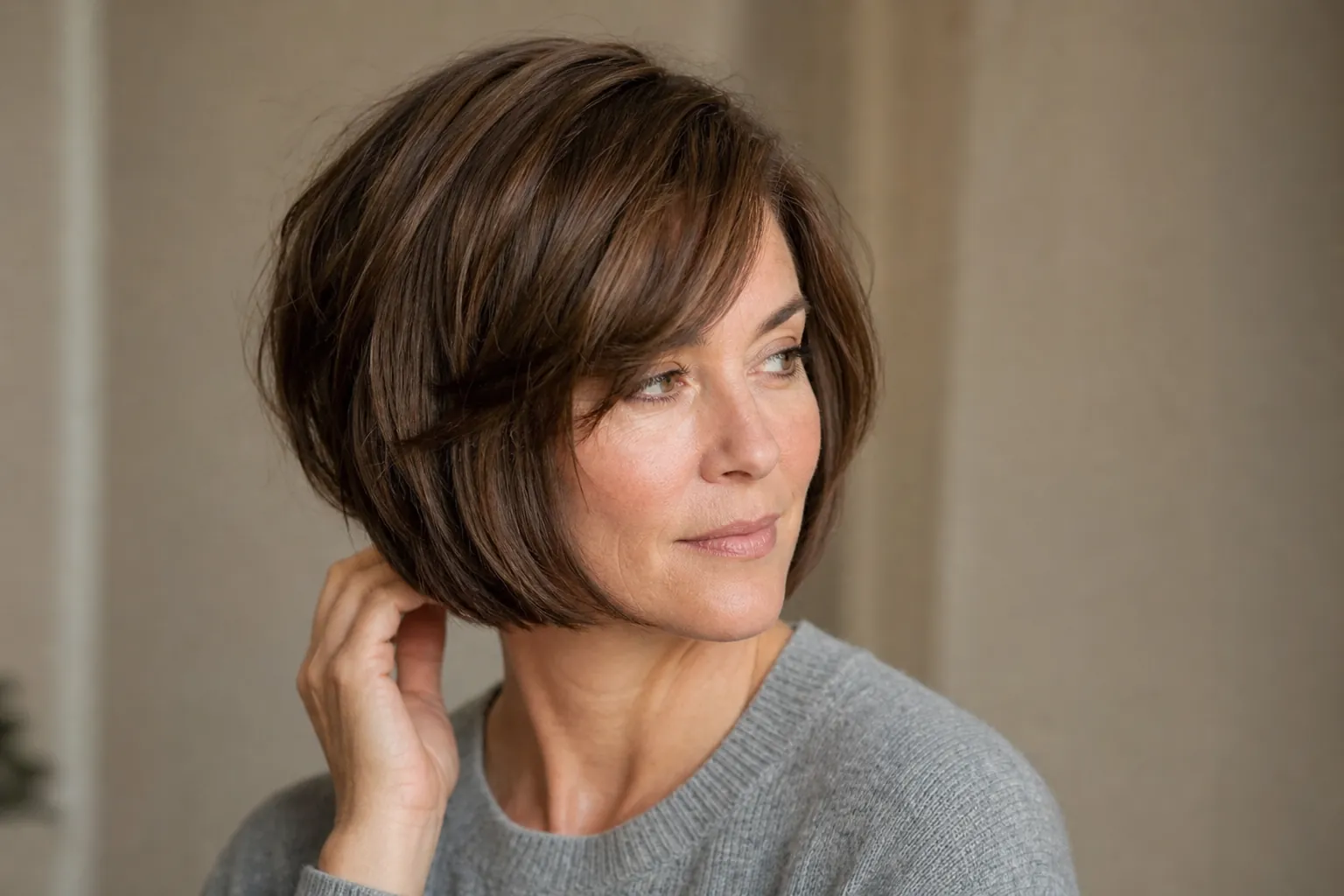
Short version: Short layered haircuts work when the layers are chosen for the hair: surface layers for fine hair that needs lift, internal layers for thick hair that needs weight taken out, and long layers for hair that should keep its length and movement. Layers sit in the crown on a pixie, through the top on a bob and from the chin down on a lob. Plan on a trim every 4-8 weeks, depending on how short the layers are.
What Layers Do on Short Hair, and Why the Type Matters
Layering is the decision that sits underneath every layered cut: how much shorter the hair above is than the hair below, where those steps start, and whether they show. Among the short haircuts for women that carry layers, the same word covers cuts that behave in opposite ways, so it helps to know the types first.
Long layers start at the chin or lower and step down an inch or two at a time, so the hair hangs together and moves. Short layers start higher, at the crown or cheekbone, and step in small increments, so the top stands in visible pieces. Surface layers shorten only the top section and leave the hem and interior at one length. Internal layers (often called invisible layers) are cut shorter underneath, where nothing shows, to take bulk out while the outline stays solid.
| Layer type | Where it is cut | What it does | Risk | Best on |
|---|---|---|---|---|
| Long layers | Chin down, steps of 1-2 in | Movement and a softer outline, little change in weight | Barely visible on short hair | Lobs; fine to medium straight or wavy hair |
| Short layers | Crown and top, small steps | Lift, texture, a piece-y top | Cannot be put back; needs texture to hold | Pixies, shags, wavy and curly hair |
| Surface layers | Top section only | Lift without touching the hem | Flat if cut too long to lift | Fine hair, lower density |
| Internal layers | Under the top, hidden | Removes bulk, keeps the line | Short hairs poke through if overdone | Thick straight and wavy hair |
| Graduation (not a layer) | Back and sides, shorter underneath | Adds weight and a rounded shape | Bulky on thick hair | Fine straight hair needing body |
Graduation is often mistaken for layering, and it does the reverse job. It stacks shorter hair beneath longer hair to build weight at the back of a bob, while layering lifts hair away from the head as it is cut, so the ends fall at different lengths and weight comes out. The mechanics of angle are covered in the bob guide to graduation and stacking. The sixteen cuts below put each type at pixie, bob and lob length.
Salon note: "Layers" is not a request a stylist can act on. Say where they start (crown, cheekbone, chin), whether they should show or stay inside, and whether the aim is to add weight or remove it. Those three answers describe the cut.
Softly Layered Pixies and Bixies
On a pixie, layers are a matter of a few inches, so the decision is how stepped the top is and how long the front stays. A soft layered pixie keeps the steps small and the ends blended, unlike the broken-up, razored tops in shaggy and edgy pixie cuts. Nape and ear finishing follow the pixie nape options.
1. Soft Surface-Layered Pixie on Fine Straight Hair
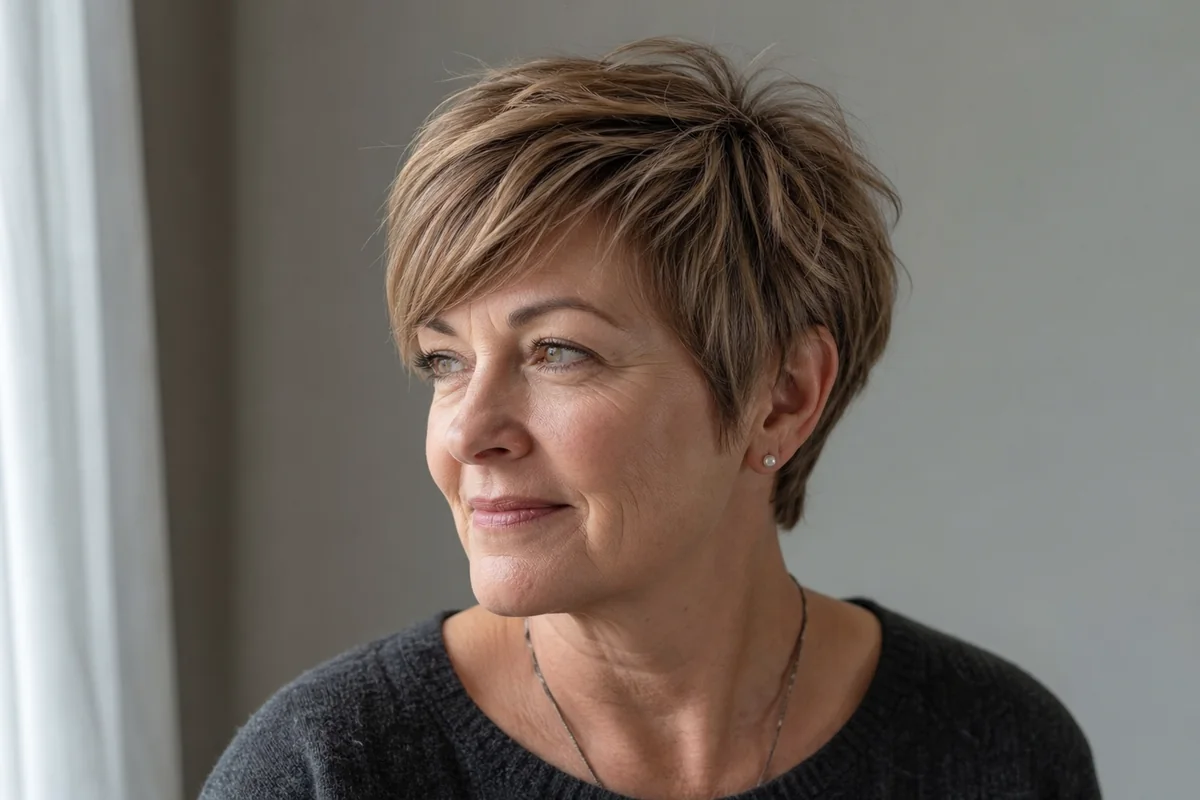
- Length
- 2.5-3 in on top, layers 1/2-1 in apart
- Texture
- Straight
- Density
- Fine, low to medium
- Face shapes
- Oval, heart, long
- Daily effort
- 4-6 minutes
- Trim every
- 4-5 weeks
Only the top section carries layers here, so the sides and nape keep their density and the crown gets lift. Steps under half an inch in the front keep the fringe from separating into strings.
Ask for: "About 2.5 inches on top with small blended layers at the crown only, cut with the scissor tips, sides tapered and left solid."
2. Long-Layered Pixie with a Swept Fringe on Wavy Hair
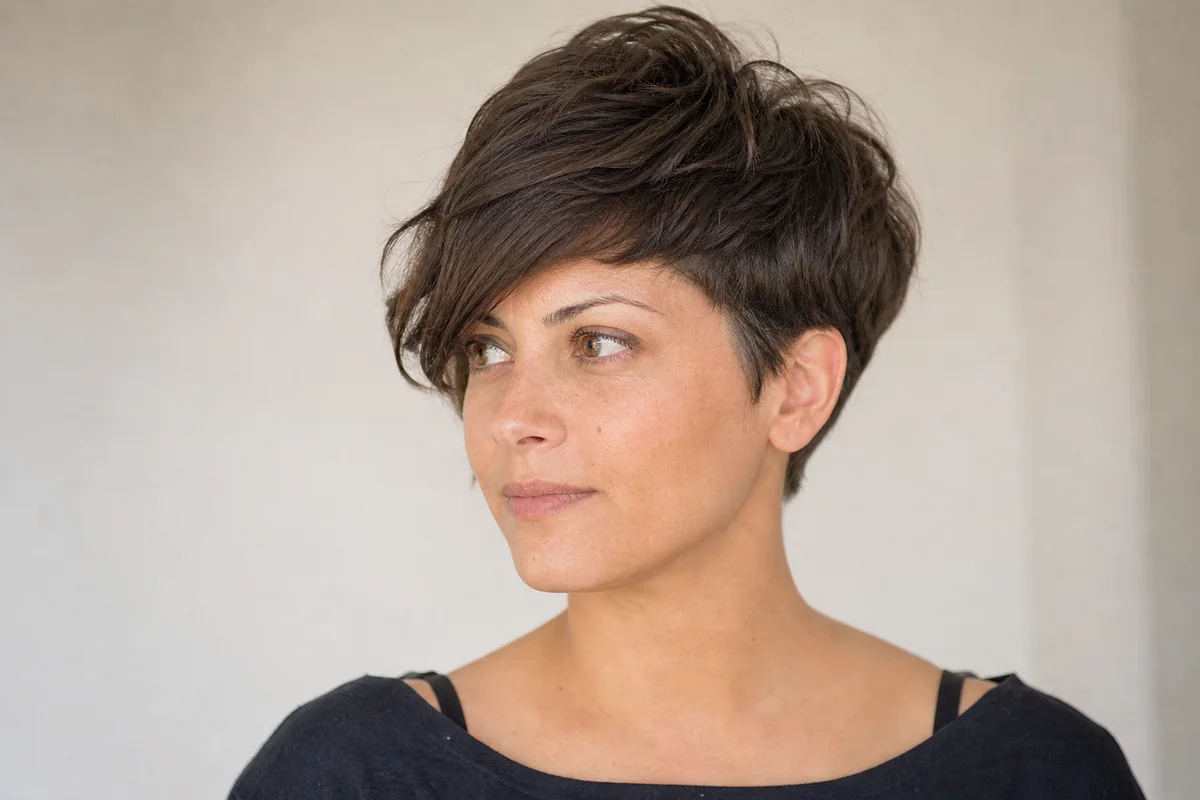
- Length
- 3.5-4 in on top, layers 1-1.5 in apart
- Texture
- Wavy, 2A-2C
- Density
- Medium
- Face shapes
- Oval, square, round
- Daily effort
- 5-8 minutes
- Trim every
- 5-6 weeks
Waves need some length to form, and wider steps let each wave keep its shape instead of springing up. The sweep across the forehead also moves the eye diagonally, which helps round and square faces.
Ask for: "A pixie with 4 inches on top and longer, soft layers so the waves can curl, fringe long enough to sweep, sides short and tapered."
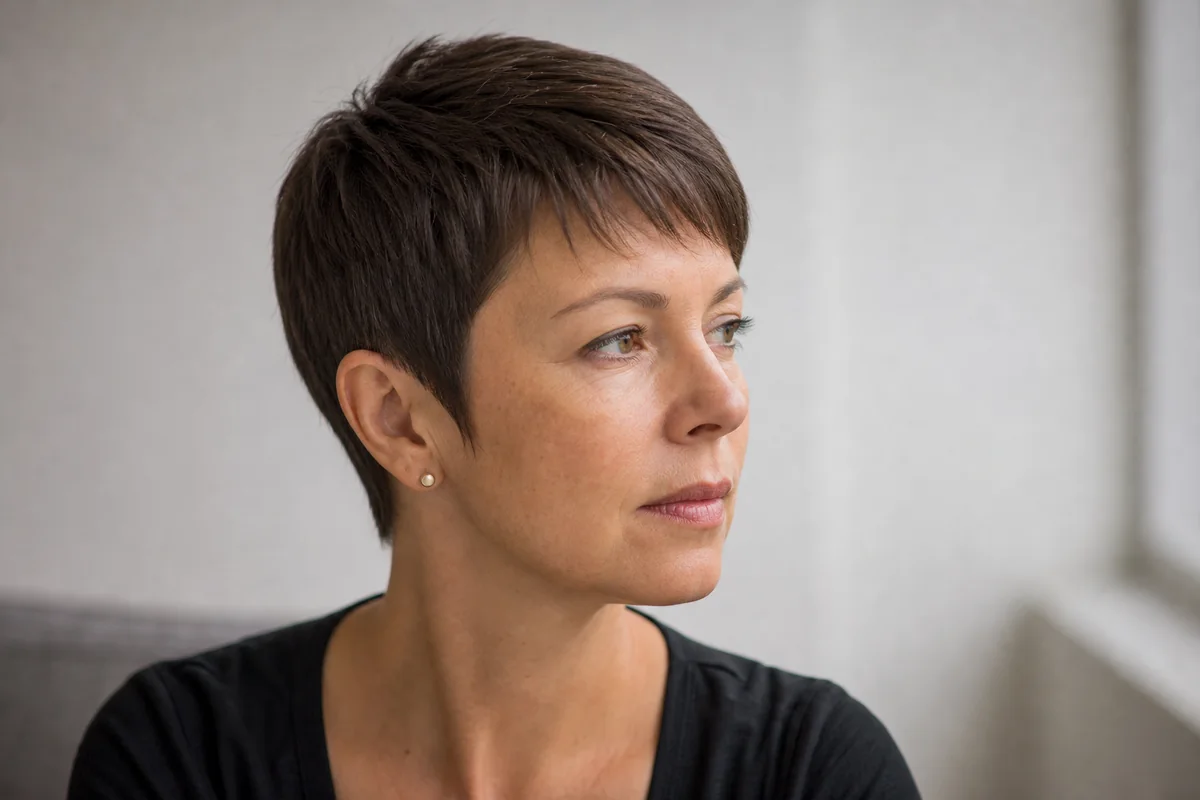
3. Pixie with Internal Layers for Thick Straight Hair
- Length
- 3 in on top, interior cut shorter
- Texture
- Straight
- Density
- Thick
- Face shapes
- Oval, heart, diamond
- Daily effort
- 3-5 minutes
- Trim every
- 4-5 weeks
From outside it reads as one smooth shape, because every layer is under the surface. The shorter interior lets the top lie down, which answers the helmet look thick straight hair gets when its inside is left full.
Ask for: "Keep the outside smooth at about 3 inches and take weight out from underneath, so nothing stands up or shows short pieces."
4. Layered Bixie with Long Side Layers on Wavy Hair

- Length
- Sides to earlobe, top 4-5 in, short nape
- Texture
- Wavy to loosely curly
- Density
- Medium
- Face shapes
- Oval, long, heart
- Daily effort
- 5-8 minutes
- Trim every
- 5-7 weeks
A bixie lets layers run from the cheekbone to the earlobe at the sides, framing the face and echoing the wave while the back stays short. Where the bixie boundaries sit is set out in the bixie guide.
Ask for: "Long layers at the sides ending at the earlobe, back kept short and tapered, face-framing pieces starting at the cheekbone."
Layered Bobs, from Surface Layers to Graduation
A layered bob is a bob whose outline stays and whose inside is adjusted, which is why the type of layer matters more here than at any other length. Surface layers lift fine hair, internal layers lighten thick hair, and graduation, which is not layering at all, builds a rounded back. Fine hair often looks fuller with fewer layers than it is offered, because a blunt hem carries the density.
5. Chin-Length Bob with Surface Layers on Fine Hair

- Length
- Hem at the chin, top layers 1-2 in shorter
- Texture
- Straight
- Density
- Fine, low to medium
- Face shapes
- Oval, heart, square
- Daily effort
- 8-10 minutes
- Trim every
- 6-8 weeks
The hem stays untouched, so the bob keeps the thick, solid edge that makes fine hair look dense. A few shorter layers on top and around the face lift the roots without removing anything from the ends.
Ask for: "A blunt chin-length bob, no layers in the bottom third, a few short layers on the top section only, checked dry."
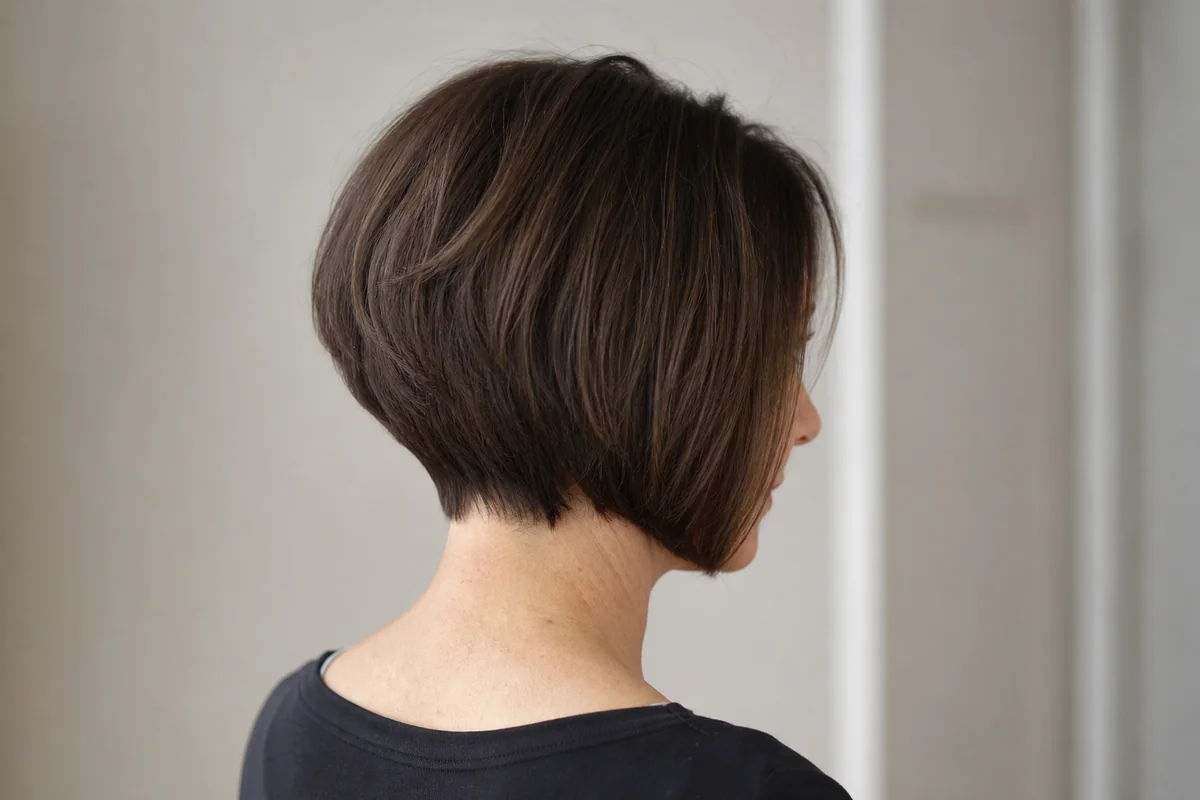
6. Graduated Bob with a Stacked Back on Straight Hair
- Length
- Nape about 1.5 in, front at the jaw
- Texture
- Straight
- Density
- Fine to medium
- Face shapes
- Oval, long, heart
- Daily effort
- 10-12 minutes
- Trim every
- 5-7 weeks
This is the cut most often confused with layers. The shortest hair is underneath and the weight collects in a rounded back, so it adds fullness where layering would take it away. On thick hair it can turn bulky, which is where internal layers come in.
Ask for: "Graduation, not layers: shorter at the nape, building up to a rounded back, front at the jaw, hem left solid."
7. Layered Bob with Internal Layers on Thick Wavy Hair

- Length
- Chin at the front, slightly shorter at the back
- Texture
- Wavy, 2B-2C
- Density
- Thick
- Face shapes
- Oval, round, square
- Daily effort
- 5-10 minutes
- Trim every
- 6-8 weeks
Thick waves stack up and push outward, so the layers are cut inside to give them somewhere to go. Point cutting or slide cutting by hand removes weight without the frizz thinning shears can raise in waves.
Ask for: "A chin-length bob with internal layers to remove bulk, cut dry so I can see how the waves sit, no thinning shears."
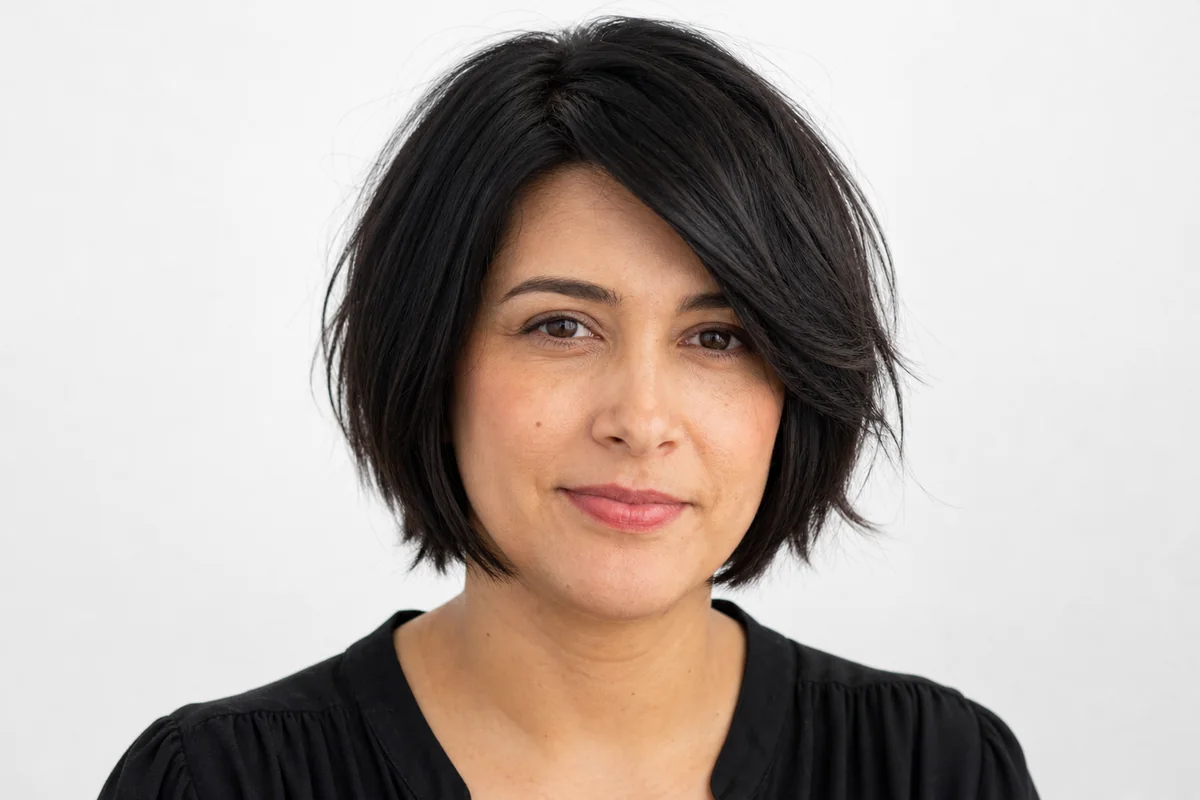
8. Choppy Layered Bob on Medium Straight Hair
- Length
- Jaw, top layers about 2-3 in shorter
- Texture
- Straight
- Density
- Medium to thick
- Face shapes
- Oval, square, heart
- Daily effort
- 7-10 minutes
- Trim every
- 5-6 weeks
The edgier end of layering: short steps that show, ends cut with a razor or the scissor tips, and a dry texture spray to separate them. It looks deliberate for about five weeks and unkempt after that, so it suits people who book on schedule.
Ask for: "A jaw-length bob with short, visible layers on top, ends cut with the tips of the scissors, and a deep side part."
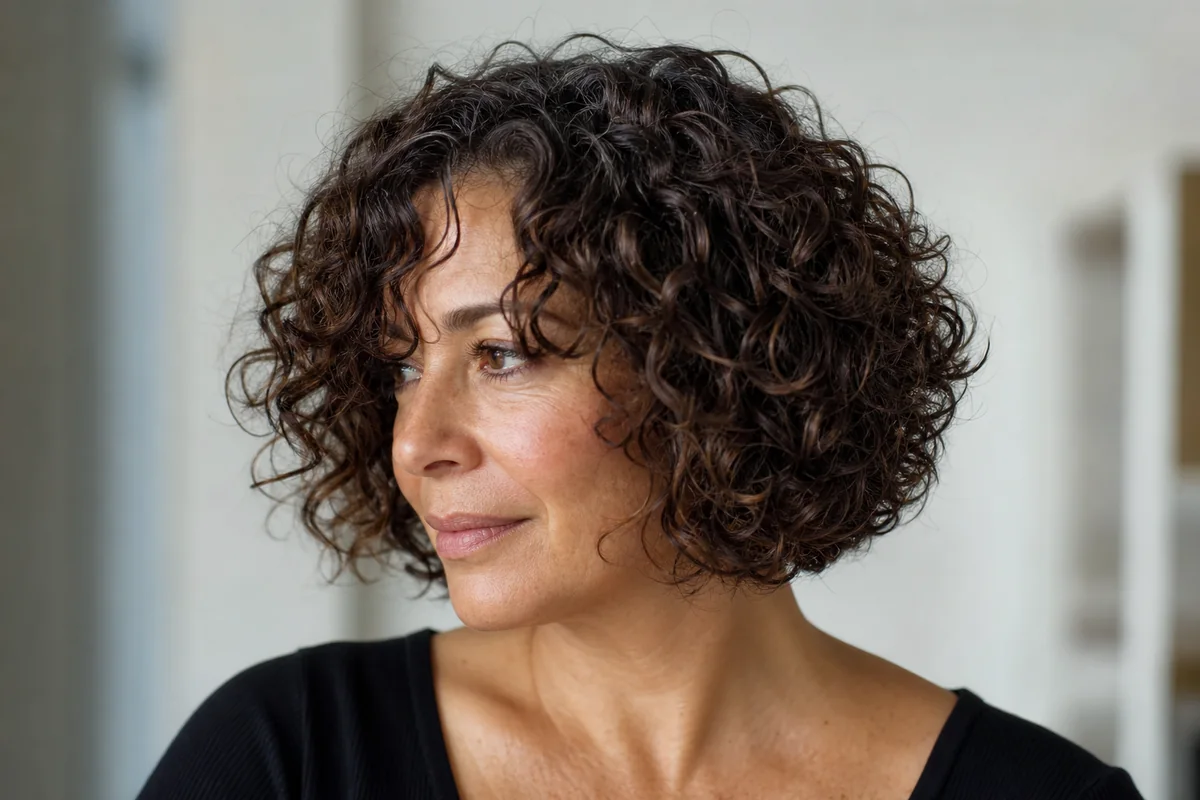
9. Curly Layered Bob Cut Dry on 3B Hair
- Length
- Jaw length once dry and curled; cut longer to allow for shrinkage
- Texture
- Curly, 3A-3C
- Density
- Medium to thick
- Face shapes
- Oval, heart, long
- Daily effort
- 5-10 minutes with a diffuser
- Trim every
- 8-10 weeks
On curls, layers are how the bob gets its shape: without them heavy curls form a triangle. Cutting each tier dry, one curl at a time, shows where every layer will land, which a wet cut cannot. See short curly haircuts for shrinkage by curl pattern.
Ask for: "A rounded curly bob cut dry with layers that follow the curl, left a little longer than I want since it will shrink."
Layered Lobs and Long Layers
A lob is the length where long layers can be seen, since there is enough hair for a step of an inch or two to show. The risk flips from too little lift to too little weight: layers cut high into a fine lob leave thin, see-through ends at the hem. The landmarks in the long bob guide still apply.
10. Long-Layered Lob on Fine Straight Hair

- Length
- Collarbone, layers start below the chin
- Texture
- Straight
- Density
- Fine strands, medium density
- Face shapes
- Oval, long, heart
- Daily effort
- 8-12 minutes
- Trim every
- 8-10 weeks
Two or three layers, starting low, give movement and keep the hem full. When fine hair at the collarbone still looks thin, the answer is usually a shorter length rather than more layers.
Ask for: "A collarbone lob with a straight hem and two or three long layers that start below the chin, nothing shorter than that."
11. Layered Lob with Curtain Layers Framing the Face

- Length
- Just above the shoulders, layers from the cheekbone
- Texture
- Straight to wavy
- Density
- Medium
- Face shapes
- Round, square, oval
- Daily effort
- 8-10 minutes
- Trim every
- 8 weeks, bangs at 4-6
The layers are concentrated at the face, which opens the cheekbones and softens a strong jaw while the back stays whole. The bangs are the high-upkeep part and are detailed in curtain bangs on short hair.
Ask for: "A lob just above the shoulders, curtain bangs that blend into layers starting at the cheekbone, back left one length."
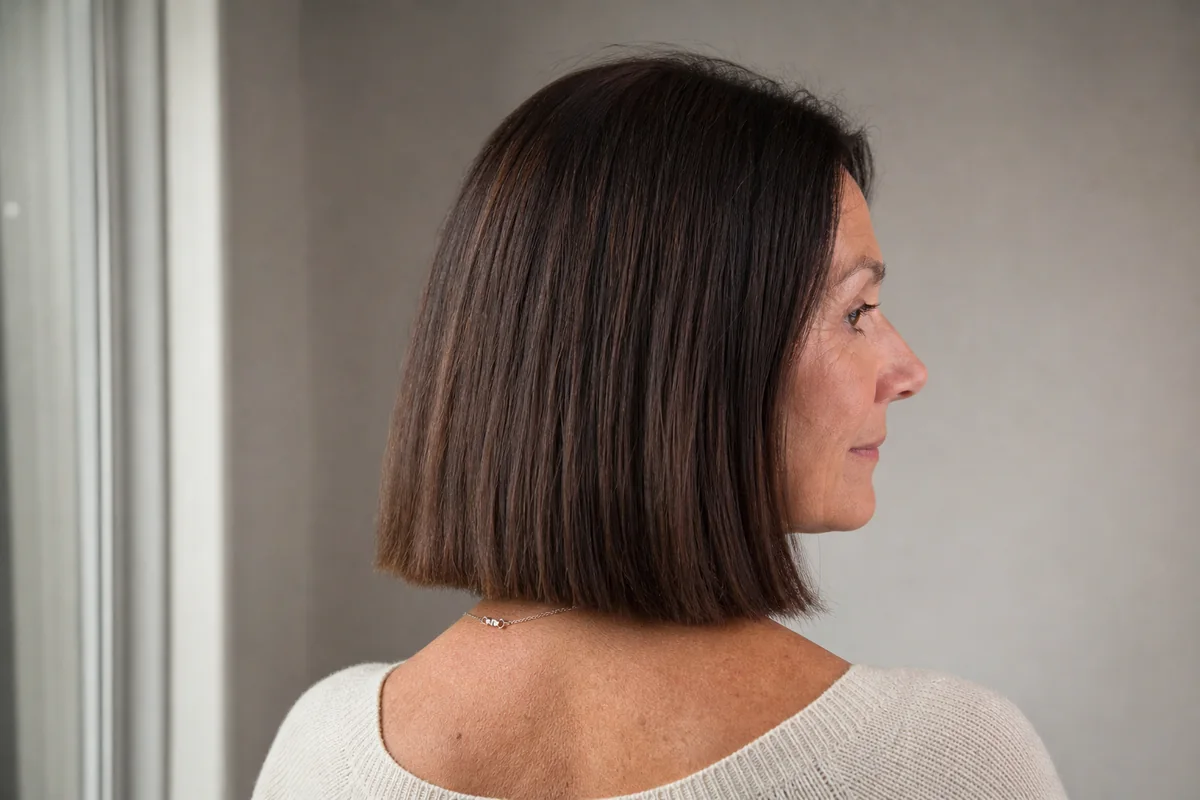
12. Shoulder-Skimming Lob with Internal Layers on Thick Hair
- Length
- Top of the shoulders, ends tapered inside
- Texture
- Straight to wavy
- Density
- Thick
- Face shapes
- Oval, heart, long
- Daily effort
- 5-8 minutes
- Trim every
- 8-10 weeks
Thick hair resting on the shoulders tends to flare outward. Cutting layers inside the mass lets the ends tuck, and the blunt outer hem keeps the lob from looking cut to pieces.
Ask for: "A lob that ends above the shoulders, with internal layers to take out bulk and a hem that stays blunt and tucks in."
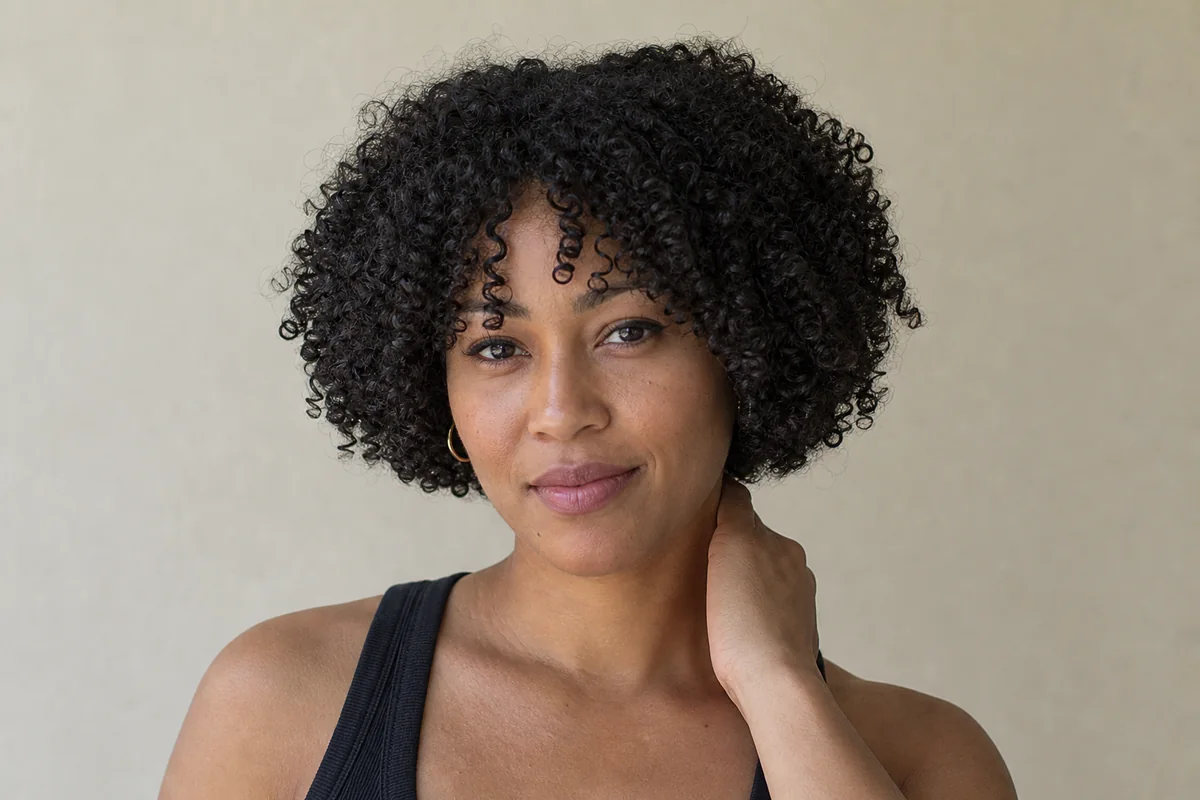
13. Rounded Layered Lob on Curly to Coily Hair
- Length
- Jaw to chin once shrunken; cut near the collarbone stretched
- Texture
- Curly to coily, 3C-4A
- Density
- Medium to thick
- Face shapes
- Oval, heart, long
- Daily effort
- 5-10 minutes
- Trim every
- 8-12 weeks
Layers here are tiered rounding, not movement: they keep the hair from collapsing into a pyramid. Because shrinkage can take several inches, the length is set with the curls stretched and the final shape checked dry.
Ask for: "A rounded shape with layers that follow the curl, cut dry, long enough to land at the jaw once it shrinks."
Shag-Leaning Layers and Cropped Shapes
The shortest layers belong to the cuts built around them, and those have their own pages. A shag moves weight into the crown, and the short shag haircuts guide covers where those layers start. The wolf cut and the butterfly cut, which stack long and short steps in one head, will be covered on their own pages, so the three looks here stay at the gentler end of the family.
14. Chin-Length Layered Shag Bob on Medium Hair

- Length
- Chin, crown layers 2-3 in
- Texture
- Straight to wavy
- Density
- Medium
- Face shapes
- Oval, round, square
- Daily effort
- 8-10 minutes
- Trim every
- 5-7 weeks
A layered bob keeps its hem as the main line, while this version lets the crown layers shape the silhouette. Texture spray and a rough dry are enough to finish it.
Ask for: "A chin-length bob with layers starting at the crown, feathered ends, and side-swept bangs that blend into them."
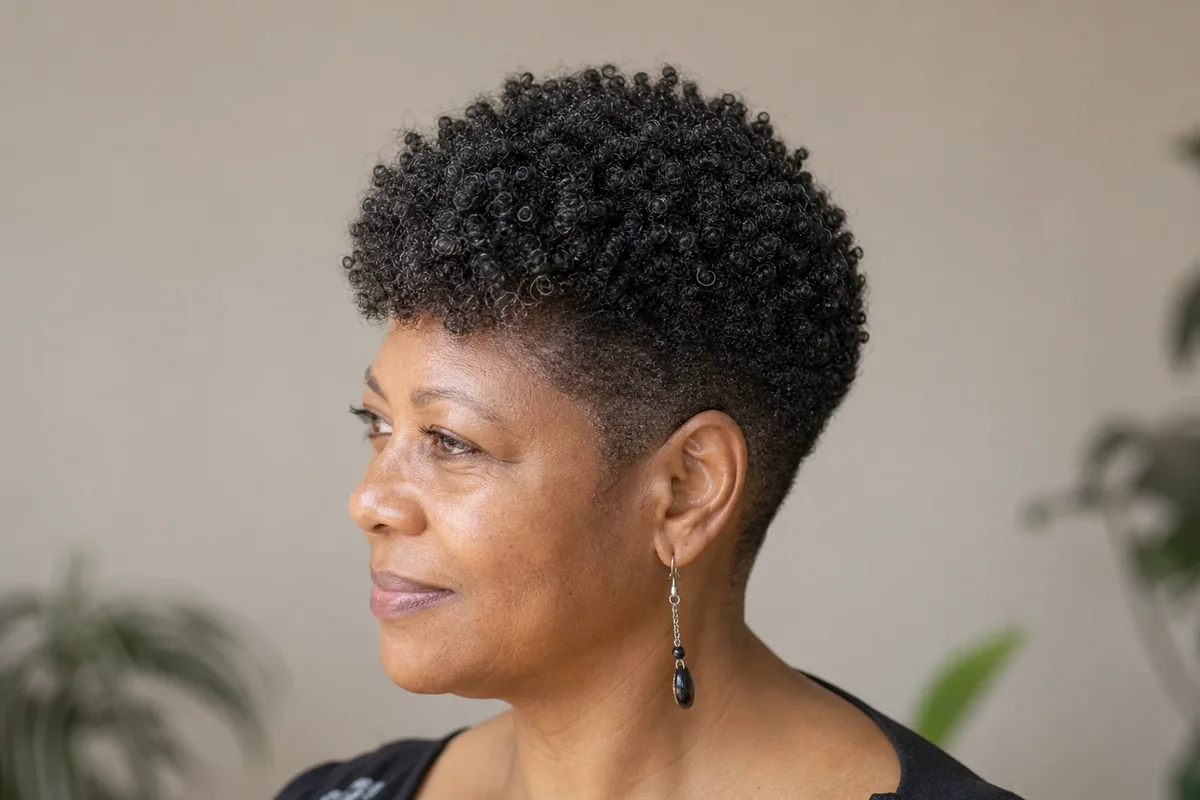
15. Rounded Layered Crop on 4C Coily Hair
- Length
- 2-3 in on top (shrunken), tapered sides
- Texture
- Coily, 4B-4C
- Density
- Medium to thick
- Face shapes
- Oval, heart, square, diamond
- Daily effort
- 3-5 minutes
- Trim every
- 4-6 weeks
On 4B and 4C hair, layering is shaping: the stylist sculpts the tiers so the crop reads as an even sphere. It is cut dry, by someone used to coily hair.
Ask for: "A rounded crop with the coils shaped in even tiers, cut dry, sides and nape tapered."
16. Soft Layered Ear-Length Bob on Silver Hair

- Length
- Earlobe to jaw, top layers 1-1.5 in
- Texture
- Straight, slightly wiry
- Density
- Fine to medium
- Face shapes
- Oval, round, heart
- Daily effort
- 6-10 minutes
- Trim every
- 6-8 weeks
Soft layers on top give coarser gray strands a place to lie without sticking out. More on gray and density is in short haircuts for women over 60.
Ask for: "An ear-length bob with a few soft layers on top, a solid hem, and enough room around the ears for my glasses."
How Much Layering Each Texture and Density Can Take
Texture and density decide how many layers a short cut can carry, and the limit is lower on fine hair than most people expect. Strand width sets how well a layer stands up, while density sets how much hair is left once the layers are cut, so the two answer different questions. The fine-versus-thin split is explained in short hairstyles for thin hair.
| Texture | Lower density | Higher density |
|---|---|---|
| Straight | Surface layers only, blunt hem, layers 1-2 in shorter | Internal layers plus a few visible ones; thinning shears are a normal tool |
| Wavy | Long layers, hand-cut; avoid very short layers that frizz | Internal layers and a curved outline so the hem does not flip |
| Curly | Few layers, cut dry, shape kept rounded | Tiered layers to avoid the triangle; leave length for shrinkage |
| Coily | Shaped crop, layers kept even | Tiered shaping, cut dry by a stylist used to coily hair |
Tip: More layers do not mean a fuller cut on fine hair. A lighter hem is not a sign of good layering; it is often the first sign of too much.
Choosing Layers by Face Shape
Layers add width where they start, so the starting point should sit where the face needs it. A short cut already draws a line at its hem, so layers are the second tool, not the first. Hem placement is a separate choice, made first.
| Face shape | Where layers start | Avoid |
|---|---|---|
| Round | Below the cheekbone, longer face-framing layers; crown lift | Short layers at the cheeks |
| Square | Soft layers at the jaw to round the corners | Blunt layers ending at the jaw |
| Heart | Layers at the chin, fuller at the hem | Heavy volume at the crown and temples |
| Long | Side layers at the cheekbone for width | Tall crown layers |
| Oval | Most positions work; choose by hair type | Nothing specific |
What to Ask Your Stylist for
Describe layers by where they start, how far apart they step and whether they show, since "layers" alone can mean anything from a lighter hem to a shag. Use measurements and landmarks, and ask for the cut to be checked dry.
- Name the starting point. "Layers start at the crown" or "below the chin" tells the stylist how short the shortest layer is.
- Say whether they show. "Internal layers, smooth outside" or "visible, choppy layers on top."
- State the goal. "Take weight out" or "add lift", since these call for different cuts.
- Protect the hem. "Blunt hem, no layers in the bottom third" is the usual instruction for fine hair.
- Ask to see it dry. Dry-checking matters most on waves, curls and coils.
Salon note: A request to "thin it out" can lead to thinning shears, which are a normal tool on thick straight hair and a risk on waves, curls and fine hair. Ask for the method as well as the result.
Styling Short Layers Day to Day
Layers do much of the styling, but they need the right finish: lift at the roots for surface layers, a diffuser for curls, a dry texture spray for choppy ends. Most layered short cuts take 5-10 minutes.
- Fine hair: root-lift spray on damp roots, a small round brush at the crown, no heavy cream.
- Thick straight hair: a dime of smoothing cream, blow-dried with the nozzle pointing down the hair.
- Wavy hair: light mousse, scrunched in, then air-dried or diffused on low.
- Curly and coily hair: gel or cream on soaking-wet hair, diffused, then left alone until dry.
- Choppy layers: 4-8 spritzes of texture spray on dry hair, separated with the fingers.
Maintenance and Grow-Out for Layered Cuts
The shorter the layers, the sooner they show they are overdue, because a short layer loses its step as it grows. A pixie needs a trim every 4-6 weeks, a bob 6-8 and a lob 8-10. For the cuts with the lowest upkeep, see low-maintenance short haircuts.
Layers grow out better than a hem does. Short layers blend as they lengthen, and a bob with surface layers can become a long bob over 6-8 months without much reshaping. Hair grows about half an inch a month, so a layered pixie needs roughly 8-12 months to reach the chin.
When Layers Are Not the Right Choice
- Very fine, low-density hair: layers cut through the interior remove the strands that hold the shape and leave wispy ends. A blunt cut with a few surface layers works better.
- Hair that frizzes when cut short: short layers on wavy or curly hair can puff and lose their shape. Cut it longer and dry, or stay with one length.
- No time for daily styling: layers that depend on a blow-dry go flat without one. A cut shaped for air-drying is the alternative.
- A strong cowlick: short layers on a cowlick stand up. Leave extra length there.
- Wanting to grow out fast: short layers reset the length. Long layers, or none, keep the growing-out path open.
Short layered haircuts start with a plain decision: where the layers begin, how far apart they step and whether they show. Pick the type for your texture and density, bring those numbers to the chair, and ask for the cut to be checked dry before you leave.