
Short version: Short shag haircuts are layered cuts from pixie length to about the chin, with short, choppy layers through the crown and a broken-up, lighter perimeter. Waves and curls wear them most naturally; fine straight hair needs a blunt baseline, and thick straight hair needs weight removed from the inside. Plan on a trim every 6-8 weeks and 5-10 minutes of styling most mornings.
What Makes a Haircut a Short Shag
A short shag is defined by where the layers sit, not by one length: the crown is cut shorter than the rest, the layers are visible rather than blended away, and the edge is softened so the outline looks broken rather than drawn. Among all the short haircuts, it is the one pattern that can be laid over a pixie, a bixie or a chin-length bob. This page stops at the chin; shags that continue below the collarbone are a different cut.
Four cuts get mistaken for it, and the table separates them by where the weight sits. A shag moves weight from the hem up into the crown, while a layered bob keeps the hem as the main feature and a shaggy bixie keeps the nape short. The gallery is grouped by length and by the bangs, texture or era that define each look.
| Cut | Where the weight sits | Perimeter | Layers | Trims |
|---|---|---|---|---|
| Short shag | Crown and cheekbone | Broken, point cut or feathered | Short and visible from the crown | 6-8 weeks |
| Layered bob | The hem | Clean line | Inside the line, mostly hidden | 6-8 weeks |
| Mixie or short wolf cut | Crown, with the nape longest | Soft, longer at the back | Short crown, long nape, little between | 6-8 weeks |
| Shaggy bixie | Top and sides | Short nape, longer sides | Choppy, over a short back | 5-7 weeks |
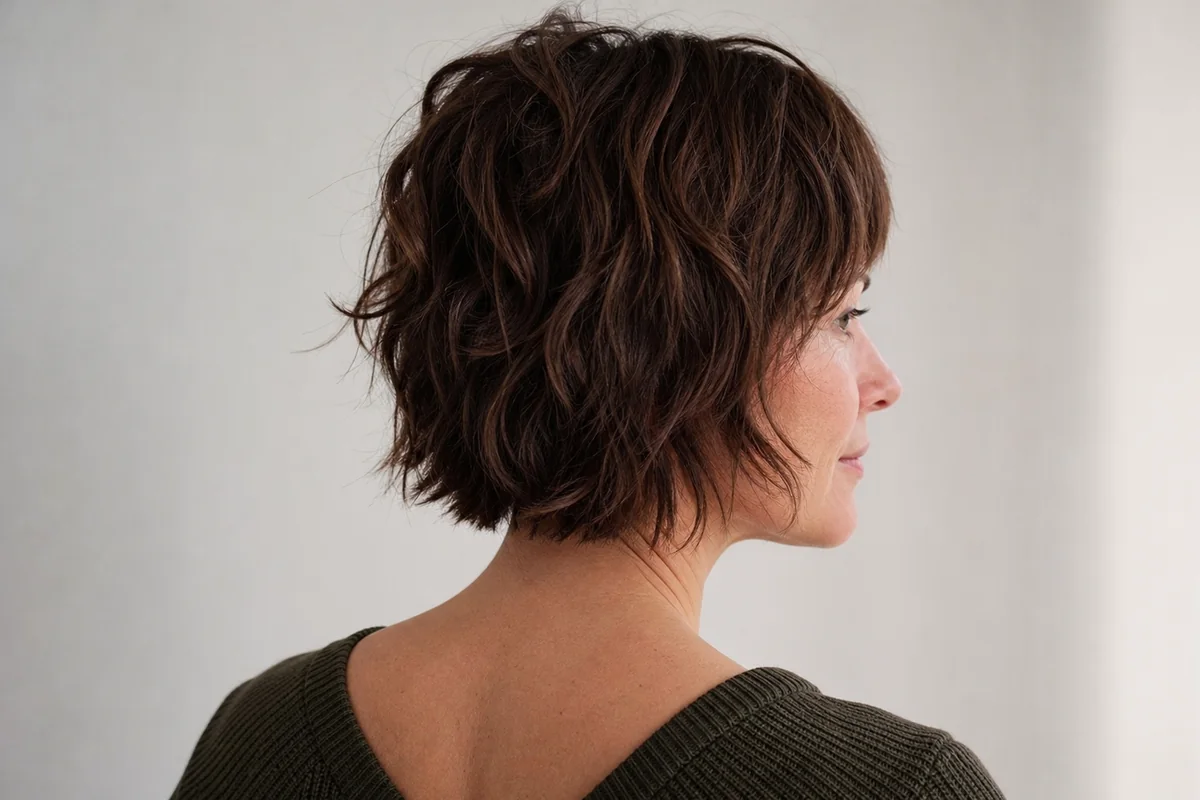
Shaggy Pixies and Mixies
At pixie length a shag is crown layers and little else, because there is no hem to break up. These cuts suit anyone who wants the shag's movement without covering the ears or neck.
1. Shaggy Pixie with Crown Layers and a Feathered Fringe

- Length
- 2-3 in at the crown, tapered nape
- Texture
- Straight to slightly wavy
- Density
- Fine to medium
- Face shapes
- Oval, heart, long
- Daily effort
- 5 minutes
- Trim every
- 4-6 weeks
The shag shows up here as point-cut layers short enough to stand up without product, which is why straight hair can wear it. Edgier and more cropped versions belong to our guide to shaggy and edgy pixie cuts.
Ask for: "A shaggy pixie, 2 to 3 inches at the crown with point-cut layers, a feathered fringe to the brow and a scissor-tapered nape."
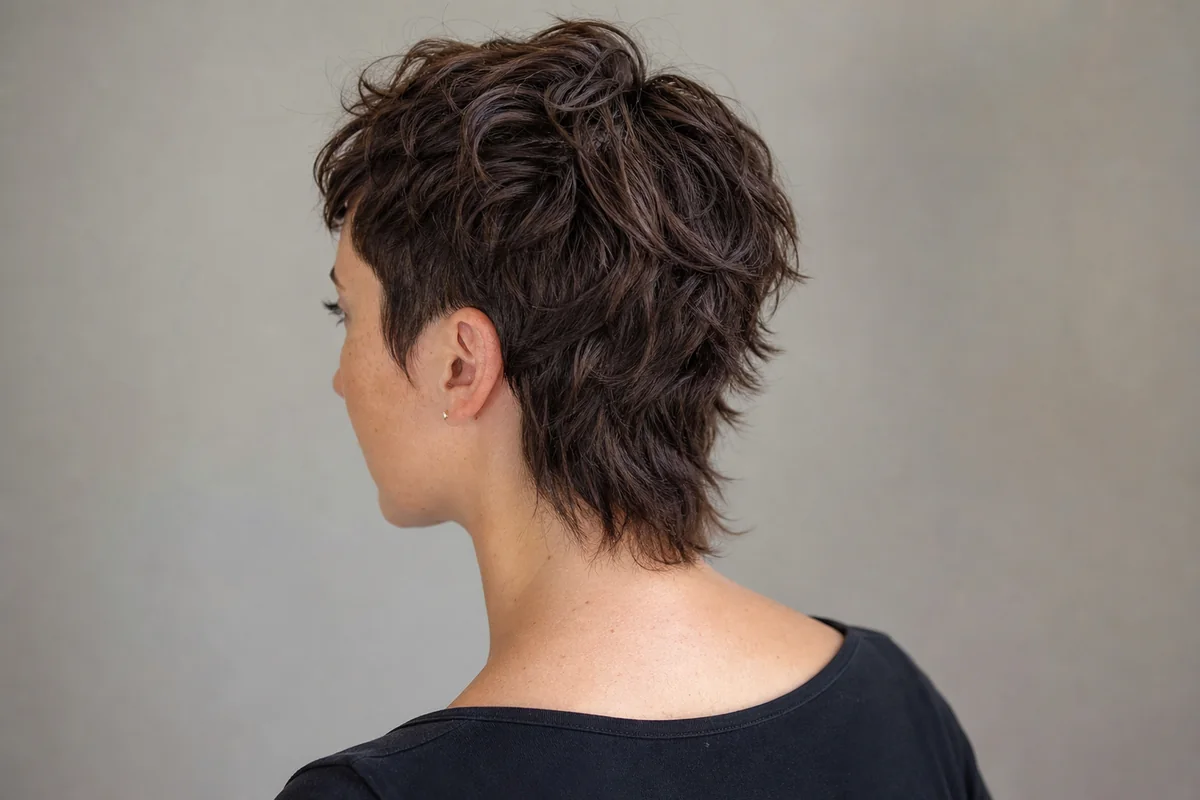
2. Mixie with a Longer Nape and a Choppy Top
- Length
- 3 in top, nape 3-4 in
- Texture
- Wavy
- Density
- Medium to thick
- Face shapes
- Oval, round, square
- Daily effort
- 5-8 minutes
- Trim every
- 6-8 weeks
Waves fill the gap between a short top and a long nape, so the two read as one shape. On straight hair the same cut can show a step, and a stylist then adds mid-length layers to connect them. Push the nape and the crown further apart and it becomes the short wolf cut.
Ask for: "A mixie: 3 inches on top, choppy layers, sides short over the ears, and the nape left 3 to 4 inches with broken ends, checked dry."
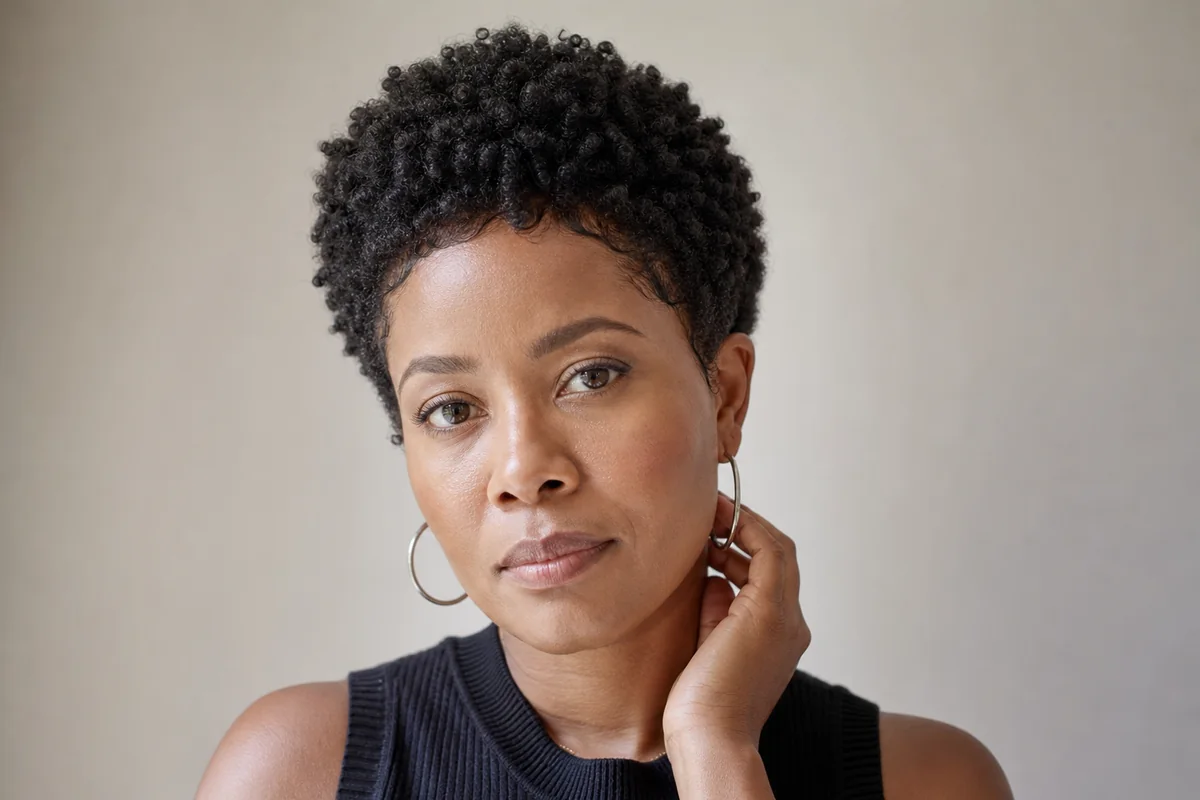
3. Coily Shag Crop with a Shaped, Rounded Top
- Length
- 2-4 in of coils on top, tapered sides
- Texture
- Coily (4A-4C)
- Density
- Medium to thick
- Face shapes
- Oval, round, heart
- Daily effort
- 3-5 minutes
- Trim every
- 5-8 weeks
On 4B and 4C hair a shag is a shaping decision rather than a layering one. The top is rounded into a dome that sits longer than the tapered sides, and shrinkage supplies the texture that layers supply on straight hair. Cut it dry, in the natural state, by a stylist who works with coils.
Ask for: "A rounded shape on top, 3 inches of coils at the crown, sides and nape tapered, cut dry with my hair in its natural state."
Jaw-Length and Chin-Length Shags
Between the jaw and the chin the shag has room for every layer type, and the choice of layering matters more than the length. A layered bob keeps its layers inside a clean line, as in the bob haircuts gallery; these cuts break the line itself.
4. Chin-Length Shag with a Soft Side Part

- Length
- Chin, layers from the cheekbone
- Texture
- Straight to wavy
- Density
- Medium
- Face shapes
- Square, oval, long
- Daily effort
- 8-10 minutes
- Trim every
- 6-8 weeks
Layers that start at the cheekbone and fall away from the face soften a square jaw, since the eye follows the diagonal instead of the corner. A side part gives the front layers a direction to fall, which reads as polished rather than messy.
Ask for: "A chin-length shag with layers starting at the cheekbone, broken ends and a soft side part, cut dry to check the front."
5. Choppy Chin-Length Shag with Interior Weight Removal
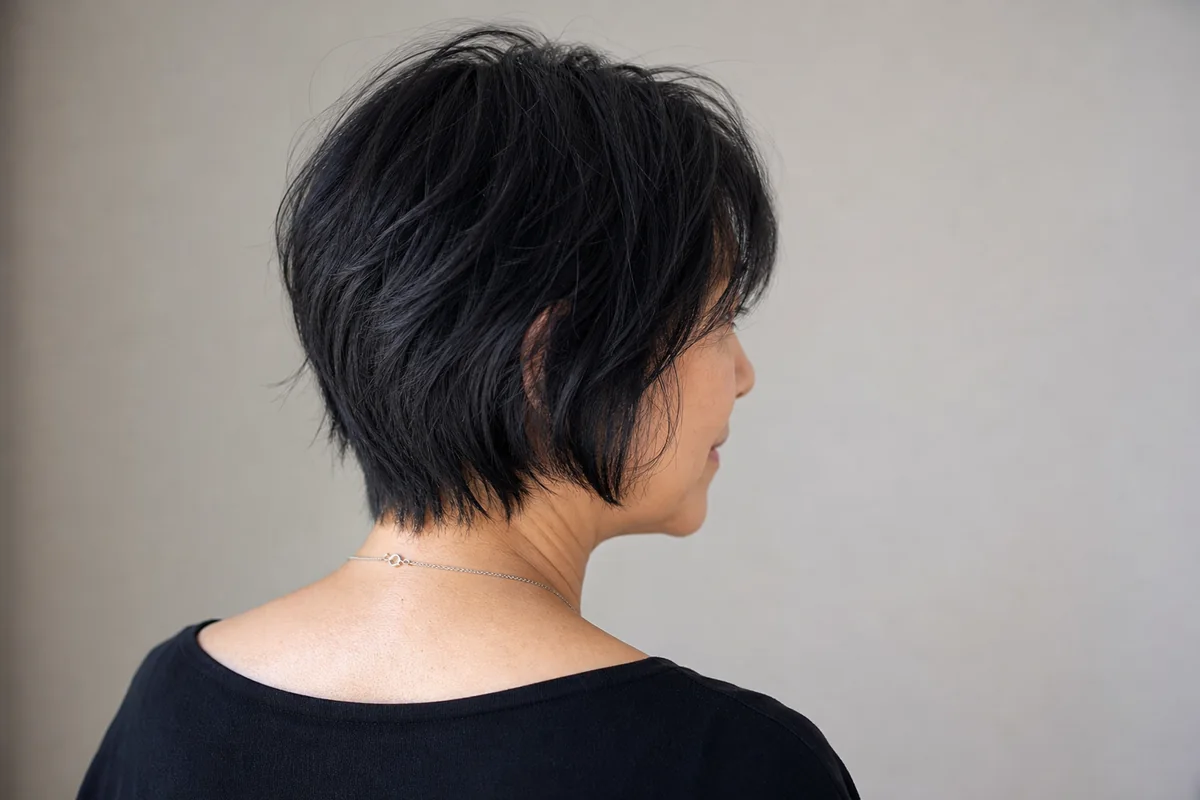
- Length
- Chin, point-cut layers throughout
- Texture
- Straight
- Density
- Thick, coarse strands
- Face shapes
- Oval, round, long
- Daily effort
- 10 minutes
- Trim every
- 5-7 weeks
Thick straight hair is where a shag is most often promised and least often delivered. Layers cut only on the surface leave the undercoat to push the shape wide; weight has to come out of the interior as well, with point cutting or slide cutting, so the cut hangs close.
Ask for: "A choppy chin-length shag with the weight removed through the inside by point cutting, not only surface layers, and textured ends."
6. Shag with a Blunt Baseline on Fine Straight Hair

- Length
- Jaw, crown layers only
- Texture
- Straight
- Density
- Fine, low to medium density
- Face shapes
- Oval, round, heart
- Daily effort
- 8-10 minutes
- Trim every
- 5-7 weeks
A fine shag keeps its layers on top and its edge solid. Layers through the lower lengths pull hair off the hem, and a see-through hem makes fine hair look thinner than it is, so the blunt baseline carries the density. The same rule holds for one-length bobs on fine hair.
Ask for: "A jaw-length shag with layers only through the crown, a blunt hem with no thinning shears, and a light side-swept fringe."
7. Razor-Cut Shag with Feathered Ends

- Length
- Jaw, feathered ends
- Texture
- Straight, coarse
- Density
- Medium to thick
- Face shapes
- Oval, square
- Daily effort
- 10 minutes
- Trim every
- 5-6 weeks
A razor tapers each strand to a fine tip, which is why it gives the wispiest ends of any tool. It also splits fine strands and frizzes curls, so this finish is reserved for coarse or thick straight hair in good condition.
Ask for: "A jaw-length shag with razor-cut feathered ends, cut on damp hair, with no razor through the roots."
8. Deep Side-Part Shag Tucked Behind One Ear
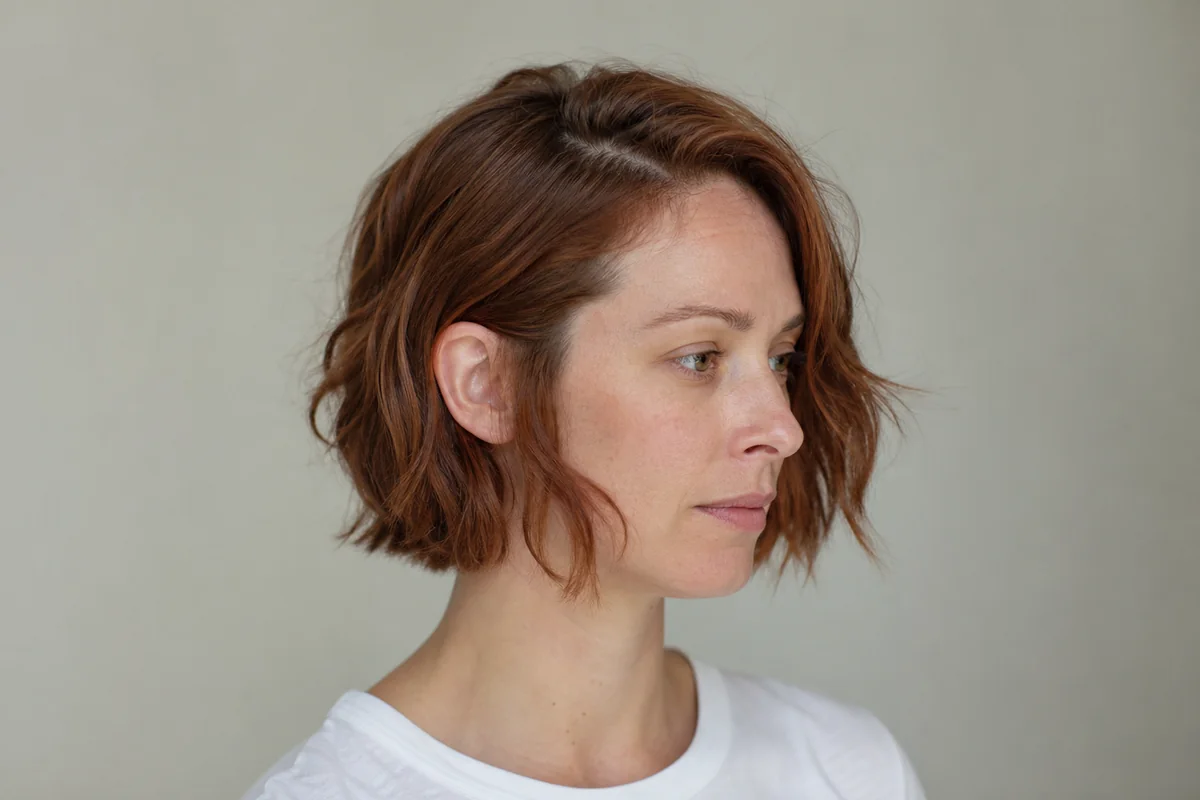
- Length
- Jaw, shortest layer at the cheekbone
- Texture
- Wavy (2A-2C)
- Density
- Medium
- Face shapes
- Oval, heart, diamond
- Daily effort
- 5-8 minutes
- Trim every
- 6-8 weeks
The routine is short: scrunch a golf-ball amount of mousse into damp hair, flip the part deeper than usual, dry with a diffuser and tuck one side. Tucking shows the short layer near the ear, which is the detail that makes it look shaped instead of grown out.
Ask for: "A jaw-length shag, shortest layer at the cheekbone, deep side part, cut to tuck behind the ear and checked dry."
9. Silver Shag with Wispy Edges

- Length
- Chin, wispy ends
- Texture
- Straight to wavy
- Density
- Medium
- Face shapes
- Oval, round, long
- Daily effort
- 8 minutes
- Trim every
- 6-8 weeks
Gray strands tend to be coarser and drier, and that helps a shag: the layers hold their shape instead of collapsing. The ends need a light oil or cream so wispy does not turn straggly. More on texture changes sits in our guide to short hairstyles for women over 50.
Ask for: "A chin-length shag with wispy, point-cut ends and soft face-framing layers, cut dry so the gray texture shows."
Short Shags with Bangs
Bangs are the part of a shag that needs the most upkeep, since a fringe grows into the eyes in three to five weeks while the layers behind it can wait twice as long. Choose the bang for its trims as well as its shape.
10. Short Shag with Curtain Bangs and Cheekbone Layers

- Length
- Jaw, bangs to the cheekbone
- Texture
- Straight to wavy
- Density
- Medium
- Face shapes
- Oval, long, heart
- Daily effort
- 8-10 minutes
- Trim every
- 6-8 weeks, bangs 3-5
Curtain bangs part in the middle and sweep outward, and in a shag they melt into the first face-framing layer, so they grow out without a gap. The method for curtain bangs on short hair has a guide of its own.
Ask for: "A jaw-length shag with center-parted curtain bangs that blend into cheekbone layers, checked dry."
11. Short Shag with a Micro Fringe on 2C Waves

- Length
- Chin, micro fringe about 2 in
- Texture
- Wavy to curly (2C-3A)
- Density
- Medium to thick
- Face shapes
- Oval, long, square
- Daily effort
- 8 minutes
- Trim every
- 6-8 weeks, fringe 3-4
Waves pull a fringe upward as they dry, so a micro fringe cut wet ends up shorter than planned. It is cut dry, a half inch longer than the target, and the stylist watches how it springs.
Ask for: "A micro fringe that sits just above the brow after it dries, cut dry and left half an inch long, with choppy layers and chin-length ends."
12. Wispy Bangs on a Fine Straight Shag

- Length
- Jaw, wispy bangs at the brow
- Texture
- Straight
- Density
- Fine, low density
- Face shapes
- Round, oval, heart
- Daily effort
- 8 minutes
- Trim every
- 5-6 weeks, bangs 3
Bangs are cut from the front of the crown, and fine hair has little to spare. A narrow triangle of hair keeps the sides and crown full while the wisps stay light; a wide, heavy fringe takes the density off everything behind it.
Ask for: "Wispy bangs cut from a narrow triangle at the front, a jaw-length shag with crown layers, and no thinning shears at the hem."
13. Side-Swept Fringe That Grows into the Layers

- Length
- Chin, fringe past the cheekbone
- Texture
- Straight to wavy
- Density
- Medium to thick
- Face shapes
- Round, square, diamond
- Daily effort
- 8 minutes
- Trim every
- 7-8 weeks
Without full bangs there is no separate fringe to trim. The front starts at the temple and joins the first layer, so it grows through the stages instead of getting in the eyes, a sensible choice for anyone who skips appointments.
Ask for: "A long side-swept fringe starting at the temple and blending into face-framing layers, no separate bangs."
Wavy, Curly and Coily Shags
Curls and waves already break into layers, so a shag on them is cut to follow the pattern, not to impose one. Curly and coily shags are cut dry and longer than the final result, because curl shrinks from the stretched length; the gallery lists the dry length where it matters.
14. Curly Shag with Rounded Layers

- Length
- Stretched to the chin, jaw when dry
- Texture
- Curly (3A-3B)
- Density
- Medium
- Face shapes
- Oval, long, heart, square
- Daily effort
- 5 minutes, wash and go
- Trim every
- 8-10 weeks
Layers on curls are cut curl by curl, so each spiral sits where its neighbors can stack, and the outline rounds instead of forming a triangle. Cut wet in straight lines, the same hair springs up in unplanned steps.
Ask for: "A curly shag cut dry, curl by curl, with rounded layers and the length checked stretched and unstretched."
15. Short Curly Shag with a Tapered Nape
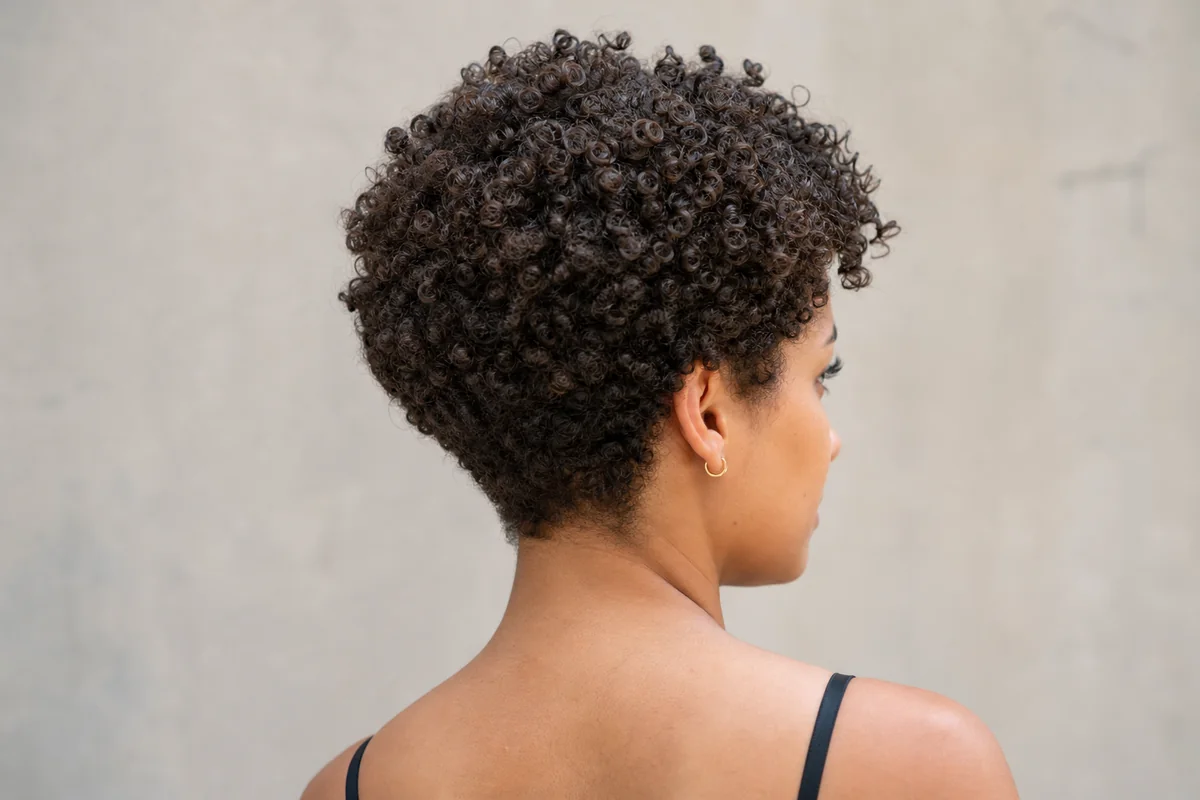
- Length
- 4 in stretched on top, tapered nape
- Texture
- Curly (3B-3C)
- Density
- Thick
- Face shapes
- Oval, round, long
- Daily effort
- 5 minutes
- Trim every
- 6-8 weeks
The taper at the nape removes the bulk that widens a thick curly shag at the neck. The top keeps its length, so the shape stays full where the face is framed. Our short curly hair guide covers shrinkage and products in depth.
Ask for: "A short curly shag, 4 inches stretched on top, nape and sides tapered, cut dry."
16. Chin-Length Coily Shag Cut Dry

- Length
- Stretched to the chin, higher when dry
- Texture
- Coily (4A-4B)
- Density
- Medium to thick
- Face shapes
- Oval, heart, long
- Daily effort
- 5-10 minutes
- Trim every
- 8-10 weeks
Hem width matters more than length here: a coily shag that is too wide at the bottom makes a triangle, and one that is too wide on top makes a dome. Moisturizing the ends between visits keeps the layers defined, since coils break where they dry out.
Ask for: "A coily shag cut dry in its natural state, shrunken length at the jaw, with the hem narrowed to balance the top."
17. Wavy Air-Dry Shag That Needs Almost No Styling

- Length
- Jaw, choppy layers throughout
- Texture
- Wavy (2B-2C)
- Density
- Medium
- Face shapes
- Oval, round, square
- Daily effort
- Under 5 minutes
- Trim every
- 8-10 weeks
This is the lowest-effort look on the page: apply cream and a few drops of oil to wet hair, scrunch and leave it alone. Handling it as it dries is what makes waves frizz, so it should not be touched until it is fully dry.
Ask for: "A jaw-length shag with layers cut to my wave pattern, dry, so it air-dries into shape without a diffuser."
Retro, Soft and Undercut Shags
The 1970s shag and the modern one differ in how visible the layers are: the retro cut shows each layer and flicks the ends, the modern cut blends them. A third option removes bulk from underneath for thick hair.
18. Feathered 70s-Style Shag with Flicked Ends

- Length
- Chin, feathered layers
- Texture
- Straight to slightly wavy
- Density
- Medium
- Face shapes
- Oval, long, heart
- Daily effort
- 10-15 minutes
- Trim every
- 6-8 weeks
It is not a wash-and-go cut. The flick comes from a 1-inch round brush and heat, and in air-dried hair it falls straight. A modern shag takes more from the cut and less from the dryer.
Ask for: "A feathered 70s-style shag, chin length, layers brushed back from the face, with the ends cut to flick outward."
19. Soft Modern Shag with Long Face-Framing Layers

- Length
- Chin to just below, long front layers
- Texture
- Straight to wavy
- Density
- Medium
- Face shapes
- Oval, round, square, long
- Daily effort
- 5-8 minutes
- Trim every
- 8-10 weeks
A soft shag keeps the contrast between crown and hem low, so the layers blend instead of stepping. It is the most forgiving look here for stretched appointments and a good first shag, since a stylist can add more layers on the next visit.
Ask for: "A soft shag at the chin, blended layers, longer in front and shorter at the crown, with only a light break at the ends."
20. Short Shag with an Undercut Nape
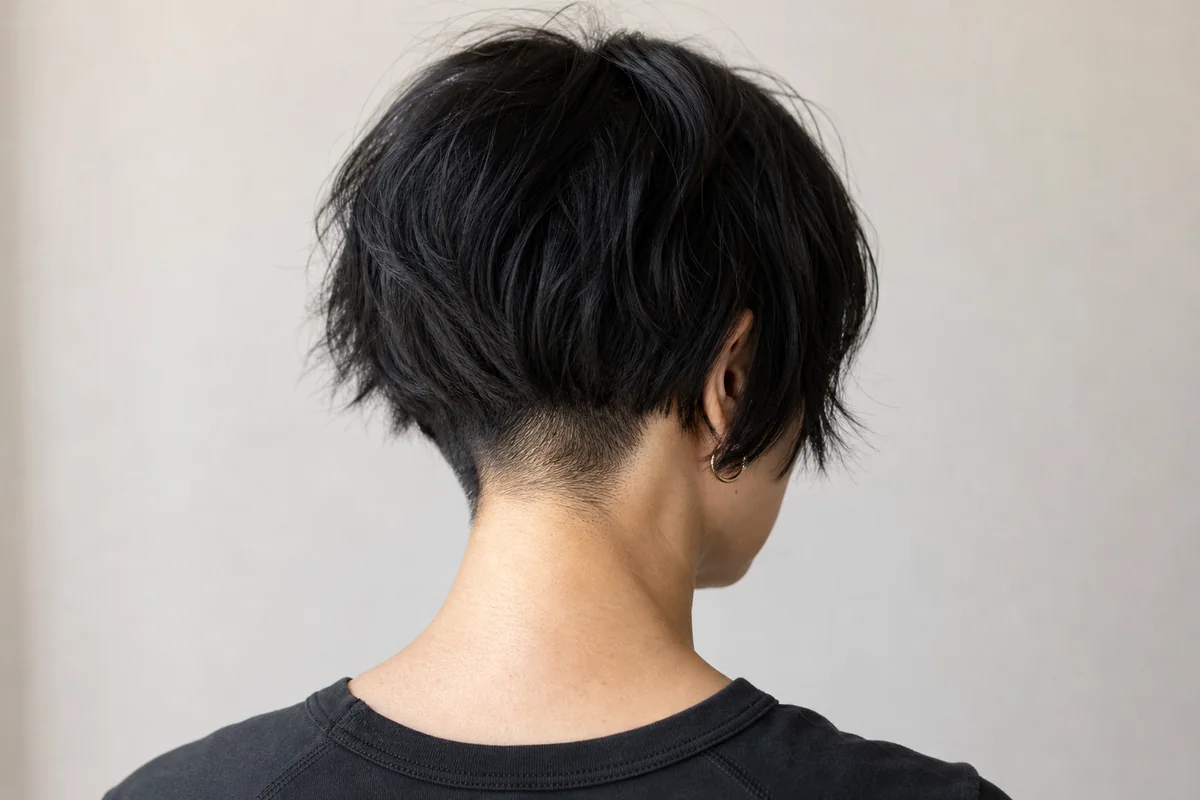
- Length
- Jaw top layers, #2-#3 nape beneath
- Texture
- Straight, coarse
- Density
- Thick to very thick
- Face shapes
- Oval, round, square
- Daily effort
- 8-10 minutes
- Trim every
- 5-6 weeks, nape cleanup 2-4
The undercut takes bulk out from under the shag and the layers cover it, so a thick head of hair sits closer while the outside keeps its length. The cost is a shelf of regrowth that needs cleanups, covered under the nape options for a pixie.
Ask for: "A shag with the top at the jaw and the underlayer at the nape clippered with a #2 to #3 guard, hidden when the hair is down."
Where the Layers Start Decides the Shag
The same word covers four different cuts, depending on where the layering begins, and each one pushes fine and thick hair in opposite directions. Asking for the placement is more useful than asking for more or fewer layers.
| Layers start at | What it does | Works best on | Risk |
|---|---|---|---|
| The crown only | Lifts the roots and leaves the edge intact | Fine and medium straight or wavy hair | Falls flat if cut too short on fine strands |
| The cheekbone | Frames the face and softens the jaw | Most textures, square and long faces | Round faces need the start below the cheekbone |
| The interior (point or slide cut) | Removes bulk without shortening the outline | Thick and coarse straight hair | Thinned-out ends if overdone |
| The perimeter (point, razor or feathered) | Breaks the edge into soft pieces | Thick, coarse or wavy hair in good condition | Fine ends fray, curls frizz |
The shorter the crown layers, the more the cut depends on texture to hold them up. Waves and curls prop short layers in place, while fine straight strands drop them back down. A stylist who asks about your texture before the first snip is checking exactly that.
Salon note: The usual fault in a shag is a gap between short crown layers and long lengths below, which reads as a mullet. Connected layers, where each layer overlaps the next by a finger width or so, keep the shape one piece. Check the sides and back in a mirror before you leave the chair.
Short Shag Haircuts by Texture and Density
Waves and curls fit a short shag most naturally; straight hair can wear it with the right layering. Hair shape is programmed in the follicle, so a cut can't change texture, only how well it sits.
| Texture | Fine or low density | Thick or high density | Cut wet or dry |
|---|---|---|---|
| Straight | Crown layers over a blunt hem (looks 1, 6, 12) | Interior weight removal, razor or undercut (looks 5, 7, 20) | Wet, layers checked dry |
| Wavy (2A-2C) | Soft shag, layers from the cheekbone (looks 4, 19) | Mixie, micro fringe, air-dry shag (looks 2, 11, 17) | Either; check dry |
| Curly (3A-3C) | Rounded shag with a little length at the sides (look 14) | Tapered nape, rounded top (look 15) | Dry, curl by curl |
| Coily (4A-4C) | Shaped crop that keeps the top dense (look 3) | Chin-length cut dry, hem width managed (look 16) | Dry, natural state |
Fine hair gets its shag from the edge. A blunt baseline carries the density and crown layers give lift, so the most layered cut is not the fullest one. On thick hair the opposite holds: the work is inside, where surface layers leave the undercoat untouched.
Salon note: Thinning shears suit straight hair and punish waves and curls, which frizz where the shears pass. If the stylist reaches for them on wavy hair, ask for point cutting instead.
Choosing a Short Shag for Your Face Shape
In a shag the face-framing layers and the bangs do the face-shape work, while the hem only sets the length. Where those layers start and end changes how wide or long the face reads.
| Face shape | Shag detail that helps | Usually skip |
|---|---|---|
| Oval | Any bangs, any length | Nothing in particular |
| Round | Crown height, layers starting below the cheekbone, side-swept fringe | A full round fringe, width at the cheeks |
| Square | Wispy bangs, soft layers from the cheekbone, textured ends | A blunt hem ending at the jaw |
| Long | Curtain bangs, width at the sides | Tall crown with no fringe |
| Heart | Longer side fringe, fullness at the chin | Volume at the temples |
| Diamond | Fringe for the forehead, soft pieces at the cheekbones | Close sides that expose the cheekbones |
Curly and coily hair adds width at the hem, so choose the layer starting point as if the hair were an inch wider than it looks wet.
What to Ask for at Your Shag Appointment
Name where the layers start, how long the crown is, how the edge is finished and whether there are bangs, in inches or landmarks. Bring two photos of the cut on hair like yours and one of the version you don't want.
- Length. Say where the longest layer ends: jaw, chin or just below. Curly and coily hair: give the dry length.
- Layer start. Crown only, cheekbone or all through, from the layer table above.
- Edge. Blunt, point cut, razor or feathered, and whether your hair tolerates it.
- Bangs. Type, length, and how often you will come back for them.
- Connection. Ask that the crown and the lower layers be connected, so the cut does not split.
Ask for: "A shag to the chin with crown layers about 3 inches, cheekbone layers framing my face, point-cut ends and a long side fringe. Connect the layers so it doesn't separate, take the weight out of the inside, and check it dry."
Watch out: Short layers cannot be put back. Ask for the crown layers a little longer than you picture, and have more taken out at the next visit.
Styling a Short Shag Day to Day
A shag cuts the styling time but not to zero: it looks planned when the layers are given a direction, and untidy when they are left to dry flat. Most take 5-10 minutes; wash-and-go curly and wavy versions run under 5. Our guide to styling short hair covers products and tools.
- Start damp. Work cream (a dime to nickel) or mousse (a golf ball) through damp hair. On curly and coily hair, use a leave-in and gel on soaking wet hair.
- Dry with the cut. Diffuse waves and curls on low and don't touch until dry; on straight hair, rough-dry upside down, then smooth the front with a 1-inch round brush.
- Add grit last. 4-8 spritzes of texture spray at the crown on straight hair, or 1-2 drops of oil on coarse and gray ends.
- Shape the layers. Twist the ends with your fingers and press the front layers to the side so they fall in one direction.
Tip: Short roots get greasy sooner. Dry shampoo at the crown refreshes the layers and gives lift without a second wash.
Short Shag Maintenance and Grow-Out
Book a trim every 6-8 weeks to keep the layers and the outline in shape; bangs need attention every 3-5 weeks, and a clippered or undercut nape every 2-4. Shags hide growth better than blunt cuts, since there is no hard line to lose, so 8-10 weeks is realistic for soft and curly versions.
Hair grows about half an inch a month on average, though rates vary by person, sex and scalp area, as a study of young adults from 24 ethnic groups found. At that pace a chin-length shag reaches the collarbone in 6-8 months, becoming a shaggy lob along the way (see the long bob haircut gallery). The layers make the middle months easier than other cuts, but the short crown layers are the last to catch up, so ask the stylist to trim the crown only lightly while the lengths grow.
Salon note: When growing out, keep the face-framing layers and let the crown grow. Cutting the crown layers shorter to match brings back the shag outline you are trying to leave.
When a Short Shag Is Not the Right Choice
A shag asks for texture, density and some styling, and several hair types and habits work against it. In these cases another short cut usually serves better.
- Your hair is very fine and sparse. Layers remove the little weight that creates density. A blunt bob with crown layers only is a safer cut.
- You want a sleek, polished finish every day. Broken edges and layers read as soft and a little undone; a blunt bob or a one-length lob is the sleek option.
- Your hair is thick and straight and your stylist won't remove interior weight. It will flare at the sides. Find a stylist who will, or choose a longer, textured cut.
- Your hair is curly or coily and would be cut wet with a razor or thinning shears. It will frizz and spring far shorter than planned. Book a stylist who cuts curls dry.
- A strong cowlick sits at the crown or hairline. Short layers there stand up. Point the cowlick out first, so the stylist leaves length over it.
- Your hair is damaged or breaking. Wispy edges on fragile ends look ragged. Trim to healthy hair first, then add layers.
The best short shag haircuts are chosen by where the layers start: crown for lift on fine hair, interior for thick hair, shaped dry for curls and coils. Pick a look from this gallery on hair like yours, read its script from your phone, and ask for the crown a little longer than you think you want.