
Short version: A bob haircut is a cut whose ends meet in one deliberate line between the earlobe and the chin, with its weight at that line. Bobs differ by the back (level, graduated or stacked), the angle from back to front and the layering inside. Fine hair suits blunt bobs, thick hair needs weight taken from the interior, and curly and coily bobs are cut dry and longer than they sit. Plan on a trim every 6-8 weeks.
What Defines a Bob, and How It Differs from a Lob or Shag Bob
A bob keeps its weight at the perimeter: the ends meet in a single line, and that line is the cut. Ear, jaw and chin bobs are points on one range, and the map of length bands and face-shape rules for every short cut covers which suits whom.
At the short end the boundary is the nape: once the back tapers in with no weight line and the sides cover the ears, the cut is a bixie, and the bixie haircut boundaries are set out by landmark. At the long end a bob becomes a lob past the jaw; with its weight moved up into crown layers, it is a shag bob.
| Cut | Ends at | Where the weight sits | Back | Trim every | Choose it if |
|---|---|---|---|---|---|
| Bob | Earlobe to chin | In a line at the hem | Level, or graduated shorter | 6-8 weeks | You want a clean edge that swings |
| Lob | Jaw to collarbone | Lower hem; its length pulls hair flatter | Level or a gentle angle | 8-10 weeks | You need to tie it back |
| Shag bob | Bob length | Spread through crown layers; light, broken hem | Layered | 6-8 weeks | Your hair waves or curls and you want texture |
| Bixie | Front between cheekbone and jaw | Top and sides; no weight line | Short tapered nape | 5-7 weeks | You want a bob's cover with a pixie's back |
Blunt and One-Length Bobs
A blunt bob is cut with no elevation, so every strand ends at the same line and the bob looks densest on any texture. French, micro and Italian bobs are one-length shapes at different landmarks; the guide to the blunt bob and the French bob gallery go further.
1. Blunt Jaw Bob Tucked Behind One Ear

- Length
- At the jaw, one length
- Texture
- Straight
- Density
- Medium
- Face shapes
- Oval, long, heart
- Daily effort
- 5-10 minutes
- Trim every
- 6-8 weeks
Tucking one side makes a symmetrical cut asymmetrical with no extra cutting. Medium density holds the tuck; very thick hair springs back out.
Ask for: "A one-length bob at my jaw, deep side part, blunt line checked dry."
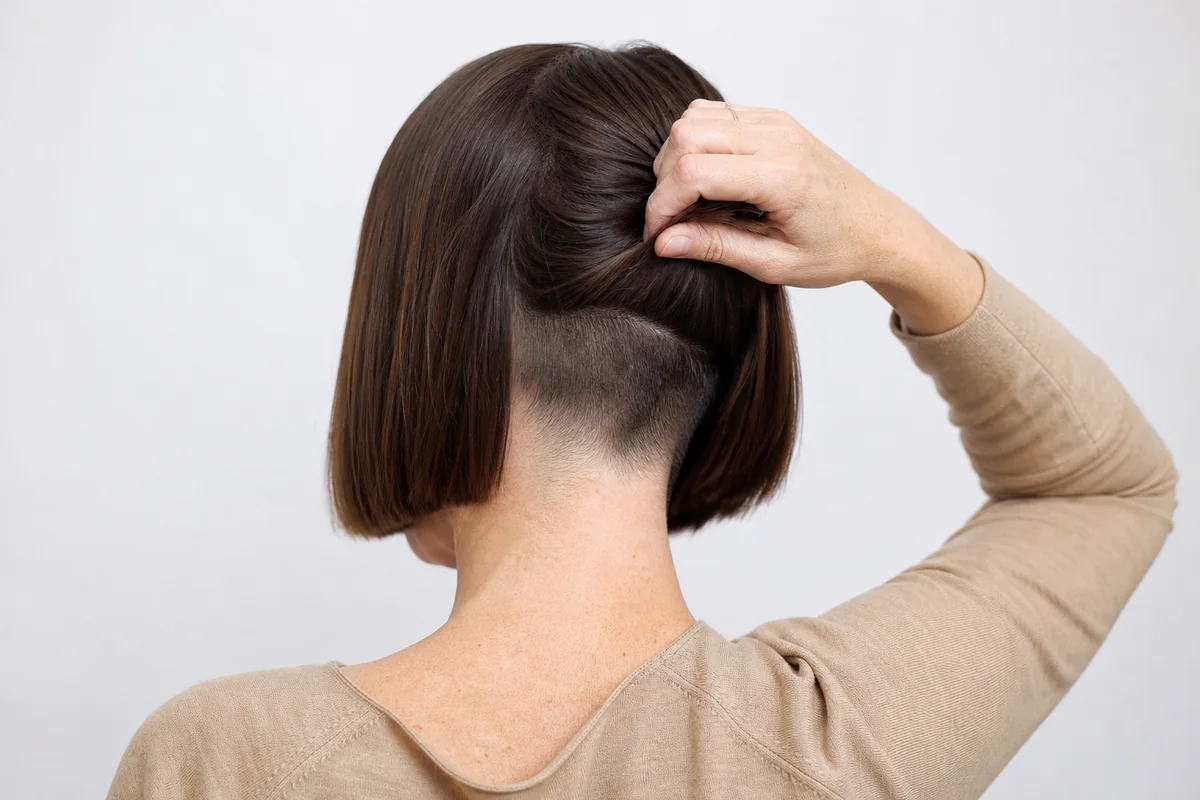
3. French Bob at the Cheekbone with a Brow Fringe

- Length
- Cheekbone to earlobe, brow fringe
- Texture
- Straight to 2B wavy
- Density
- Fine to medium
- Face shapes
- Oval, long, heart
- Daily effort
- 5 minutes
- Trim every
- 6-8 weeks, fringe at 3-5
A French bob is worn undone, air-dried or finger-dried, never brushed smooth. Light waves give it the right bend; straight hair may need texture spray.
Ask for: "A French bob between cheekbone and earlobe, soft blunt edge, fringe grazing my brows dry."
4. Micro Bob with a Blunt Fringe

- Length
- Above the earlobe, fringe at mid-forehead
- Texture
- Straight
- Density
- Fine to medium
- Face shapes
- Oval, long, diamond
- Daily effort
- 5-10 minutes
- Trim every
- 5-6 weeks, fringe at 3-4
The shortest bob that keeps a weight line, it shows growth within a month. Skip it if your face is widest at the cheeks, where the hem lands.
Ask for: "A one-length micro bob just above my earlobes, blunt fringe at mid-forehead."
5. Italian Bob with Rounded Volume at the Jaw

- Length
- Just below the jaw
- Texture
- Straight to 2C wavy
- Density
- Medium to thick
- Face shapes
- Oval, square, long, diamond
- Daily effort
- 10-15 minutes
- Trim every
- 7-8 weeks
Longer and fuller than a French bob, with the front corners kept short. It needs density, so thick waves wear it best.
Ask for: "An Italian bob just below my jaw, rounded edge, light internal layers, short front corners."
Stacked, Graduated and Inverted Bobs
A graduated bob is cut shorter at the back in overlapping tiers, building roundness above the nape; stacking is the tight version, and inverted adds a longer front. Both are explained after the gallery, and the inverted and stacked bob gallery goes further.
6. Classic Stacked Bob with a Rounded Back
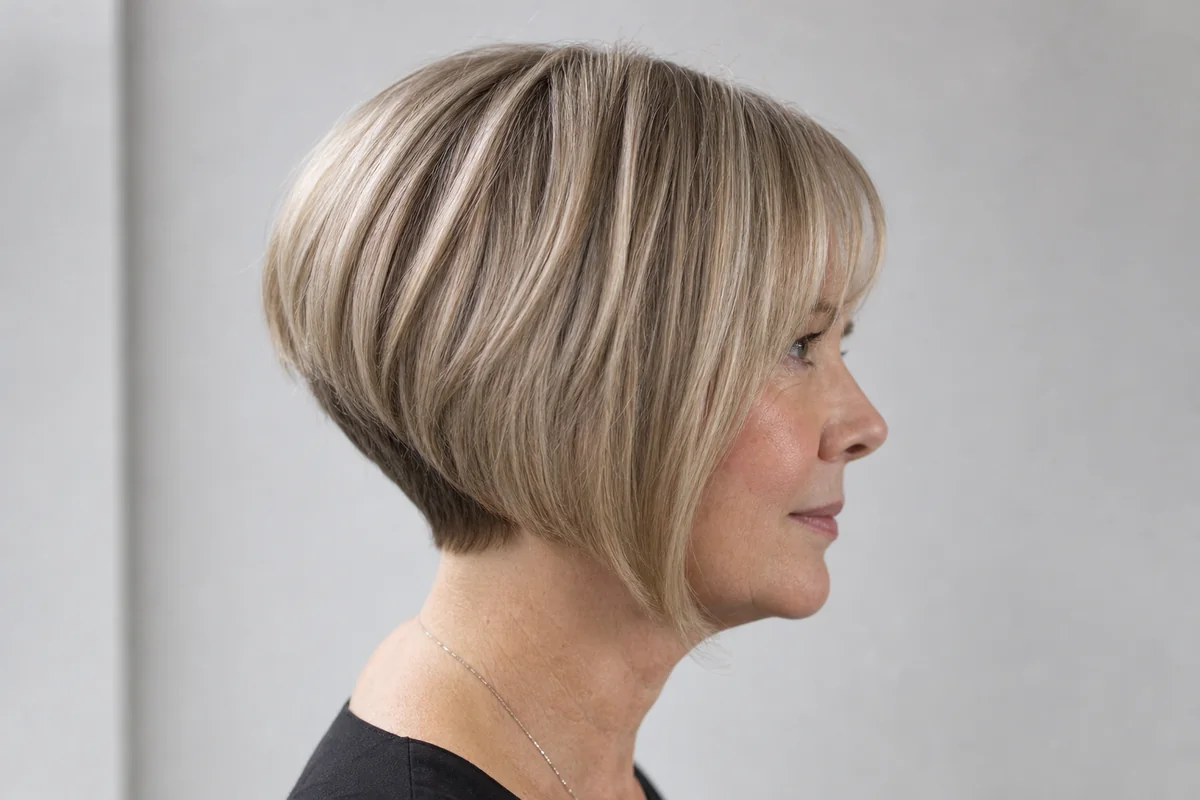
- Length
- Chin at the front, nape about 1 in
- Texture
- Straight
- Density
- Fine to medium
- Face shapes
- Round, oval, heart
- Daily effort
- 10 minutes
- Trim every
- 5-7 weeks
The stacked back builds volume fine hair can't get from blow-drying alone. A small round brush through the tiers sets the curve in minutes.
Ask for: "A stacked bob from about an inch at the nape, rounded back, front at my chin."
7. Low-Graduation Bob on Coarse Gray Hair
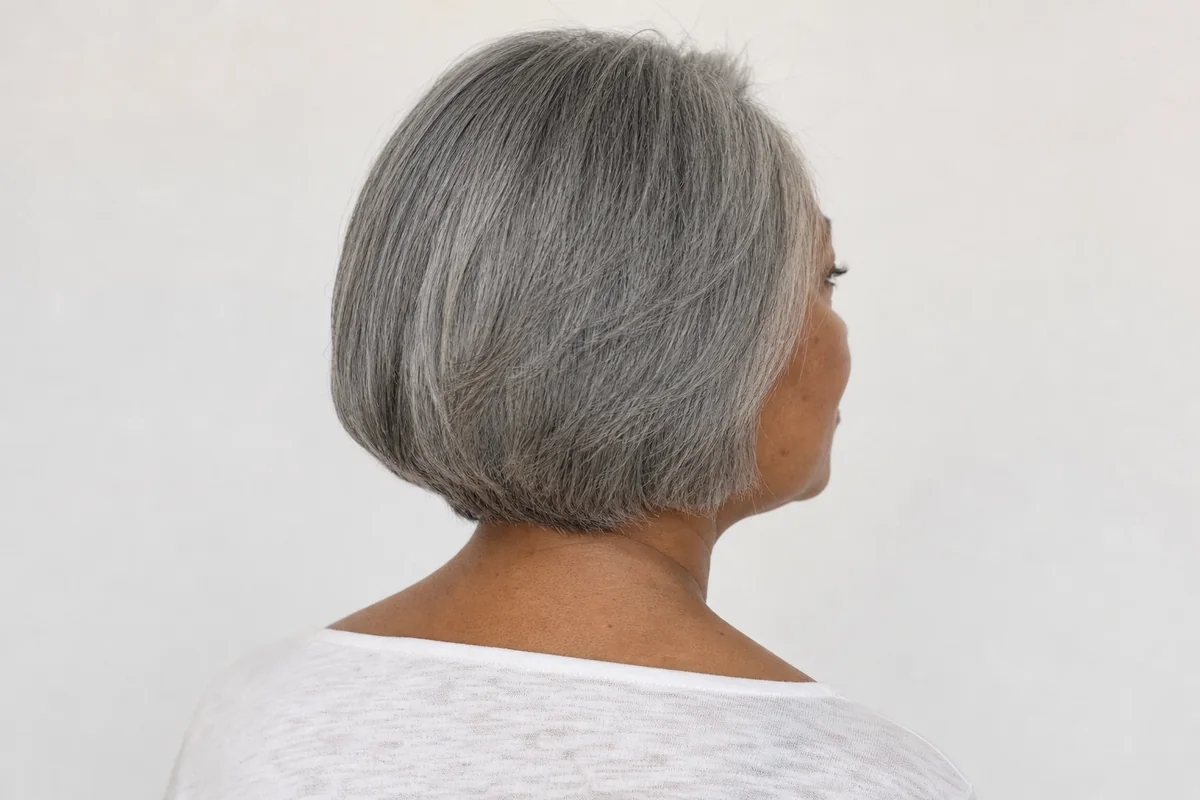
- Length
- Chin; graduation in the bottom inch only
- Texture
- Straight to wavy, coarse
- Density
- Medium to thick
- Face shapes
- Oval, square, long
- Daily effort
- 10 minutes
- Trim every
- 6-8 weeks
Wiry gray strands can make a full stack stand away from the head. Low graduation tucks the nape in without a ledge, and a drop of light oil smooths the ends.
Ask for: "A chin bob with graduation in the bottom inch only, no stacking higher up."
8. Inverted Bob with a Two-Inch Angle
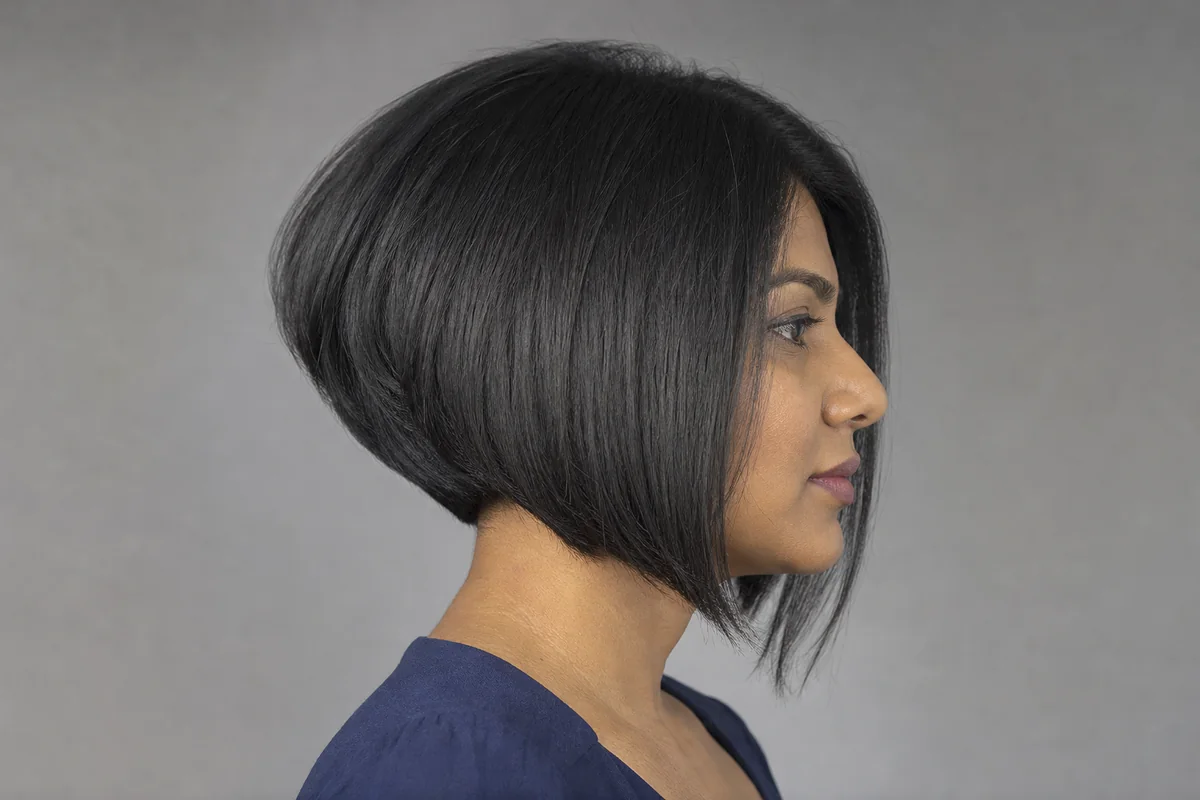
- Length
- Front just below the chin, back about 2 in shorter
- Texture
- Straight
- Density
- Medium to thick
- Face shapes
- Round, square, oval
- Daily effort
- 10-15 minutes
- Trim every
- 5-6 weeks
Inverted means stacking plus an angle, so it costs more upkeep than either. By week six the front corners pass the chin and the back fuzzes.
Ask for: "An inverted bob, stacked back, front just below my chin and two inches longer than the back."
9. Stacked Curly Bob Shaped Dry
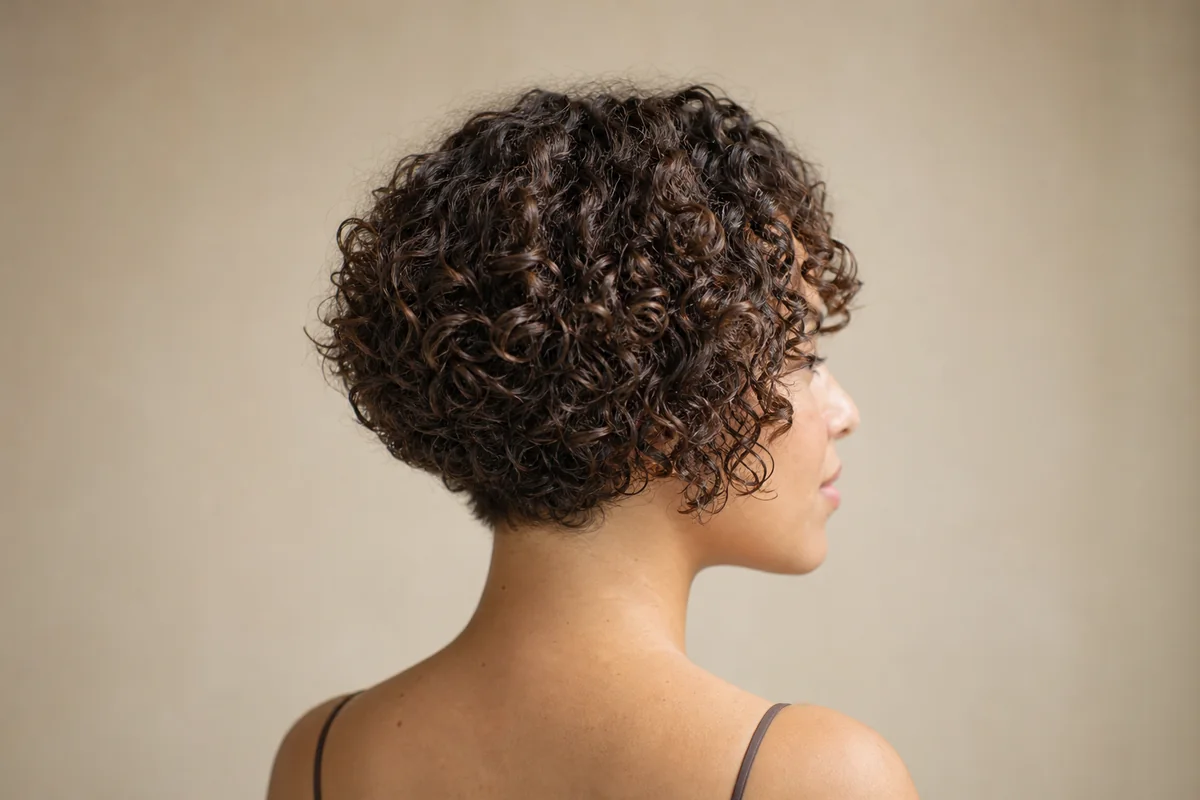
- Length
- Chin at the front when dry, shorter curled nape
- Texture
- Curly, 3A-3B
- Density
- Medium to thick
- Face shapes
- Round, oval, heart
- Daily effort
- 5 minutes on wash days, plus diffusing
- Trim every
- 8-10 weeks
On curls, graduation moves width from the hem to the back of the head, the usual cure for a triangle. Cut wet, a stacked nape can spring an inch shorter.
Ask for: "A curly bob graduated at the back, cut dry, front at my chin, nape left longer than you think."
A-Line and Angled Bobs
An A-line bob is shorter at the back and longer at the front, with or without stacking. The angle is an outline, and its size in inches sets the styling and trims it costs.
10. Gentle A-Line Bob on 2B Waves

- Length
- Front at the chin, back about 1 in shorter
- Texture
- Wavy, 2A-2C
- Density
- Medium
- Face shapes
- Round, square, oval, heart
- Daily effort
- 5 minutes, air-dry
- Trim every
- 7-8 weeks
Waves lift the back more than the front, so an inch of angle is plenty. The hem is cut in a slight curve so the ends don't flip.
Ask for: "A soft A-line bob, front at my chin, back an inch shorter, curved hem, checked dry."
11. Steep A-Line Bob with a Sleek Finish
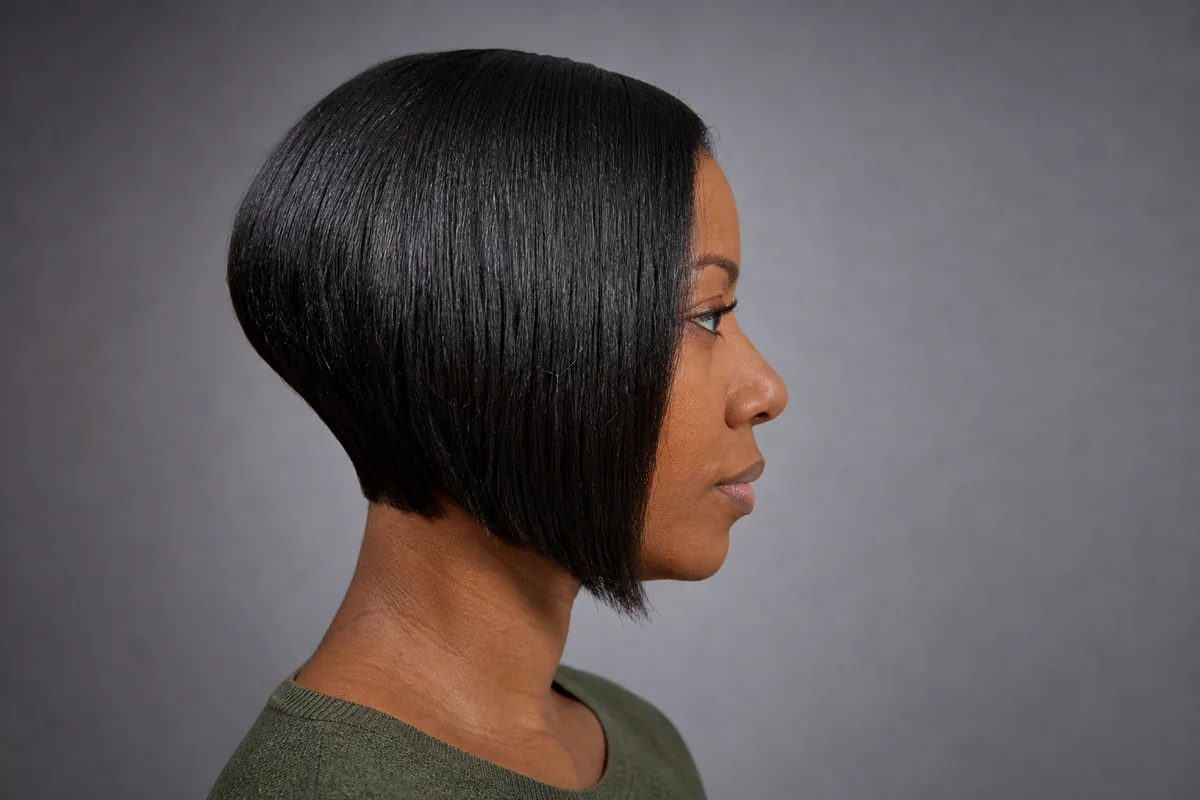
- Length
- Close nape; front about 4 in longer, past the jaw
- Texture
- Straight or relaxed
- Density
- Medium to thick
- Face shapes
- Round, square
- Daily effort
- 15 minutes with a flat iron
- Trim every
- 4-6 weeks
The line only reads when smooth, so this angle means a blow-dry or flat iron most days. On relaxed or pressed hair, keep heat moderate to protect the point.
Ask for: "A steep A-line, close at the nape, front four inches longer and just past my jaw."
Layered, Shaggy and Fringed Bobs
Layering moves a bob's weight off the hem and into the shape. A short layered bob keeps layers above the line; a shag bob breaks the line itself. The shag family continues in short shag haircuts, fringes in short hair with bangs.
12. Short Layered Bob with Crown Lift

- Length
- Just above the chin; crown layers about 4 in
- Texture
- Straight
- Density
- Fine
- Face shapes
- Round, oval, long
- Daily effort
- 5-10 minutes
- Trim every
- 6-7 weeks
Fine hair takes layers on top, not underneath. Short crown pieces stand up while solid ends keep the bob from looking wispy.
Ask for: "A bob just above my chin, short layers at the crown only, solid ends, no thinning shears."
13. Layered Bob with a Slide-Cut Interior for Thick Hair

- Length
- At the chin, interior layers
- Texture
- Straight
- Density
- Thick
- Face shapes
- Oval, square, long, diamond
- Daily effort
- 5-10 minutes
- Trim every
- 6-7 weeks
Slide cutting (gliding open shears down a section) takes weight from the middle of the hair, not the ends. On very thick straight hair it lets a chin bob lie flat; on curls it would frizz.
Ask for: "A chin bob with bulk slide cut from the interior, outline kept full."
14. Shag Bob with Curtain Bangs

- Length
- At the jaw, crown layers, bangs to the cheekbones
- Texture
- Wavy to loose curly, 2B-3A
- Density
- Medium to thick
- Face shapes
- Square, long, heart, oval
- Daily effort
- 5 minutes, diffuse or air-dry
- Trim every
- 7-8 weeks, bangs at 4-5
Unlike a layered bob, a shag bob has no clean hem: the ends are broken up on purpose and the crown is shorter. Waves form in the gaps, so it needs less styling than a sleek bob.
Ask for: "A shag bob at my jaw, crown layers, broken ends, curtain bangs to my cheekbones, checked dry."
15. Chin Bob with a Blunt Brow Fringe

- Length
- At the chin, fringe at the brows
- Texture
- Straight to 2A
- Density
- Medium to thick
- Face shapes
- Long, oval, heart
- Daily effort
- 10 minutes
- Trim every
- 6-8 weeks, fringe at 3-4
On a long face the fringe shortens from the top while the chin line adds width. A front cowlick splits a blunt fringe; choose a side-swept one instead.
Ask for: "A chin bob, blunt fringe at my eyebrows dry, cut with the hair falling naturally."
Curly and Coily Bobs
A curly or coily bob is shaped dry, in the hair's natural state, and cut longer than it will sit, because shrinkage pulls every landmark up. Shrinkage by curl type is in the short curly hair guide, and more tapered and natural shapes in short haircuts for Black women.
16. Rounded Curly Bob on 3B Curls

- Length
- Chin when dry; about 2-3 in longer stretched
- Texture
- Curly, 3A-3C
- Density
- Medium to thick
- Face shapes
- Oval, long, square, heart
- Daily effort
- Under 5 minutes on refresh days
- Trim every
- 8-10 weeks
Each curl is cut where it lives, so layers make a round silhouette, not tiers. Leave-in and gel in soaking-wet hair, diffused on low, is the usual routine.
Ask for: "A rounded curly bob cut dry, curl by curl, chin length dry, volume at the crown."
17. 3C Chin Bob Cut a Little Long
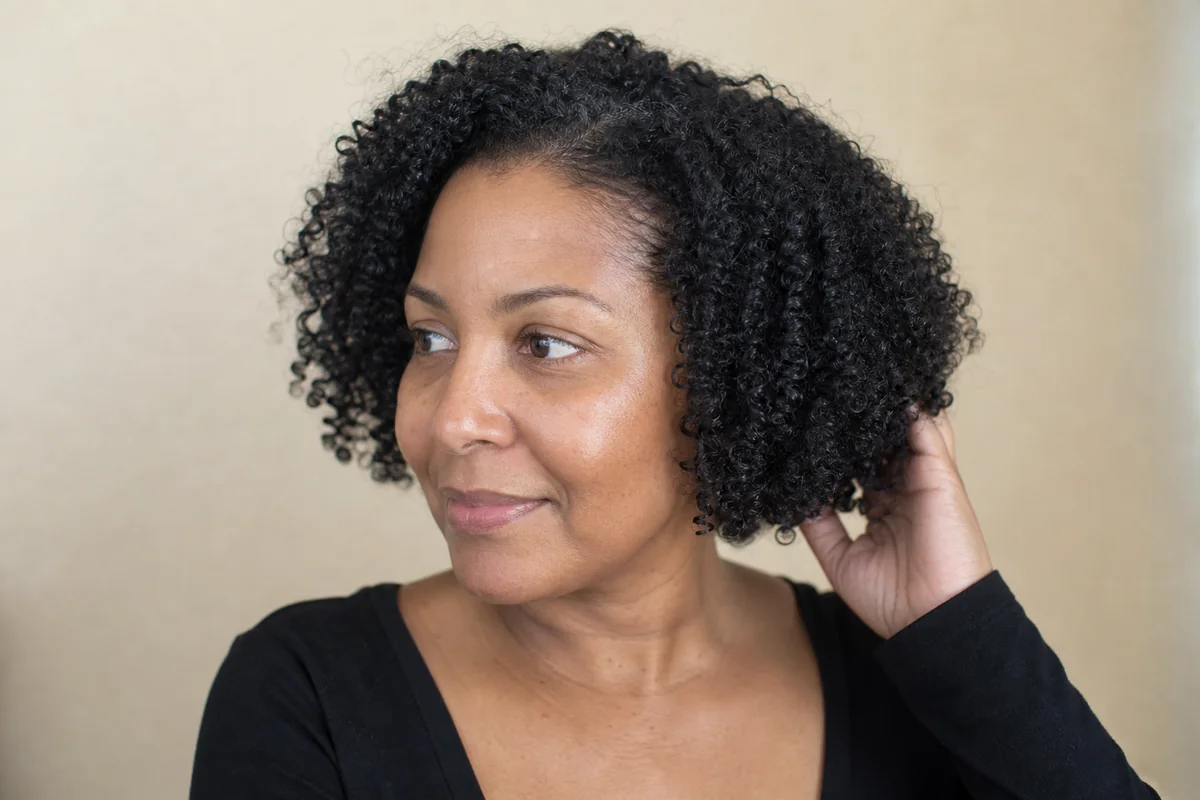
- Length
- Chin to jaw dry; 3 in or more longer stretched
- Texture
- Curly, 3C
- Density
- Thick
- Face shapes
- Oval, long, diamond, heart
- Daily effort
- 5 minutes; wash-day routine about 45 minutes
- Trim every
- 8-12 weeks
Tight curls can shrink a wet chin-length cut to the cheekbone. Ask for it a little long: another inch off next visit is easy; growing it back takes two months.
Ask for: "A curly bob cut dry to land between my chin and jaw, rounded so the hem doesn't widen."
18. Tapered Coily Bob with a Fuller Crown
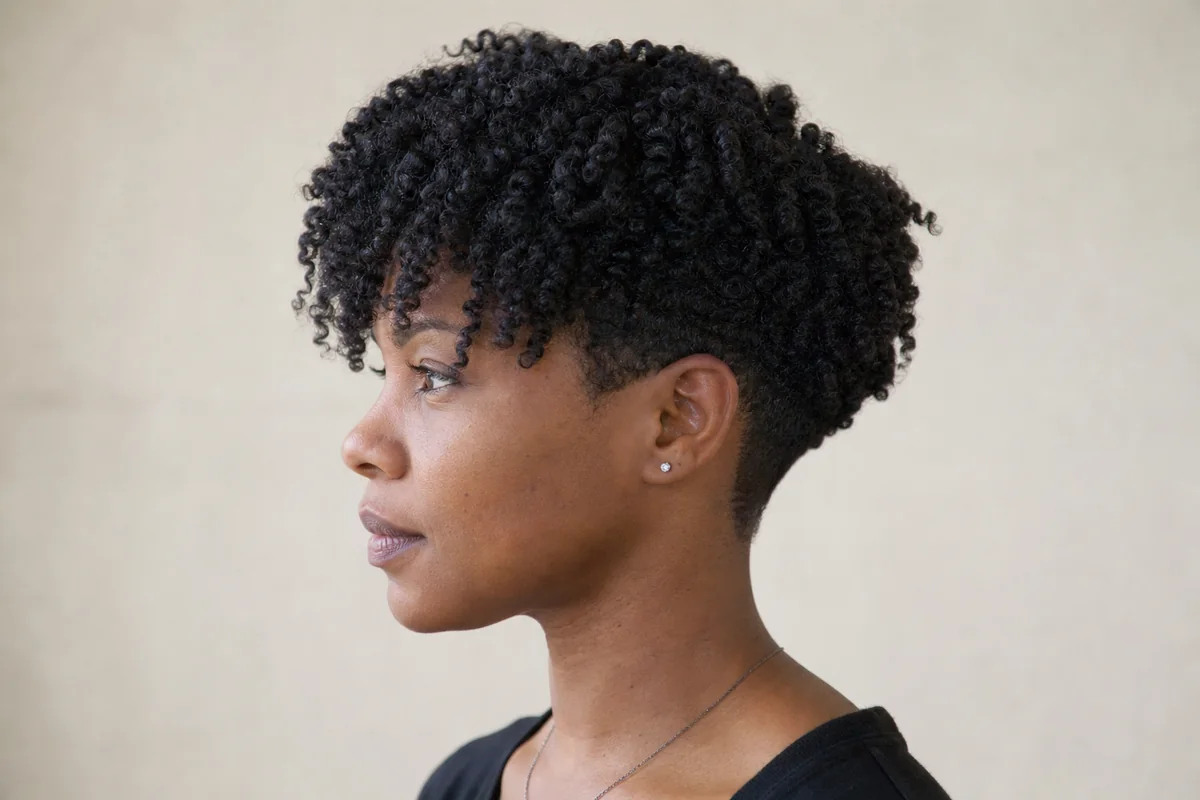
- Length
- Front to the cheekbone shrunken; tapered nape and sides
- Texture
- Coily, 4A-4B
- Density
- Medium to thick
- Face shapes
- Round, oval, heart
- Daily effort
- 5 minutes on refresh days
- Trim every
- 6-8 weeks; taper at 3-4
The taper keeps width off the sides, so a round face gets height, not breadth. Stop tapering and the sides fill into a rounded bob within two or three months.
Ask for: "A tapered bob on my natural coils, close nape and sides, fuller top, front at my cheekbone shrunken."
19. Coily Twist-Out Bob on 4C Hair
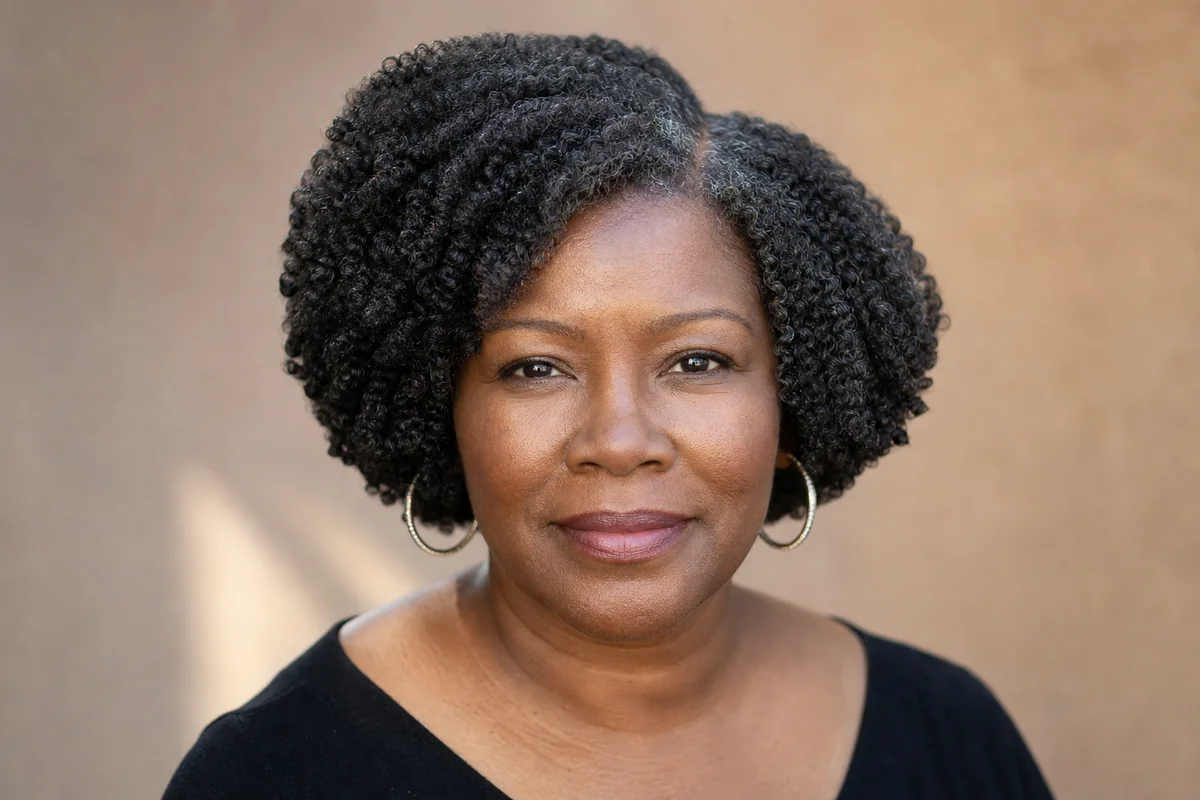
- Length
- Jaw in a twist-out; much longer stretched
- Texture
- Coily, 4B-4C
- Density
- Medium to thick
- Face shapes
- Oval, long, square, diamond
- Daily effort
- Twists set at night; 5 minutes to unravel
- Trim every
- 8-12 weeks
Shaped in the style it is worn, a twist-out bob keeps its outline across wash days, and low-manipulation styling protects the ends.
Ask for: "A rounded bob shaped dry on my twist-out, even all around, ending at my jaw."
20. Angled Bob on Stretched 4B Hair
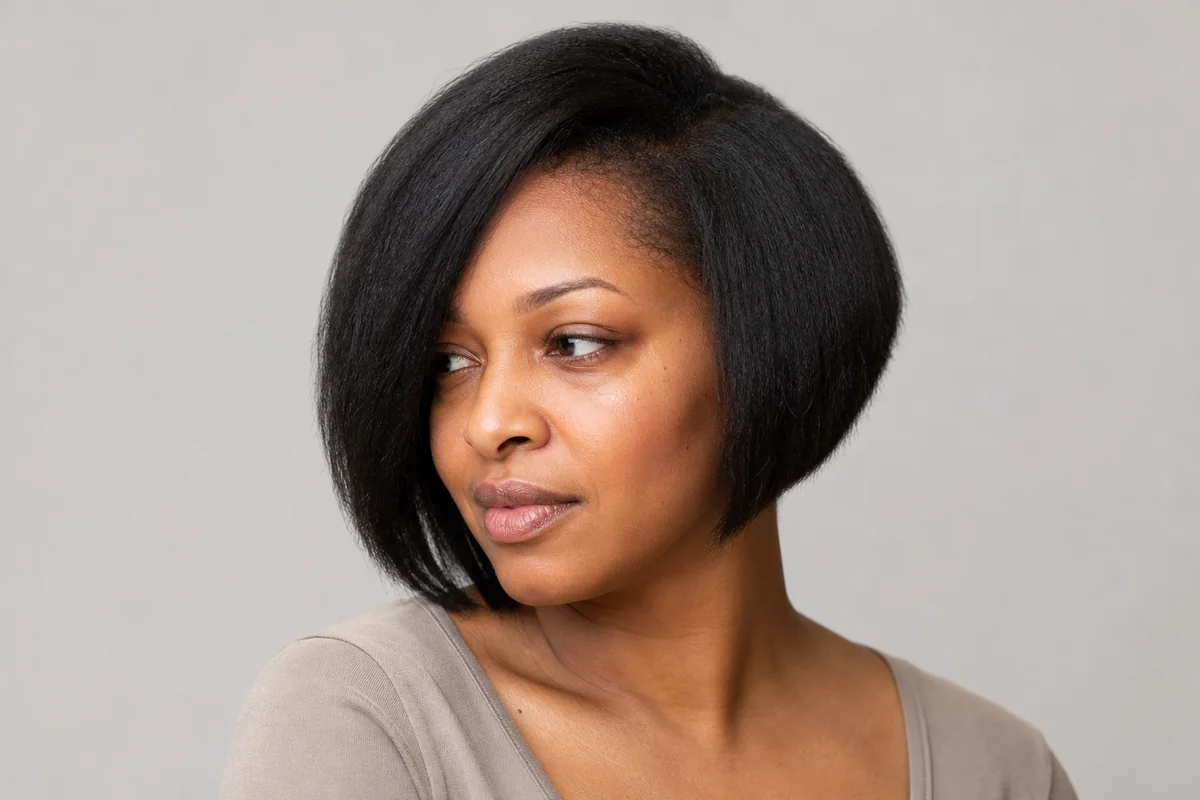
- Length
- Front below the chin stretched; back about 1 in shorter
- Texture
- Coily, 4A-4C, worn stretched
- Density
- Medium to thick
- Face shapes
- Round, square, oval
- Daily effort
- Blow-out every 1-2 weeks; 5 minutes daily
- Trim every
- 6-8 weeks
Stretched coils can carry an angle that vanishes when shrunken. Keep it to about an inch, since on natural days the back shrinks more and exaggerates it.
Ask for: "An angled bob on my blow-out, front below my chin, back an inch shorter. Where will it sit natural?"
Bobs for Fine, Thin and Gray Hair
Fine or low-density hair looks fullest in a bob with a solid hem and no layers underneath; gray hair often wants softness for a coarser texture. See short bobs for fine hair, and short haircuts for women over 60 for gray.
21. Beveled Bob on Fine Hair

- Length
- At the chin, slight under-bevel
- Texture
- Straight
- Density
- Fine, low density
- Face shapes
- Oval, heart, long
- Daily effort
- 10 minutes with a round brush
- Trim every
- 6-8 weeks
A bevel curves the ends slightly under, cut in or set with a 1-1.5 in round brush. On fine hair the curve makes the hem look fuller than a flat line of the same length.
Ask for: "A one-length chin bob with a slight bevel under, no layers underneath."
22. Wash-and-Wear Wavy Bob on Silver Hair

- Length
- At the chin, soft long layers
- Texture
- Wavy, 2A-2B
- Density
- Medium
- Face shapes
- Oval, square, round, heart
- Daily effort
- Under 5 minutes, air-dry
- Trim every
- 7-8 weeks
Silver hair often grows in with more wave and less shine, and an air-dry bob works with both. A dime of cream scrunched in damp is enough; wear your glasses to the cut.
Ask for: "A chin bob for air-drying, long soft layers, checked dry with my glasses on."
How Graduation, Stacking and Angle Shape a Bob
Every bob comes down to two decisions: how high the back is lifted as it is cut, and how much longer the front is than the back. Lift is elevation. At none, hair falling straight down, strands end together and the bob is blunt. At around 45 degrees each strand lands just longer than the one beneath it: that is graduation, and its ends pile into rounded weight above the hem. At 90 degrees or more the cut becomes layering, which removes weight instead.
Stacking is graduation cut short and tight at the nape and carried up the back, so the tiers show. An inverted bob adds a front longer than the back; an A-line is that angle alone, possibly on a level back. Salons blur the terms, so describe the back and the angle.
| Front minus back | Reads as | Trim every | Daily styling | Works best on | What gives first |
|---|---|---|---|---|---|
| 0 in | Level or blunt bob | 6-8 weeks | 5-10 min | Every texture | The line, if it reaches the shoulders |
| About 1 in | Gentle A-line | 6-8 weeks | 5-10 min | Straight, wavy, curly and stretched coily | Little; growth barely changes it |
| 2-3 in | Angled or inverted bob | 5-7 weeks | 10-15 min | Straight and smooth wavy hair | Front corners pass the landmark by week 5-6 |
| 4 in or more | Steep A-line | 4-6 weeks | 10-15 min, usually with heat | Straight or heat-straightened, medium to thick | The close nape fuzzes and the point loses its edge |
Steeper angles cost more because growth is uneven in proportion: half an inch barely shows on a 6-inch front but adds a quarter to a 2-inch nape. Graduation helps fine hair, which needs the built-up weight; on thick hair the same bulge can become a shelf. A clippered nape under a stack follows the cleanup rhythm in the pixie guide's nape section.
Salon note: When thick hair juts out at the back of a stacked bob, the cure is usually less graduation, not a shorter top. Starting the stack lower and taking bulk out underneath keeps the rounded back without the ledge.
Bob Haircut Fit by Texture and Density
Any texture can wear a bob; texture decides the back and the cutting method, density decides where weight comes out. Curl shape is set by the follicle at the hair bulb, so a cut works with the curl it is given.
| Texture | Fine or low density | Thick or high density | Cut |
|---|---|---|---|
| Straight | Blunt, beveled or crown-only layers (looks 4, 12, 21) | Interior weight removal or hidden undercut (looks 2, 13) | Wet, line checked dry |
| Wavy (2A-2C) | Blunt or gentle A-line with a curved hem (looks 3, 10) | Shag bob or internal layers (looks 5, 14) | Either; finish dry |
| Curly (3A-3C) | Fewer, longer layers so the hem stays dense | Rounded layers or graduation that follows the curl (looks 9, 16, 17) | Dry, 2-3 in or more longer than the target |
| Coily (4A-4C) | A taper that keeps the top and front dense | Tapered, rounded or stretched shapes (looks 18, 19, 20) | Dry, in the state you wear it most |
Choosing a Bob for Your Face Shape
With a bob, the face-shape levers are the angle, the part and where the front corners fall. The general rules are on the hub page linked above; these are bob-specific. Fuller faces get more options in short cuts for round faces.
| Face shape | Bob that helps | Usually skip |
|---|---|---|
| Oval | Any angle or landmark | Nothing in particular |
| Round | Front below the chin, 1-3 in of angle, side part, stacked crown | A level micro bob ending at the cheeks |
| Square | Point-cut or curved ends just above or below the jaw, side part | A blunt hem exactly at the jaw |
| Long | Level chin or ear bob with a fringe, fuller sides | Steep angles and a long center part |
| Heart | Chin bob with fullness at the ends, curtain fringe | Height at the crown with flat ends |
| Diamond | Chin bob with a fringe, front corners past the cheekbones | Front pieces ending at the cheekbone |
On curly and coily bobs, hem width matters more than length: graduation or a tapered side pulls it in, which helps a round or square face more than any landmark change.
What to Ask for at a Bob Appointment
Name the bob by its back, its angle and its landmark, because "stacked", "graduated" and "inverted" are used loosely. Bring a side-view photo on hair like yours and one of what you don't want.
- Landmark. Earlobe, jaw or chin, dry. Curls and coils: ask what that means stretched.
- Back. Level, low graduation, stacked, or with a hidden undercut.
- Angle. None, or the difference front to back in inches.
- Inside. No layers, crown-only layers, interior weight removal or shag layers.
- Edge and method. Blunt, beveled or point-cut; wet with a dry check, or dry throughout.
- Hazards. A nape whorl, a front cowlick, glasses, grow-out plans.
Ask for: "A chin bob, low graduation at the back, about an inch of angle, no layers underneath because my hair is fine. Check the line dry, and mind the whorl at the left of my nape."
Salon note: A nape whorl decides how short a stacked back can go. Cut tight over a strong whorl, the tiers swirl and stand up; leaving that section about half an inch longer, or clippering under it, lets the stack lie flat.
Styling a Bob Day to Day
Most bobs take 5-10 minutes; sleek, angled ones take 10-15; air-dried waves or curls can be under 5. Products and tools are compared in how to style short hair.
- Pick one base product. A golf ball of mousse at fine roots, a dime to nickel of cream for smooth or wavy bobs, leave-in and gel for curls and coils.
- Dry the back first. The back sets the shape; use a 1-1.5 in round brush under a graduated back, or diffuse curls on low.
- Set the front corners. Dry them forward and slightly under so they don't flick out.
- Finish lightly. A flat iron for sleek angles, 4-8 spritzes of texture spray for choppy bobs, 1-2 drops of oil on coarse or pressed ends.
Daily flat-ironing has a cost: in a laboratory study of flat-ironed hair, heat damaged the cuticle and breakdown gases appeared from about 200°C (392°F). Keep fine, gray or lightened bobs around 300-350°F, with a heat protectant.
Tip: If your bob looked right at the salon but not at home, dry the back first: brush underneath, nozzle pointing down the hair.
Bob Maintenance and Growing It Out
A bob needs a trim every 6-8 weeks: stacked and angled bobs at 5-7, steep angles at 4-6, fringes at 3-5, curly and coily bobs often 8-12. Hair grows about half an inch a month on average, and a study of 2,249 adults across five continents found growth differed by scalp area, sex and origin.
| Months of growth | Chin bob becomes | What to cut | Styling fix |
|---|---|---|---|
| 1-2 | A softer chin bob; graduation fading | Fringe only | None |
| 3-4 | Ends at the neck; nape over the collar | Even the back to meet the front | Tuck behind the ears |
| 5-6 | Ends nearing the collarbone | Shape the hem; remove bulk only | Clip or pin the sides back |
| 6-8 | A collarbone lob; ends meet the shoulders and flip | Lob trims every 8-10 weeks | Flat-iron the ends under, or wear the flip |
Stacked and inverted bobs grow out slowest, since the back starts shortest: trim the front lightly until the back catches up and the hem is level. The longer shapes it lands on are in the gallery of long bob haircuts.
When a Bob Haircut Is Not the Right Choice
A bob is a line, and some hair and routines can't hold one; another cut serves better here.
- Your hair is thick and straight and the stylist won't remove weight. It sets into a triangle. Ask for an undercut or interior weight removal, or see short cuts for thick hair.
- Your curls are tight and you want a steep A-line. The back shrinks more and puffs. Keep the angle to an inch, or go rounded.
- You need a ponytail. A bob will pin back but won't gather. A collarbone lob ties.
- You can only book a trim every 10-12 weeks. A sharp line shows growth. A curly bob or a lob forgives longer gaps.
- You want no styling at all on straight hair. Its edge needs a quick dry each morning. A blunt lob or a wash-and-go curly cut asks for less.
- Your fine hair has razored, see-through ends. The line will look thin. Cut to where the ends are solid, even if shorter.
The right bob haircut comes down to where the line falls, how the back is cut and how much angle you can maintain. Pick the look closest to your texture and density, read its script at the appointment, and ask for the line to be checked dry before you leave.