
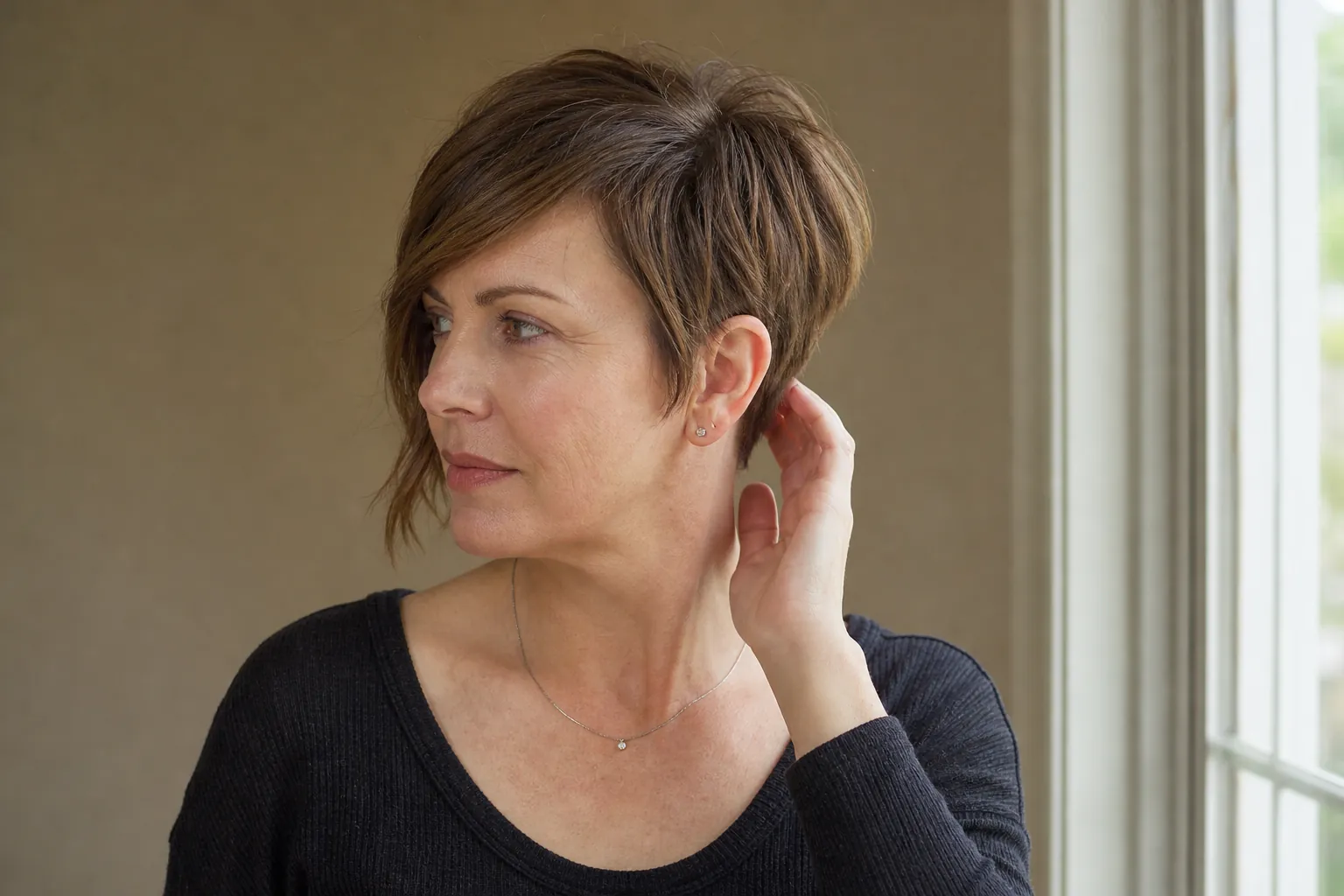
Short version: A pixie cut keeps about 1.5-4 inches on top and takes the sides and nape close to the head, so its shape is decided by how the back and the area around the ears are finished. Fine straight hair wears it most easily; thick, curly and coily hair wear it well when weight is removed from the inside or the cut is shaped dry. Plan on a trim every 4-6 weeks and 5-10 minutes of styling most mornings.
What Makes a Haircut a Pixie
A pixie is defined by a short perimeter and a slightly longer top: the nape and sides sit close to the head, the ears are usually partly or fully out, and the top carries the styling options. Shorter than about an inch everywhere, it becomes a crop; once the sides cover the ears and the front reaches the cheekbones, it is turning into a bixie. Within the full range of short haircuts, a pixie comes down to three choices: top length, fringe and nape.
Top length decides how much the cut can move: at 1.5-2 inches straight hair mostly stands up, and at 3-4 inches it can be swept, tucked or tousled. The gallery is grouped by length and finish.
Cropped and Very Short Pixies
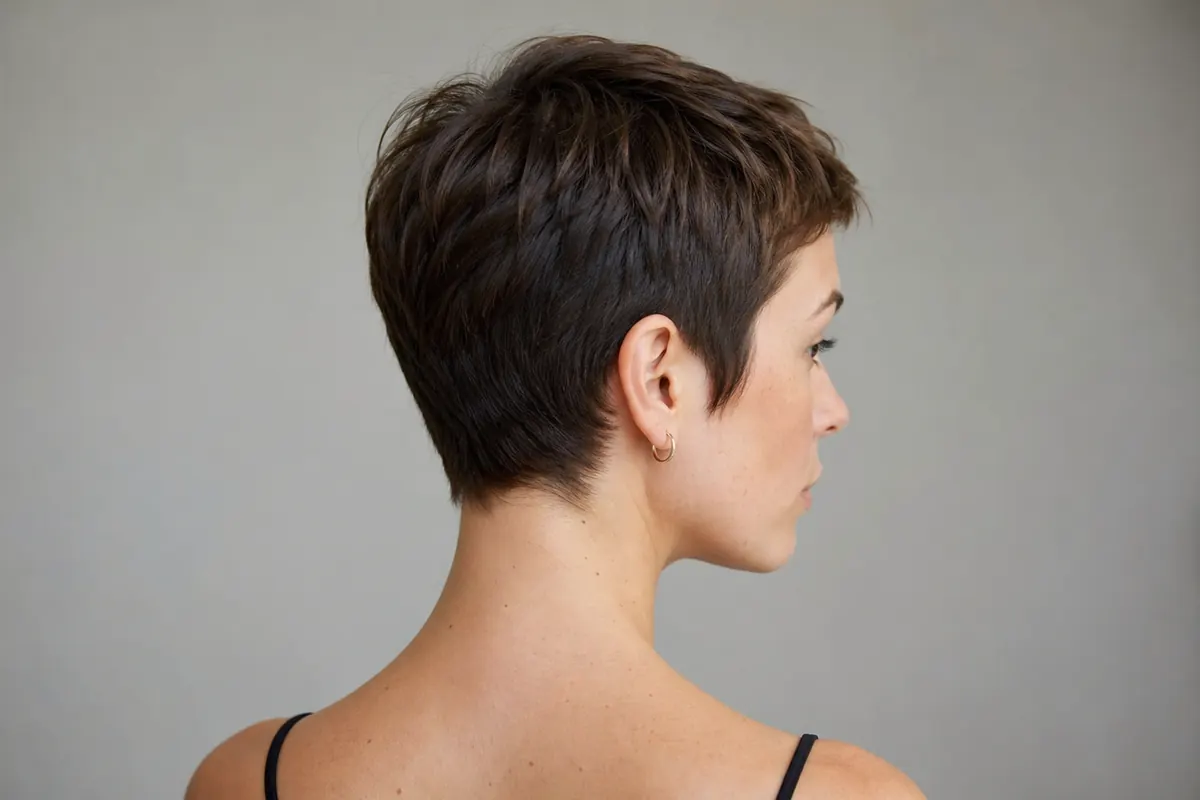
The shortest pixies are the quickest to style and the hardest to keep sharp, because a nape cut to a quarter inch looks different within three weeks. They suit fine hair that collapses at longer lengths and anyone who wants to wash and go, at the price of frequent short appointments.
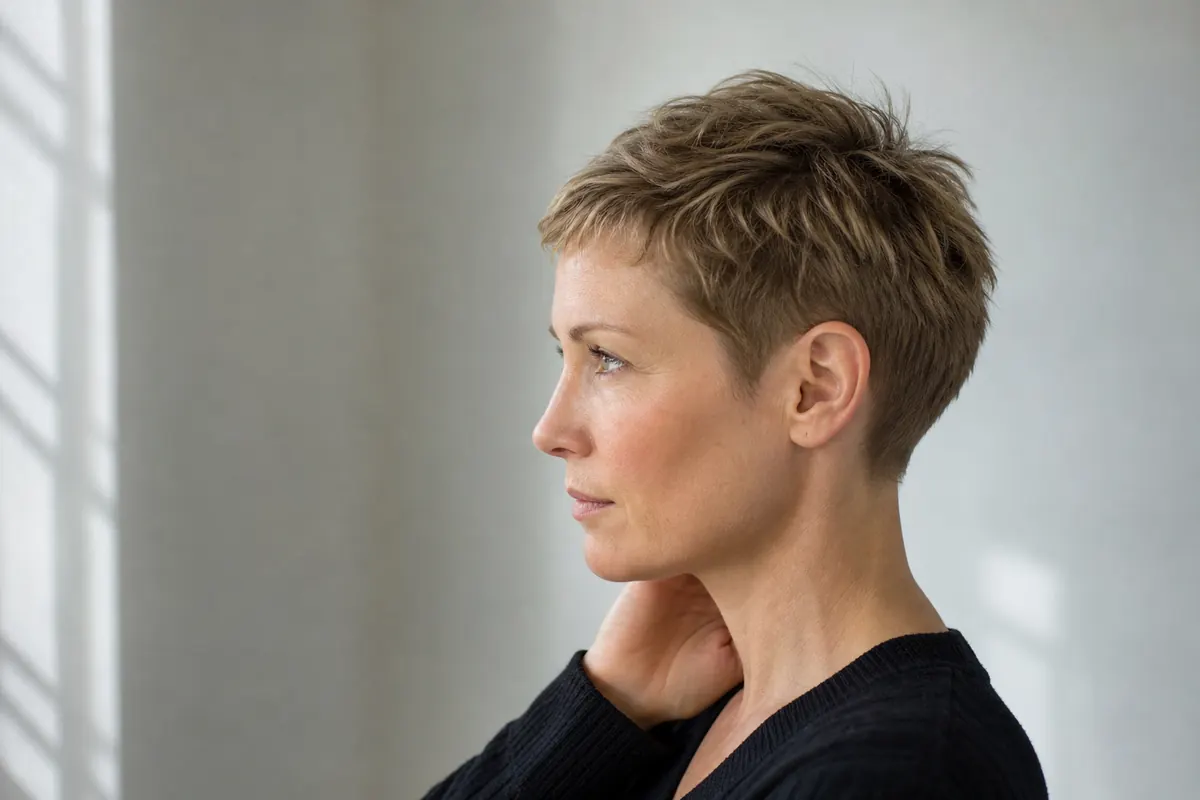
1. Cropped Pixie with a Clippered Nape
- Length
- 1-1.5 in on top, #2-#3 guard at the nape
- Texture
- Straight to slightly wavy
- Density
- Fine to medium
- Face shapes
- Oval, heart, long
- Daily effort
- 2-5 minutes
- Trim every
- 3-4 weeks, nape cleanup at 2-3
Clippers give the nape a line scissors can't match, which is why this cut needs the most upkeep on the page. On fine hair the short top stands up from the root on its own, so styling is a fingertip of paste.
Ask for: "An inch and a half on top, point cut. Clipper the nape with a #2 blended into a #3, and clean the outline around the ears."
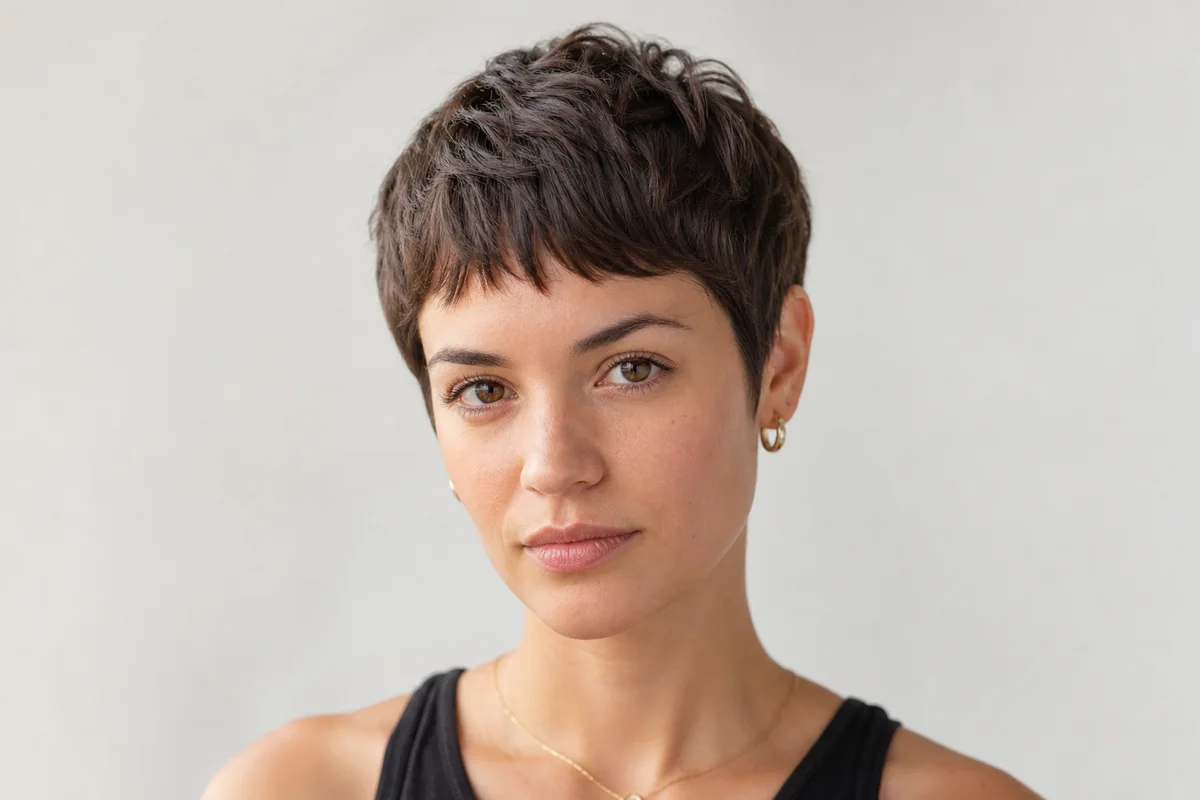
2. Classic Pixie with a Short Feathered Fringe
- Length
- 2 in on top, fringe to mid-forehead
- Texture
- Straight
- Density
- Fine to medium
- Face shapes
- Oval, heart, long, diamond
- Daily effort
- 5 minutes
- Trim every
- 4-5 weeks
The mid-century original, and still the shape most people picture. A fringe this short opens the eyes and shortens a long face, but it lifts wherever a cowlick sits at the front hairline unless it is left a little longer there.
Ask for: "A classic pixie, 2 inches on top, with a feathered fringe ending mid-forehead when dry. Scissor-taper the sides and nape, ears out."
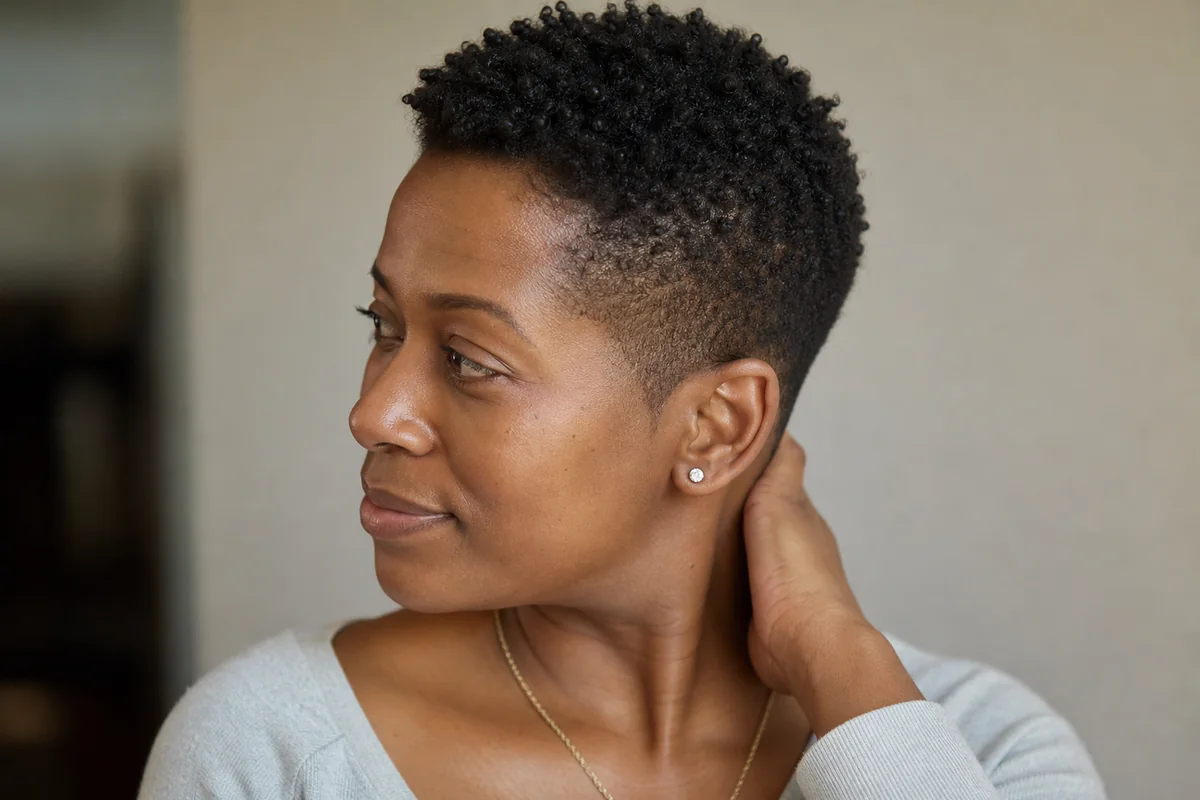
3. Very Short Tapered Crop on Coily Hair
- Length
- About 1 in on top (shrunken), #1-#2 at sides and nape
- Texture
- Coily, 4A-4C
- Density
- Medium to thick
- Face shapes
- Oval, heart, square, diamond
- Daily effort
- Under 5 minutes
- Trim every
- 2-4 weeks for the taper
On coily hair the taper does the shaping that layers do on straight hair: clippers fade the sides down while the top keeps its coil pattern. A water-based leave-in and a light cream matter more here than any holding product.
Ask for: "A tapered cut with about an inch of coils on top, shaped dry. Fade the sides and nape from a #2 down, with a soft line at the temples."
4. Silver Cropped Pixie with Soft Sideburns

- Length
- 2 in on top, sideburns to mid-ear
- Texture
- Straight to wavy, including coarse gray
- Density
- Fine to medium
- Face shapes
- Oval, square, round
- Daily effort
- 5 minutes
- Trim every
- 4-6 weeks
Wispy sideburns give the face a soft edge instead of a hard outline. Gray hair that has turned wiry often sits better at 2 inches than at 4, with less length to frizz, and a matte cream keeps silver from looking flat.
Ask for: "A cropped pixie, 2 inches on top, brushed forward. Point-cut sideburns to mid-ear and a scissor-tapered nape, no clippers."
Classic and Tapered Pixies
A tapered pixie at 2.5-4 inches on top is the most adaptable version: long enough to change the part or sweep a fringe, short enough to dry in minutes. Most first pixies land here, and the scissor-tapered nape softens as it grows instead of turning fuzzy.
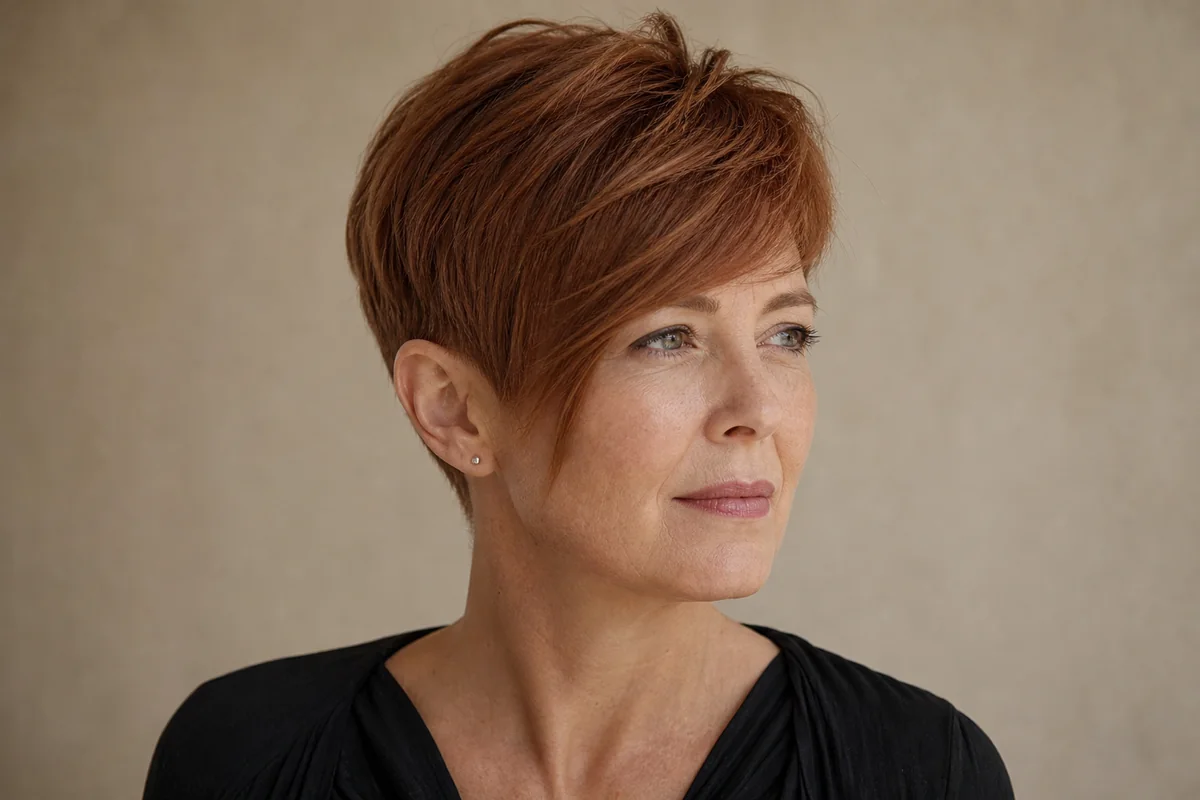
5. Tapered Pixie with a Long Side Fringe
- Length
- 3 in on top, fringe to the cheekbone
- Texture
- Straight to wavy
- Density
- Fine to medium
- Face shapes
- Round, square, heart, oval
- Daily effort
- 5-8 minutes
- Trim every
- 4-6 weeks, fringe at 3-5
For round and square faces this is usually the first suggestion: a diagonal fringe breaks up width across the forehead and cheeks, and close sides keep volume off the widest part of the face. Two minutes with a small brush sets the fringe.
Ask for: "A tapered pixie, 3 inches on top, with a long side fringe to my cheekbone, checked dry. Keep the sides close above the ears."
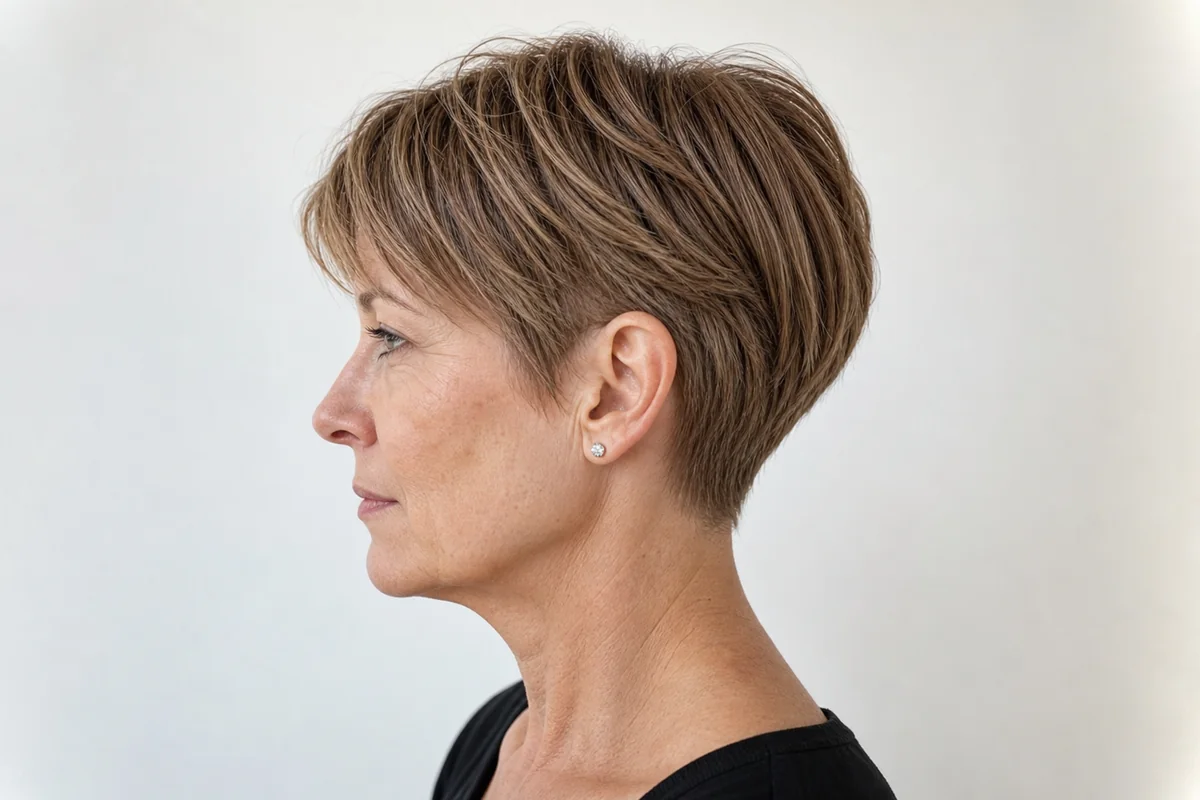
6. Stacked Pixie with Lift at the Crown
- Length
- 2.5 in at the crown, 1 in at the nape
- Texture
- Straight
- Density
- Fine, or thinner at the crown
- Face shapes
- Round, oval, heart
- Daily effort
- 5-8 minutes
- Trim every
- 4-5 weeks
Fine hair goes flat at the crown because nothing supports it. Stacking (short graduated layers resting on each other) builds that support into the cut, so the lift lasts the afternoon; heavy texturizing on top undoes it.
Ask for: "A stacked pixie with graduation at the back so the crown sits up, about 2.5 inches there. Please don't thin the top."
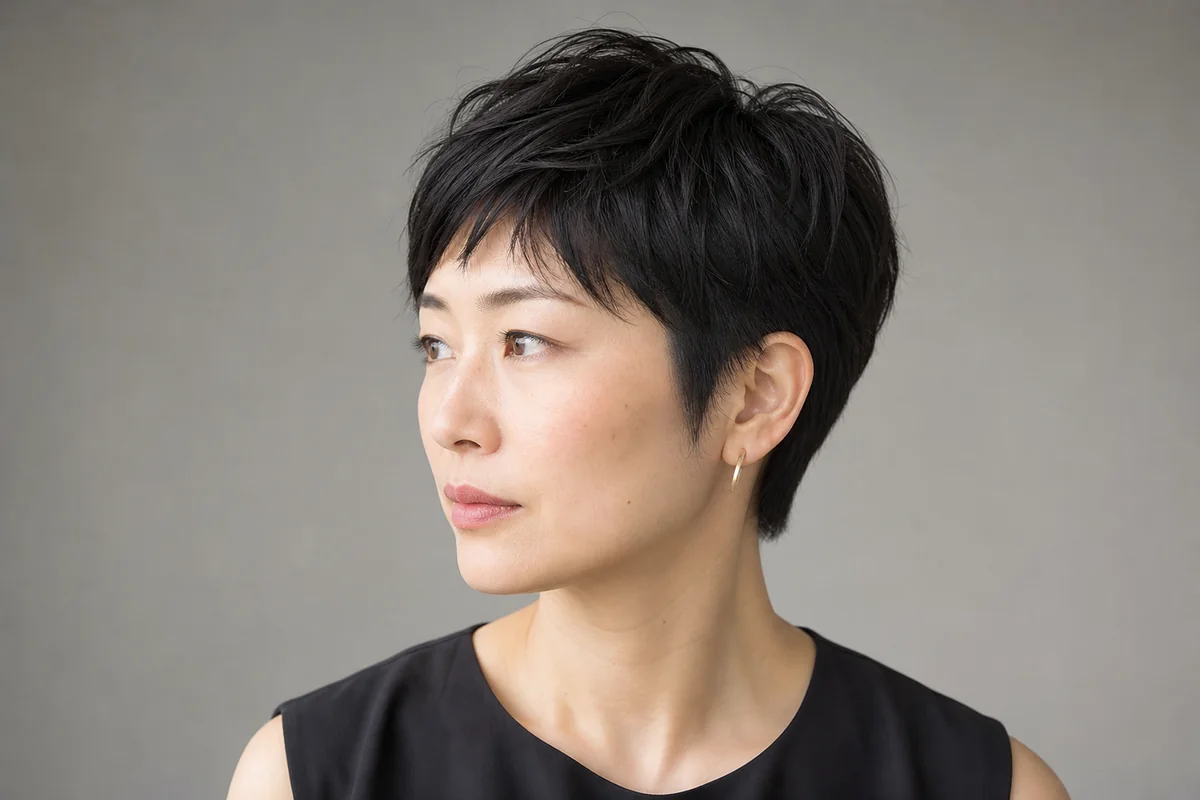
7. Layered Pixie for Thick Straight Hair
- Length
- 3 in on top, 1 in over the ears
- Texture
- Straight
- Density
- Thick, coarse
- Face shapes
- Oval, long, heart, diamond
- Daily effort
- 5-10 minutes
- Trim every
- 4-5 weeks
The helmet complaint comes almost entirely from thick straight hair cut short with its interior left full. Point cutting and slide cutting through the middle of each section (texturizing shears are normal on straight hair) let the layers lie close, so the same outline looks half the size.
Ask for: "A layered pixie, 3 inches on top. My hair is thick, so take weight out from the inside over the ears and at the back."
8. Deep Side-Part Pixie Tucked Behind the Ear

- Length
- 4 in on top, 1.5 in above the ears
- Texture
- Straight to wavy
- Density
- Medium
- Face shapes
- Square, round, oval, long
- Daily effort
- 5-10 minutes
- Trim every
- 5-6 weeks
At 4 inches the top is long enough to tuck, which gives the widest range on this page. Cut it wet but check the tuck dry: straight hair springs up slightly once the water's weight is gone.
Ask for: "A pixie with 4 inches on top and a deep left side part, long enough to tuck behind my ear. Taper the nape."
9. Wavy Pixie with a Soft Tapered Nape
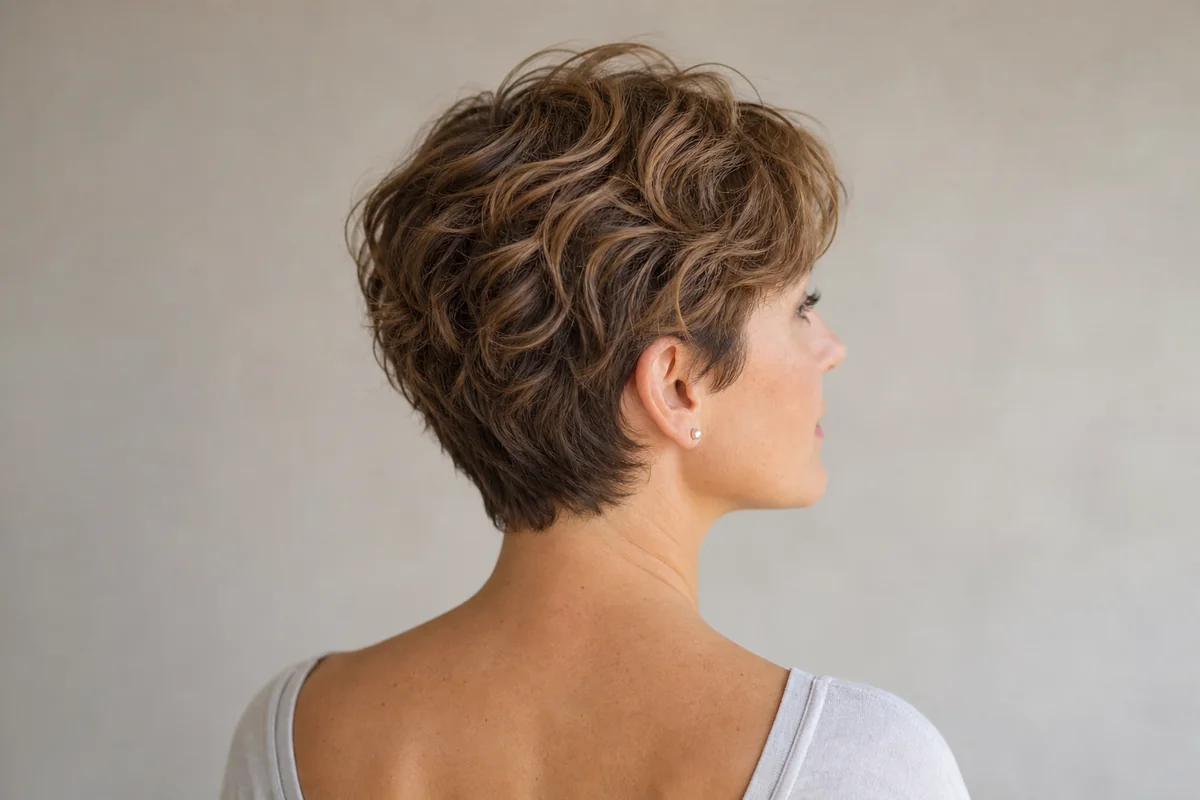
- Length
- 3.5 in on top, soft nape about 1 in
- Texture
- Wavy, 2A-2C
- Density
- Medium to thick
- Face shapes
- Oval, square, long
- Daily effort
- 5 minutes, air-dry
- Trim every
- 5-6 weeks
Waves need length to form; under about 3 inches a wavy pixie shows texture, not waves. Heavy thinning frizzes wavy layers, so this one is point cut and scrunched dry with a light cream.
Ask for: "A wavy pixie with 3.5 inches on top so the bend shows. No thinning shears, and a soft scissor taper at the nape."
Undercut and Edgy Pixies
An undercut removes the bulk thick hair carries under the top layer, so the top can stay long without widening over the ears. Shaved areas also show growth first, which makes these the best fit for thick hair and readers willing to book a cleanup every few weeks.
10. Undercut Pixie with a Disconnected Top
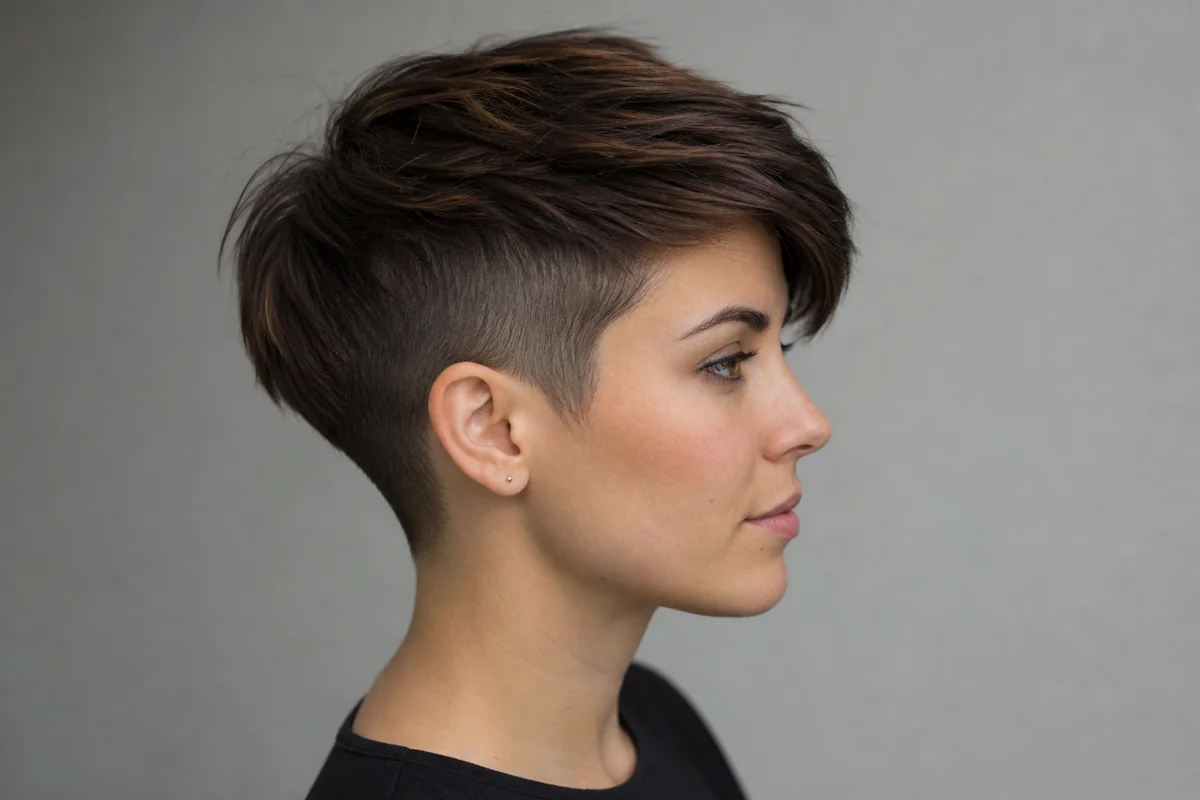
- Length
- 4 in on top, #1-#2 underneath
- Texture
- Straight to wavy
- Density
- Thick
- Face shapes
- Oval, long, heart
- Daily effort
- 5-10 minutes
- Trim every
- 5-6 weeks, undercut cleanup at 2-4
Disconnection means the top isn't blended into the short section beneath; it simply drops over it, hiding the undercut until the hair is swept up. Fine hair should skip it, since a sparse top can't cover the shaved area.
Ask for: "A disconnected undercut pixie: clipper underneath at the sides and nape with a #2 to the top of the ear, 4 inches on top."
11. Asymmetrical Pixie with One Shaved Side
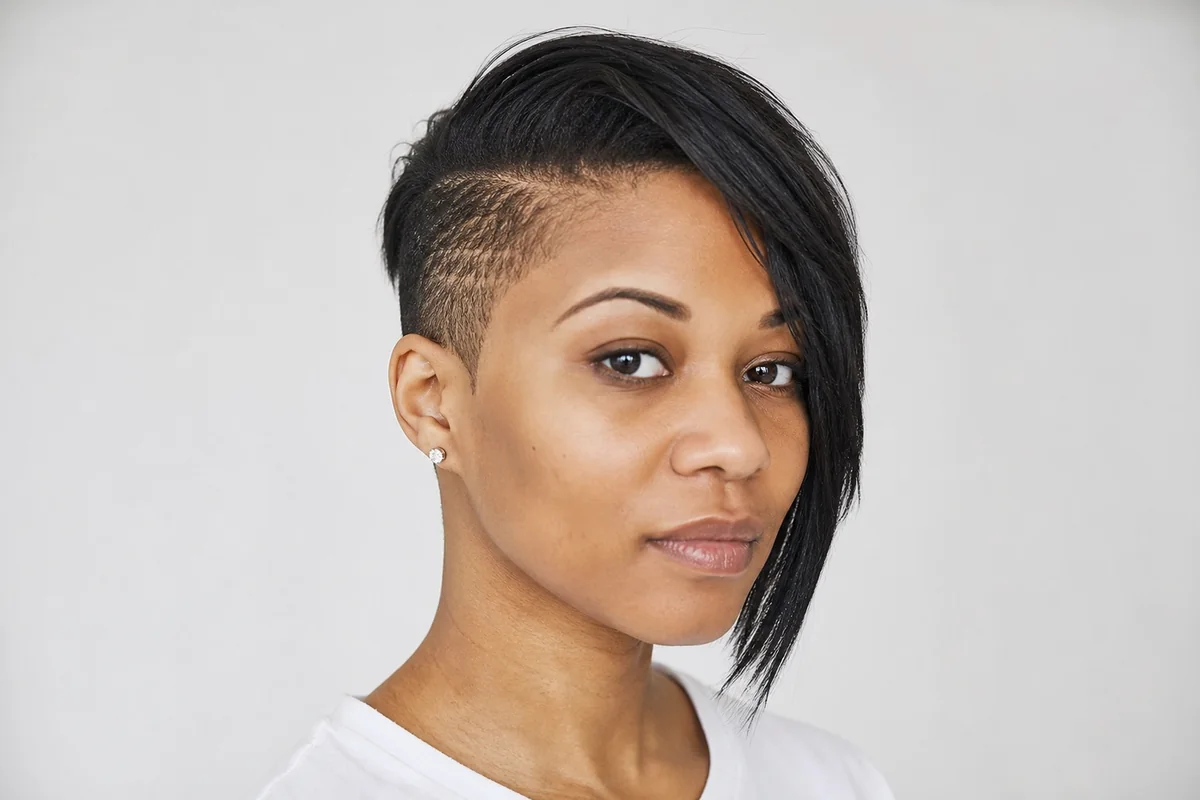
- Length
- Clippered #2 on one side, 4-5 in at the long front
- Texture
- Straight or relaxed
- Density
- Medium to thick
- Face shapes
- Round, square, oval
- Daily effort
- 10 minutes
- Trim every
- 4-5 weeks, side cleanup at 2-3
The diagonal from shaved side to long front cuts across the face and visually narrows a round or square jaw. It only holds if the long side is smoothed daily; one pass of a flat iron through the front piece keeps the angle.
Ask for: "An asymmetrical pixie: clipper the right side with a #2 below the top of the ear, and leave the left front long enough to reach my jaw."
12. Pixie Mullet with a Longer Nape
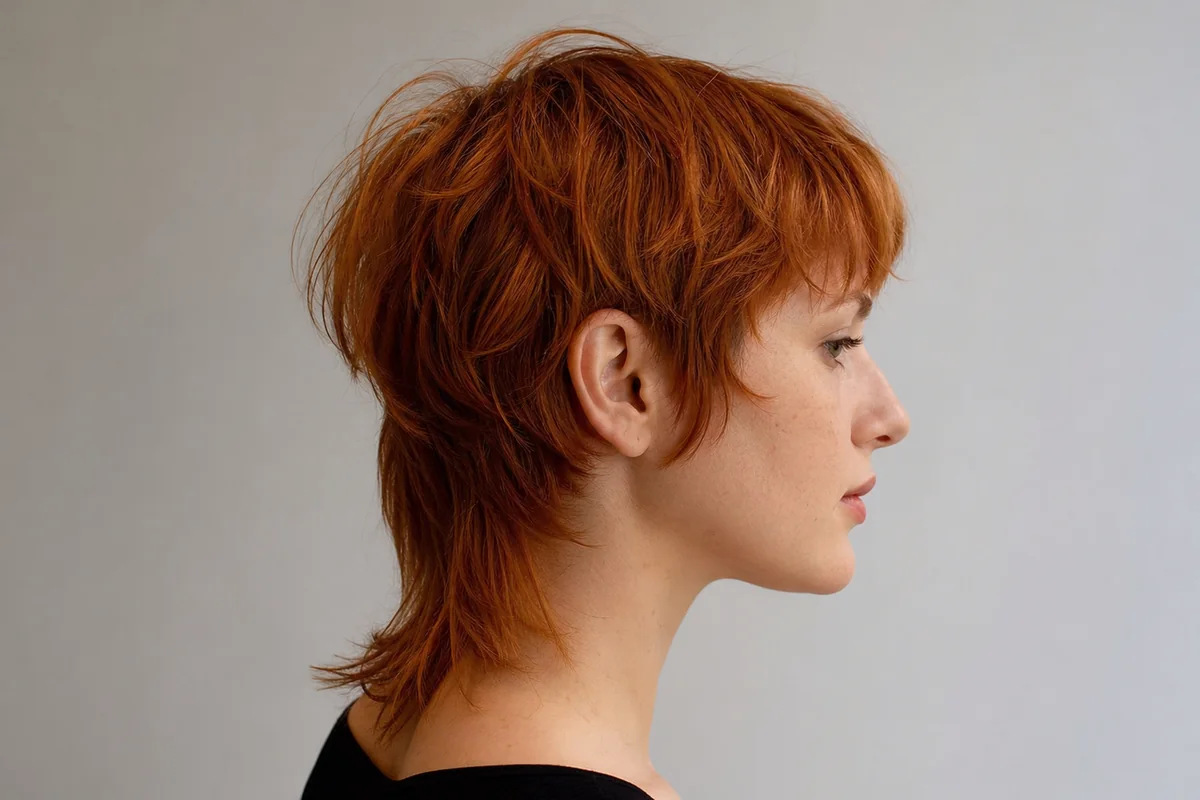
- Length
- 2-3 in on top, sides above the ears, 3 in at the nape
- Texture
- Wavy to curly
- Density
- Medium to thick
- Face shapes
- Oval, heart, long
- Daily effort
- 5 minutes
- Trim every
- 6-8 weeks
The mixie flips the usual rule, making the nape the longest part. That makes it the most forgiving pixie to grow out, though on fine straight hair the longer nape can look stringy; wave or curl fills it in.
Ask for: "A pixie mullet: short choppy layers on top and above the ears, with the nape left about 3 inches and textured."
Textured, Messy and Shaggy Pixies
A textured pixie trades a clean shape for movement: ends are point cut or razored so pieces separate, and styling means roughing it up with a dry product. Choppier versions have their own gallery in our guide to shaggy and edgy pixie cuts; these two are the everyday end of the range.
13. Messy Textured Pixie with Point-Cut Ends
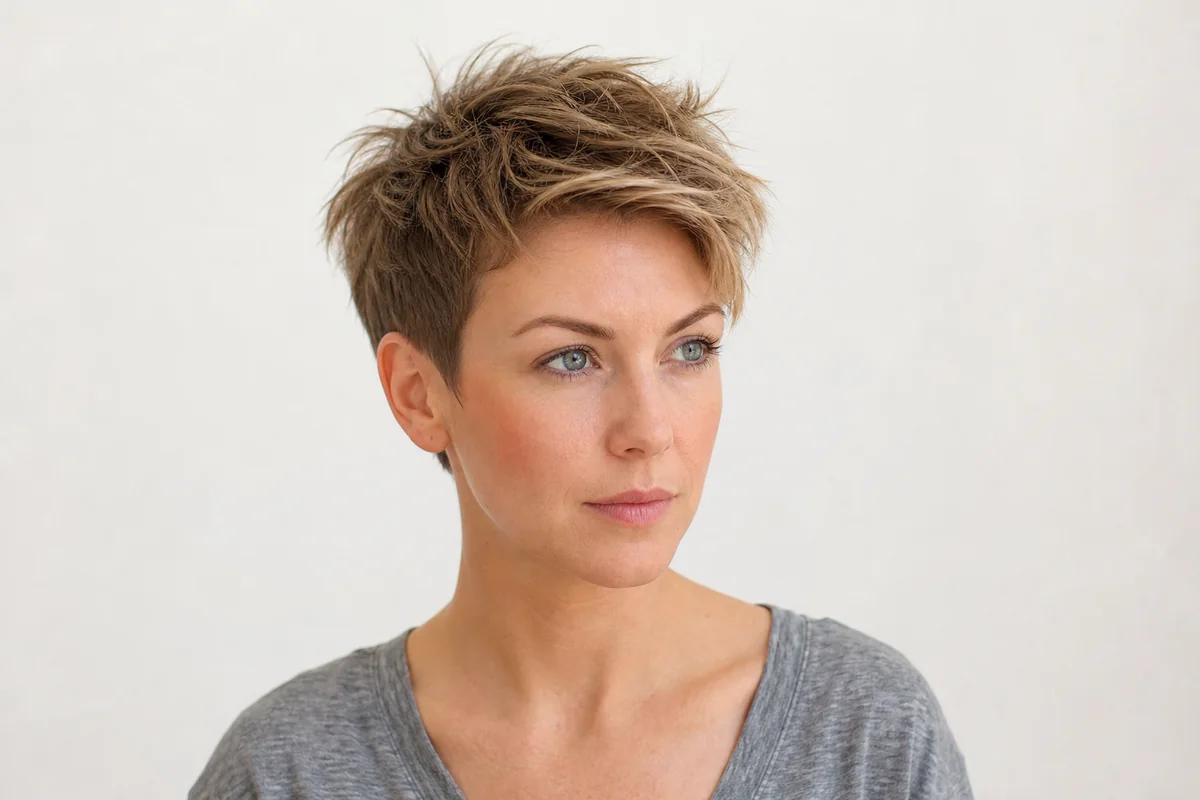
- Length
- 2.5 in on top, 1 in at the sides
- Texture
- Straight to wavy
- Density
- Medium to thick
- Face shapes
- Oval, square, long, diamond
- Daily effort
- 3-5 minutes
- Trim every
- 5-6 weeks
Messy is still a precise cut: point cutting snips into the ends vertically, and a pea of matte paste or clay on dry hair separates them. It also hides an extra week or two between trims best, since overgrown just reads as more texture.
Ask for: "A textured pixie, 2.5 inches on top, point cut so the ends separate, with enough length to push around with paste."
14. Shaggy Pixie with Crown Layers and Wispy Edges
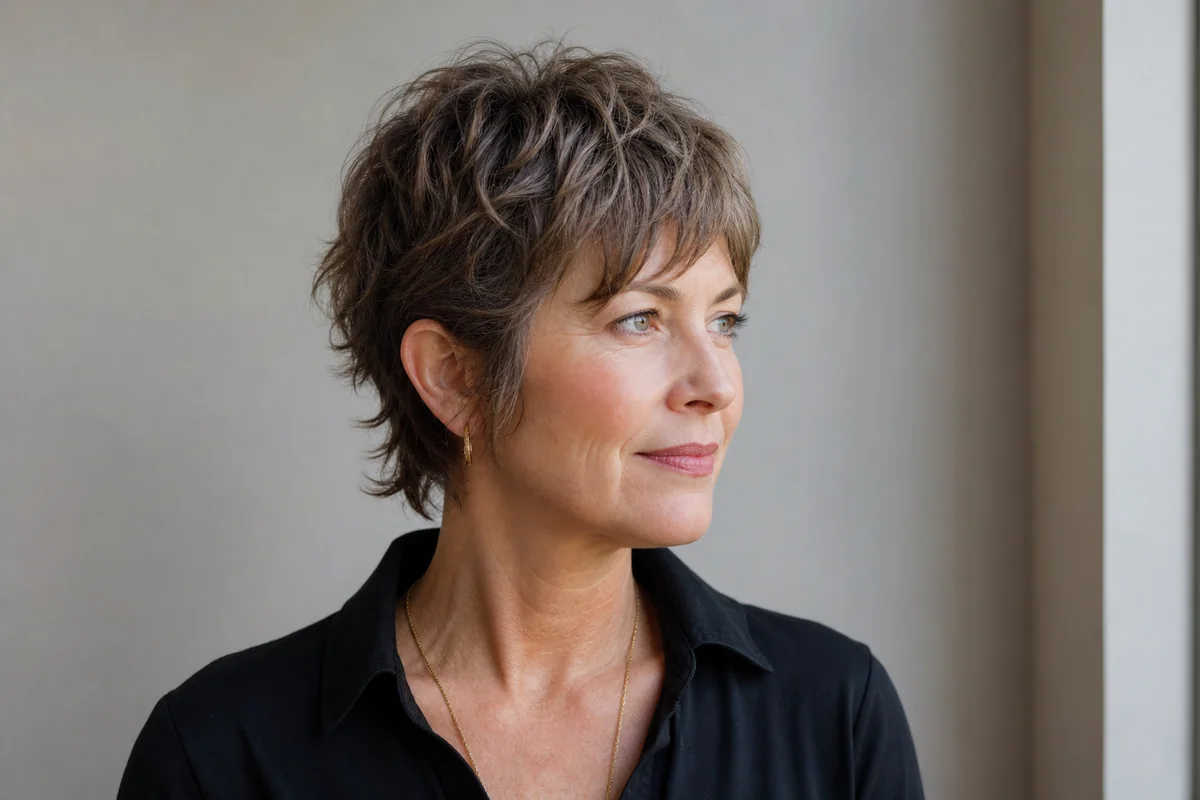
- Length
- 2 in at the crown, 3 in at the fringe, wispy 1.5 in nape
- Texture
- Wavy to loosely curly
- Density
- Fine to medium
- Face shapes
- Round, oval, heart, long
- Daily effort
- 5 minutes
- Trim every
- 5-7 weeks
Crown layers add height without a blow-dry, and wispy edges blur the outline so growth shows later than on a clean taper. Scrunch a little mousse into damp waves and leave it alone.
Ask for: "A shaggy pixie with short crown layers, a wispy 3-inch fringe and broken-up edges at the ears and nape, checked dry."
Long Pixies
A long pixie keeps 4-6 inches on top while the nape and sides stay short, which makes it the safest first pixie and the natural halfway point of a grow-out. Long-front and long-fringe variations have a full gallery in our long pixie cut guide.
15. Long Pixie with a Curtain Fringe

- Length
- 5 in at the fringe, 1.5 in at the nape
- Texture
- Straight to wavy
- Density
- Medium to thick
- Face shapes
- Long, heart, square, oval
- Daily effort
- 8-10 minutes
- Trim every
- 5-6 weeks, fringe at 3-5
A curtain fringe covers the top corners of the forehead, softening long and heart-shaped faces. Air-dried it hangs straight and splits, so it needs a quick round-brush pass to curve away from the face.
Ask for: "A long pixie, 5 inches on top, with a center-parted curtain fringe to my cheekbones and a short tapered nape."
16. Long Pixie with a Swept Front for Round Faces
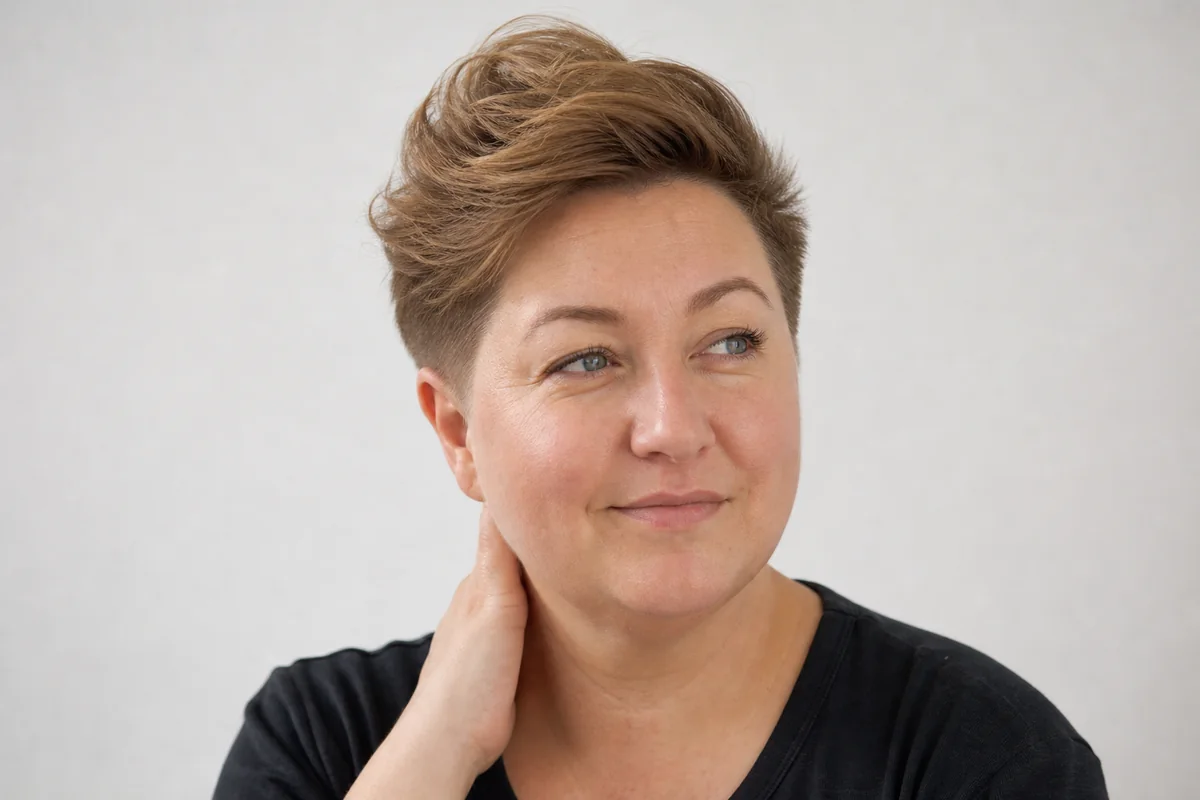
- Length
- 5 in at the front, 2.5 in at the crown, short sides
- Texture
- Straight
- Density
- Fine to medium
- Face shapes
- Round, square
- Daily effort
- 8-10 minutes
- Trim every
- 5-6 weeks
Readers who never use a blow-dryer should skip this one. Fine straight hair needs a minute of root lift with mousse to hold the swept front, and the payoff is a round face visually lengthened by height above and closeness at the sides.
Ask for: "A long pixie with a 5-inch front cut to sweep up and right. Height at the crown, sides close, no width at my cheeks."
Curly and Coily Pixies
Curly and coily pixies are cut longer than they will look and shaped dry, because curls shrink. A curl that measures 4 inches stretched may sit at 2 once dry. Shrinkage rules for short cuts are covered in our short curly hair guide, and coily and natural cuts get their own page on pixie cuts for Black women.
17. Curly Pixie with Length on Top
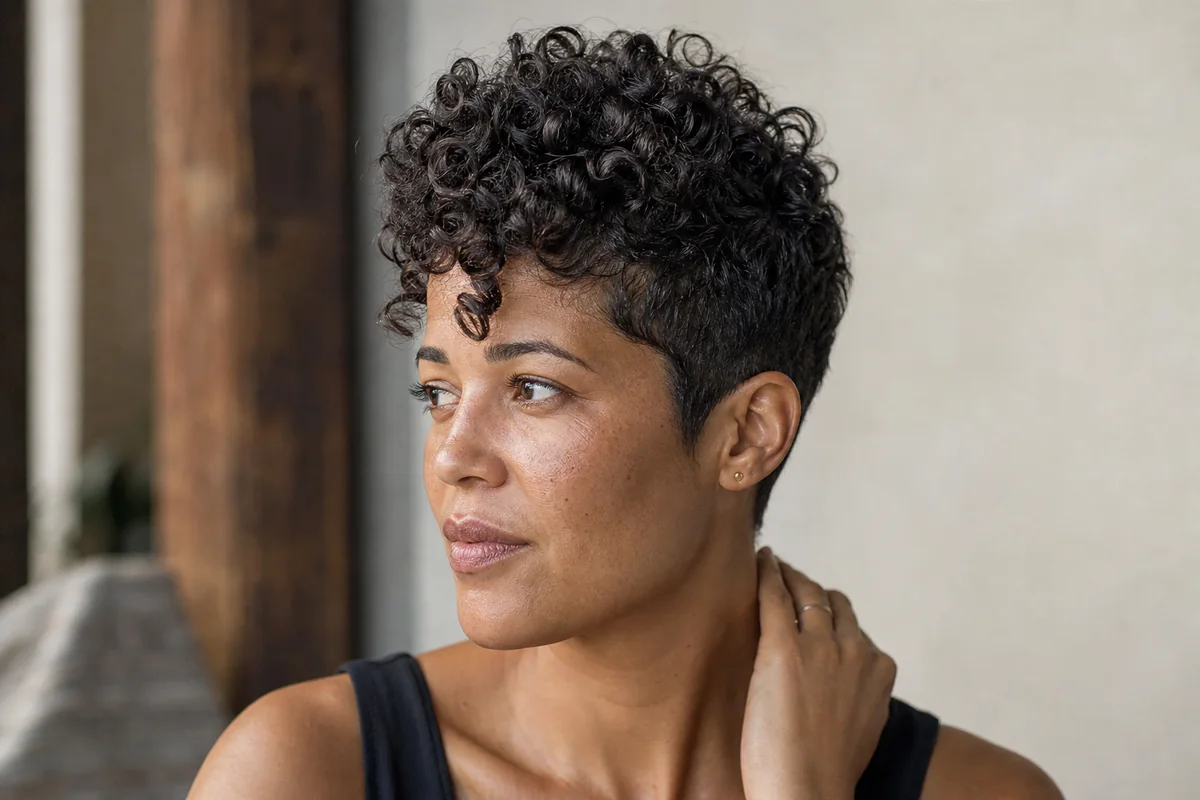
- Length
- 4 in on top stretched (about 2.5 in dry), tapered sides
- Texture
- Curly, 3A-3C
- Density
- Medium to thick
- Face shapes
- Oval, long, heart, square
- Daily effort
- 5 minutes, wash-and-go
- Trim every
- 6-8 weeks
Shaped curl by curl, with tapered sides so volume sits on top instead of over the ears. Leave-in plus gel or curl cream on soaking-wet hair, then a low diffuser, gives the definition; overgrown curls simply look fuller, so trims can stretch longer than on a straight pixie.
Ask for: "A curly pixie cut dry, curl by curl: 4 inches on top stretched, about 2.5 dry, with close tapered sides and nape."
18. Tapered Coily Pixie with a Defined Top
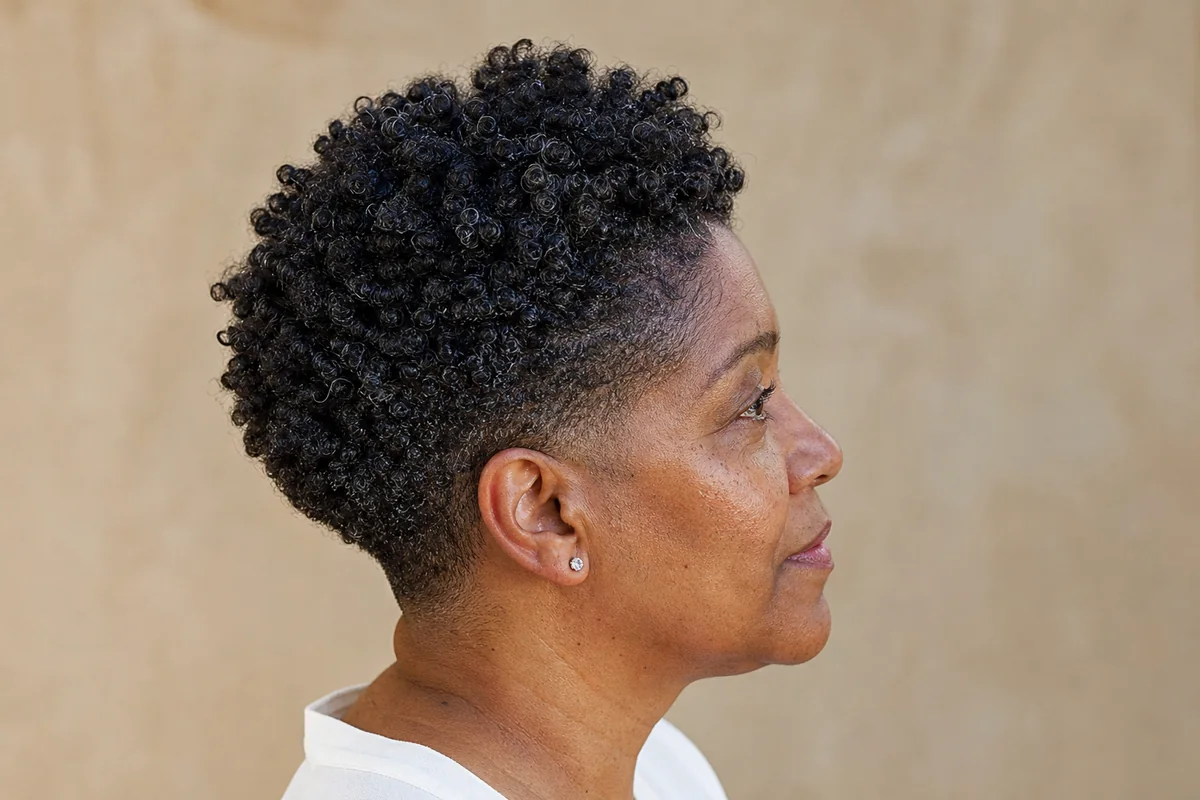
- Length
- 2 in on top (shrunken), tapered to #1-#2 at the nape
- Texture
- Coily, 4A-4C
- Density
- Medium to thick
- Face shapes
- Oval, round, heart, diamond
- Daily effort
- 5 minutes, plus a weekly wash day
- Trim every
- 3-5 weeks for the taper
Twice the top length of look 3, enough for finger coils or a twist-out while the taper keeps the shape compact. Coily hair is usually cut dry in its natural state, so choose a stylist who cuts coily textures every week.
Ask for: "A tapered cut with 2 inches of coils on top, shaped dry. Taper the sides and nape from a #2 to a #1 at the neckline."
Bixie and Pixie Bob
A bixie keeps a pixie's short nape while the top and sides grow toward bob length, usually covering the ears. It needs a trim every 5-7 weeks and is often where a pixie lands a few months into a grow-out; our bixie haircut guide has the full gallery.
19. Bixie with a Tapered Nape
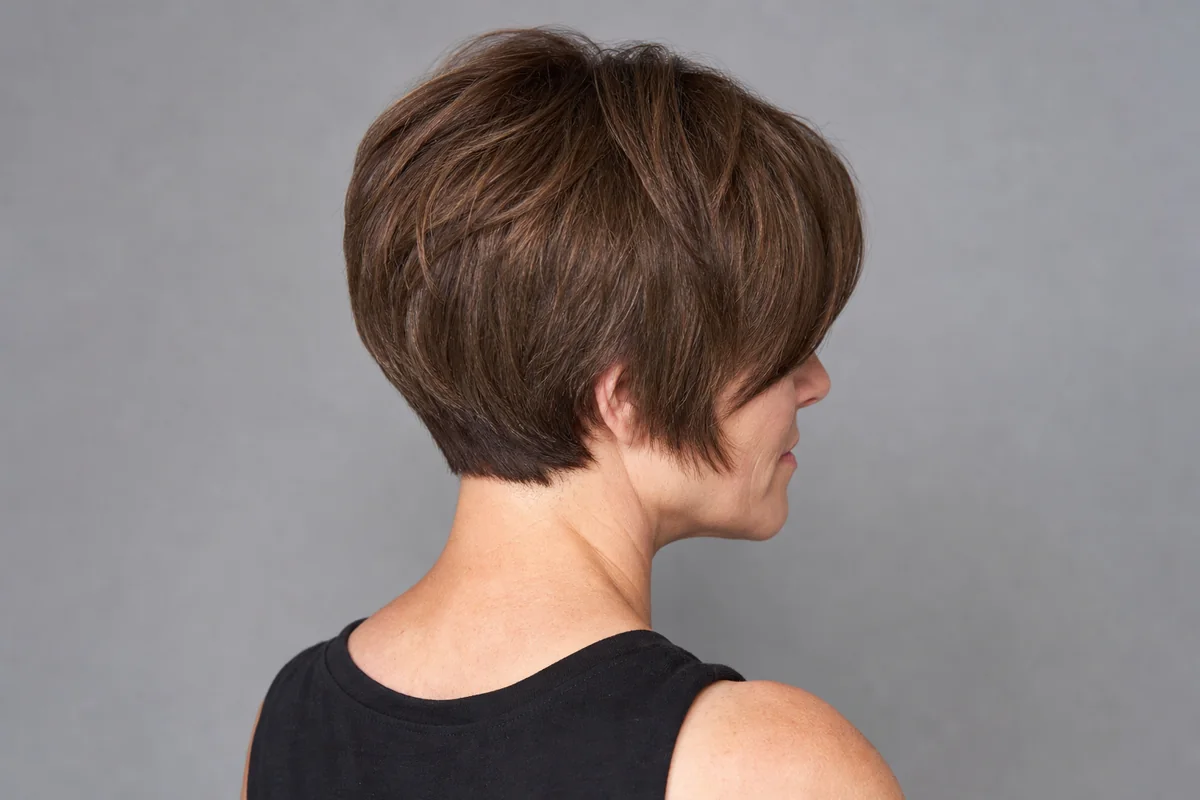
- Length
- 4-5 in on top, sides over the ears, 1.5 in at the nape
- Texture
- Straight to wavy
- Density
- Fine to medium
- Face shapes
- Oval, heart, square, long
- Daily effort
- 5-10 minutes
- Trim every
- 5-7 weeks
Anyone who feels exposed with the ears out tends to find a bixie easier to wear. It differs from a short bob at the back, where it still tapers to a pixie nape instead of ending in a weight line.
Ask for: "A bixie: layered so the ears are covered, cheekbone length at the front, and a short tapered pixie nape."
20. Wavy Pixie Bob with a Jaw-Length Front

- Length
- Jaw-length front, 2 in at the crown, short nape
- Texture
- Wavy, 2A-2B
- Density
- Fine
- Face shapes
- Round, square, oval
- Daily effort
- 5-10 minutes
- Trim every
- 6-7 weeks
A jaw-length front gives fine waves enough weight to bend while the short back keeps the crown light. Salt-and-pepper fronts often frizz, so 1-2 drops of light oil on the ends beat a holding product, and the front is already halfway to a bob.
Ask for: "A pixie bob: front to my jaw, back layered short with a close nape, ends point cut so the wave forms, checked dry."
Nape Options: Tapered, Clippered or Undercut
The nape sets a pixie's maintenance more than top length or fringe does. Most pixies look overgrown at the nape and around the ears first, often by week 4-6, and each of the three ways to finish the back grows out differently.
- Tapered with scissors: cut shorter toward the hairline with scissor-over-comb, no hard line. Soft, works on every texture and grows out gradually; the default for a first pixie.
- Clippered with a guard: usually a #2 (1/4 inch) or #3 (3/8 inch) blended upward, outline cleaned with a trimmer. The sharpest finish, and the line blurs within weeks.
- Undercut: a section under the top layer is clippered short and covered by longer hair. Takes bulk out of thick hair, but grows into a fuzzy shelf if not cleaned up.
Short hair shows growth out of proportion to its length. Hair grows about half an inch a month on average, though the rate varies by person, sex and scalp area, as a study of more than 2,000 adults from 24 ethnic groups found. That half inch barely changes a 3-inch top and triples a quarter-inch nape:
| Zone of the cut | Right after the cut | About 4 weeks later | Visible change |
|---|---|---|---|
| Clippered nape (#2) | 1/4 in | About 3/4 in | Triple the length; the line is gone |
| Scissor-tapered nape | About 3/4 in | About 1 1/4 in | Softens rather than blurs |
| Around the ears | About 1 in | About 1 1/2 in | Half again as long; touches the ear |
| Top | 3 in | About 3 1/2 in | About 17% longer; barely noticed |
| Nape | Cleanup every | How it grows out | Best for |
|---|---|---|---|
| Scissor-tapered | 4-6 weeks (with the full trim) | Gradually; easiest to grow | First pixies, fine hair, grow-out plans, all textures |
| Clippered (#2-#3) | 2-4 weeks | Fuzzy at the neckline within weeks | Very short crops, coily tapers |
| Undercut | 2-4 weeks | A short shelf under the top layer | Thick and coarse hair with a long top |
A cleanup is a short appointment between full cuts that tidies the nape, the outline around the ears and any clippered section while leaving the top alone. Many salons book it as a neck or fringe trim of 15-20 minutes. With a clippered nape, plan on one or two cleanups between full cuts.
Salon note: A whorl at the nape decides which finish works. Hair that grows sideways or upward at the neckline won't lie flat in a soft one-inch taper; it needs either clippers short enough to sit on the skin or enough length for the weight to hold it down. Have the nape looked at dry before choosing.
Pixie Cut Fit by Texture and Density
Every texture can wear a pixie cut; what changes is top length and how weight is handled. Hair shape is programmed by the curvature of the follicle, so a cut can't change texture, only how it sits.
| Texture | Fine or low density | Thick or high density | Cut wet or dry |
|---|---|---|---|
| Straight | Stacked or classic, 2-3 in on top, little thinning (looks 2, 6, 16) | Layered with internal weight removal, or undercut (looks 7, 10) | Wet, fringe checked dry |
| Wavy (2A-2C) | Pixie bob or shaggy pixie, 3 in or more on top (looks 14, 20) | Wavy pixie or mixie, point cut (looks 9, 12) | Either; check dry |
| Curly (3A-3C) | Curly pixie with slightly longer sides for coverage | Tapered sides, 4 in stretched on top (look 17) | Dry, curl by curl |
| Coily (4A-4C) | Short tapered crop that keeps the top dense (look 3) | Tapered pixie, 2 in of coils on top (look 18) | Dry, natural state |
A shorter pixie often looks thicker on fine hair than a longer one. At 2 inches fine strands stand up and overlap; at 4 inches they lie flat and part, and the scalp shows. Cowlicks need the same respect: about 8.4% of people in a genetics study of scalp whorl direction had a counterclockwise crown whorl rather than the usual clockwise one, and the direction sets where the crown wants to fall. Part and sweep the pixie with it, not against it.
Salon note: On fine hair, texture belongs at the very ends only. Texturizing shears through the mid-lengths remove the hair holding the shape up; fine pixies that look stringy by week three have usually been thinned.
Choosing a Pixie for Your Face Shape
At pixie length the fringe and side length do the face-shape work, since nothing falls below the jaw to frame the face. The question is where to keep a little length and where to take it off.
| Face shape | Pixie detail that helps | Usually skip |
|---|---|---|
| Oval | Any fringe or top length | Nothing in particular |
| Round | Crown height, long diagonal fringe, close sides | Full rounded fringe, width at the cheeks |
| Square | Wispy fringe and sideburns, textured ends | Blunt straight fringe, hard clipper lines at the temples |
| Long | A fringe and a little width above the ears | A tall, lifted crown |
| Heart | Longer side or curtain fringe, some fullness at the nape | Height and volume at the temples |
| Diamond | Fringe for forehead width, soft pieces at the cheekbones | Very short sides that expose the full cheekbone width |
What to Ask for at Your Pixie Appointment
Name four things at a pixie appointment: top length, fringe, sides and nape, in inches or landmarks. Bring two or three photos of the cut on hair like yours, and one of what you don't want.
- Top length. In dry inches. Curly and coily hair: give the dry length and ask what that means stretched.
- Fringe. A landmark (mid-forehead, brow, cheekbone), checked dry.
- Sides. Ears out, half covered or covered: the choice that separates a pixie from a bixie.
- Nape. Scissor-tapered, clippered with a guard number, or undercut. Mention any plan to grow it out.
- Cowlicks. Point them out before the cut starts.
Ask for: "A tapered pixie with 3 inches on top, a side fringe to my cheekbone, ears out and a soft scissor taper at the nape. I have a cowlick at the left crown, so leave enough length there for it to lie down. I may grow it out next year."
Watch out: A first pixie is hard to judge in the mirror, especially after years of long hair. Ask for the top a little longer than you think you want; another half inch comes off easily next visit, and growing it back takes a month.
Styling a Pixie Day to Day
Most pixies dry in minutes but need styling every morning, because bedhead shows when there is no length to hide it. Straight and wavy pixies take 5-10 minutes; curly and coily wash-and-go pixies can take under 5. Our guide to styling short hair covers products and tools in full.
- Reset with water. Dampen the top on non-wash days; curly and coily hair may need fully rewetting to re-form.
- Lift fine roots. A little mousse or root spray at the crown, blow-dried against the direction it falls.
- Dry with the cut. Fingers, or a 1-1.5 inch round brush for a swept fringe; diffuse curls on low.
- Finish with one product. A pea of matte paste or clay for texture, a cream for soft control, or 1-2 drops of oil on coarse or gray ends, worked in from the back.
Tip: Short roots look greasy sooner because there is less length to spread oil along. A short blast of dry shampoo at the crown refreshes it and adds lift on fine hair.
Pixie Maintenance, Cleanups and Grow-Out
Plan on a full trim every 4-6 weeks to keep the shape; clippered and undercut napes add a cleanup every 2-4 weeks, and fringes need attention every 3-5. Curly and coily pixies are the exception, often going 6-8 weeks between full cuts, with only a clippered taper needing earlier attention.
Growing a pixie to a chin-length bob usually takes 8-12 months, with the awkward stages around months 3-5, when the nape turns mullet-like and the sides puff over the ears. Keep trimming the back and sides while the top catches up; the month-by-month plan is in our guide to growing out a pixie cut.
Salon note: If the pixie might be grown out within a year, start with a scissor-tapered nape. Clippered napes and undercuts both pass through a stubbly, fuzzy stage on the way out that a scissor taper never does.
When a Pixie Is Not the Right Choice
A pixie is slow to undo: at about half an inch a month, most people need the better part of a year to get back to a bob. In these situations another short cut usually serves better.
- You need to tie your hair back. Nothing on a pixie reaches a ponytail; a chin bob or lob can be pinned or tied.
- You can't get to the salon every 4-6 weeks. The nape and ears lose shape first. A shaggy bixie or textured bob grows out more gracefully.
- Your hair is very thick and straight, and your stylist won't remove internal weight. The cut sits out over the ears like a helmet. Find a stylist who will, or choose a longer textured cut.
- Your hair is curly or coily and the cut would be done wet to a straight-hair length. Shrinkage takes it far shorter than planned. Book a stylist who cuts curls dry.
- You never want to style it. Most straight pixies need a few minutes every morning; a wash-and-go curly crop or a blunt bob needs less.
- You're unsure about showing your ears and neck. Start with a long pixie or a bixie; going shorter from there is easy, growing back is not.
The best pixie cut starts at the nape: choose the finish that fits how often you will sit in the salon chair, then set the top length and fringe for your texture and face. Save a look from this gallery on hair like yours, read its script from your phone, and ask for the top half an inch longer than you think you want.