
Short version: Short curly hair works best when it is cut dry or checked dry, curl by curl, and left longer than the finished length, because curls shrink as they dry. Looser curls (2C-3B) suit pixies, bobs and layered shags; tighter curls and coils (3C-4C) suit tapered crops, rounded shapes and TWAs. Expect a trim every 6-8 weeks, and a wash-and-go routine of 5 minutes once the shape is right.
What Changes When Curly Hair Goes Short
Curls are cut to a shape, not to a length, and the shape only shows once the hair has dried and sprung back. Straight hair hangs where the scissors left it; curly hair lifts, spreads and shortens, so the same cut can sit at the chin on Monday and at the jaw after a wash. Of all the short haircuts for women, curly hair is where the stylist's method matters more than the style's name.
Curl shape comes from the follicle. Laboratory work on scalp follicles found that curly follicles are curved and that the curve is kept in the hair they grow, which is why a pattern can be styled and shaped but not cut away. A short cut works with that curve: the spring becomes volume, and the cut decides where that volume sits.
Three things shape every decision below: how tight the curl is, how much hair there is, and how much shrinkage the head has. The numbers (2C to 4C) are a shorthand, and most heads carry two or three patterns at once, tighter at the nape and crown and looser at the front. A stylist cutting short curls should read each section as it is.
Short Curly Haircuts by Curl Pattern, 2C to 4C
The curl pattern decides the cut method, the best shapes and the trim schedule more than the haircut's name does. The table groups the patterns into the four readers who need different advice; where a row says "wet" or "dry", that is the method most stylists favor for that pattern, and a skilled stylist may differ.
| Pattern | Typical shrinkage | Cut method | Shapes that work | Watch for | Trim every |
|---|---|---|---|---|---|
| 2C-3A (loose waves to loose spirals) | About 1-2 in | Wet or dry-checked | Pixie, bixie, jaw bob, lob, soft shag | Layers that are too short, which frizz instead of curl | 6-8 weeks |
| 3B (springy ringlets) | About 2 in | Dry, curl by curl | Rounded bob, curly pixie, shag | A triangle outline if the hem is left heavy | 6-10 weeks |
| 3C (tight corkscrews) | About 2-3 in | Dry | Tapered crop, rounded bob, short layered cut | Width at the sides of a bob; bangs that vanish | 6-8 weeks |
| 4A (defined coils) | About 3 in | Dry, shaped in natural state | Tapered crop, TWA, coily bob | A taper that grows out as a fuzzy halo | 3-6 weeks for tapers |
| 4B-4C (zigzag, tightly packed coils) | 3 in or more | Dry, shaped in natural state | TWA, tapered crop, sculpted short afro | Cuts planned from stretched length | 3-6 weeks for tapers, 8-10 for a rounded top |
These figures are typical ranges from professional practice, not measurements; porosity, hydration and the stylist's own tension change them. A reader with 3A curls and 4B at the nape should ask for the nape to be handled as 4B.
Salon note: Shrinkage is a share of length, so it costs more inches on a bob than on a crop. A 1-inch crop can lose a quarter inch; a chin-length bob can lose an inch or more. That is why bobs on 3C and 4A hair are planned from the dry length backward, not from the wet length forward.
Shrinkage and the Stretched-Length Rule
Curly and coily hair is cut longer than the result you want, by the amount it will shrink. Stretched wet, a 3B curl can measure 5 inches and settle at 3 inches dry. The practical rule for any short cut on curls is to give the stylist two lengths: the length you want when dry, and a landmark that shows how far the hair jumps up, such as "it sits at my chin wet and at my cheekbone dry".
| Dry length you want | Wet or stretched length (3B) | Wet or stretched length (4B-4C) |
|---|---|---|
| 1 in crop | About 1.5 in | About 2-3 in |
| 2 in top | About 3-4 in | About 4-6 in |
| Chin-length bob | Collarbone | Often past the collarbone; plan from the dry shape |
These are planning ranges for talking with a stylist, and they are why the "Ask for" lines below give both numbers. Straight and wavy readers can skip this step; for waves (2A-2C) the allowance is closer to an inch, covered in the earlier pages on each style.
Cutting Curly Hair Wet or Dry
A dry cut shows the shape the hair will actually wear, and a wet cut hides it. Stylists do disagree, and the honest answer depends on curl tightness and on the stylist. For 3C-4C hair, almost every curl specialist works dry or in the natural state, because a wet cut can leave hair much shorter than expected. For 2C-3B, many stylists cut wet and then check dry, which gives cleaner lines.
Dry Cutting Suits Tight Curls and Very Short Shapes
A dry cut lets the stylist see each curl fall into place, so the outline can be rounded, tapered or sculpted on the head as it will be worn. It matters most on pixies and TWAs, where one curl cut too short stands out. Look for blunt-cut ends on short curls; razoring and heavy thinning often fray the ends and produce frizz instead of definition.
Wet Cutting Can Work on Looser Curls
On 2C-3A hair that looks nearly straight when wet, a wet cut is more precise at the perimeter, if the stylist builds in the shrinkage and checks again once the hair is dry. The mistake to avoid is a wet cut at straight-hair length on 3B and tighter hair.
Salon note: Whichever method is used, the finish should be a dry check with the curls in their natural state: one pass to detail the shape after the hair has been styled and dried the way it will be worn. Ask the stylist to say before cutting whether they cut wet, dry or both, and to explain the plan.
Curly Pixies and Crops
A curly pixie keeps the sides and nape close and lets the curls build volume on top. Because curls stack on themselves, the top can be shorter than on a straight pixie and still look full. These five pixies sit in different places on the curl range; the curly and coily pixies in the pixie gallery cover two more, and the nape options in that guide apply here too.
1. Curly Pixie with a Rounded Top
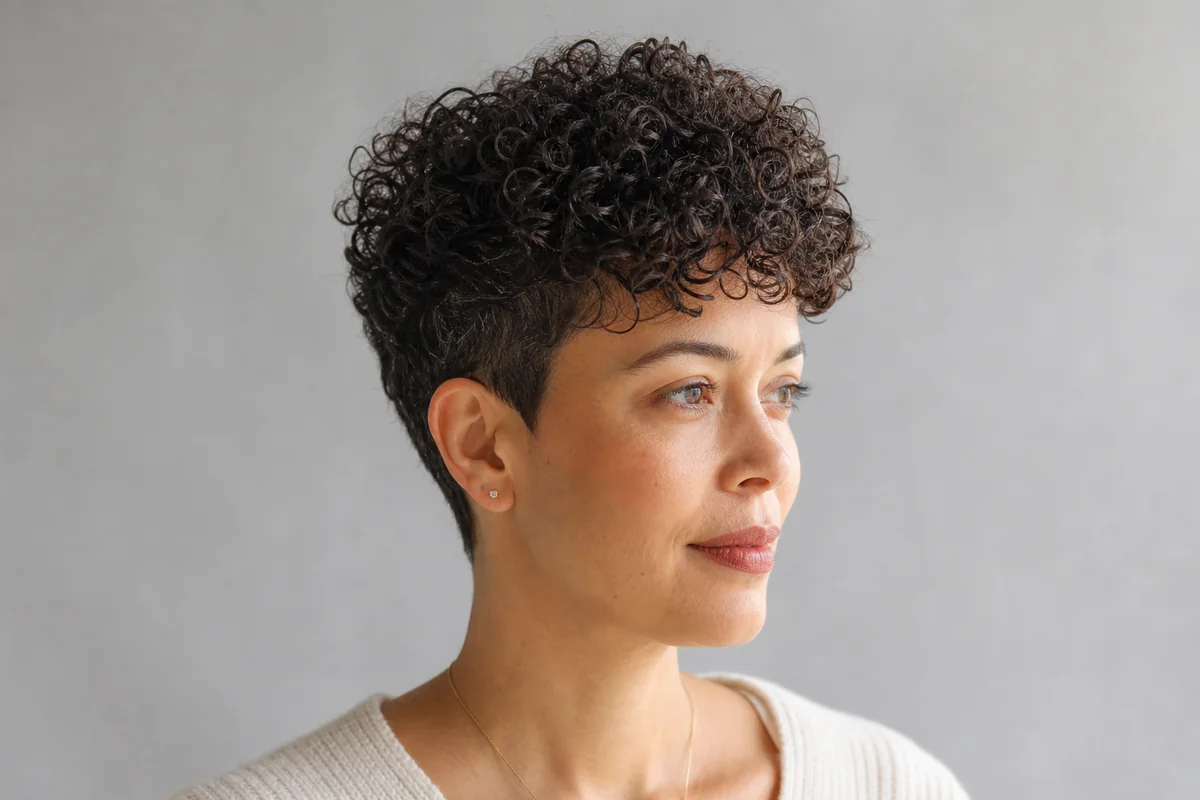
- Length
- 2.5 in on top dry, tapered sides and nape
- Texture
- Curly, 3A-3B
- Density
- Medium
- Face shapes
- Oval, heart, long
- Daily effort
- 5 minutes
- Trim every
- 6-8 weeks
The dome comes from cutting the top in a rounded curve, so each curl finishes at a similar height. The sides stay tight enough that volume stays on top, which makes the face look longer and the cheekbones clearer.
Ask for: "A curly pixie cut dry, curl by curl. Round the top to about 2.5 inches dry, and taper the sides and nape close."
2. Curly Pixie with a Long Curl Fringe
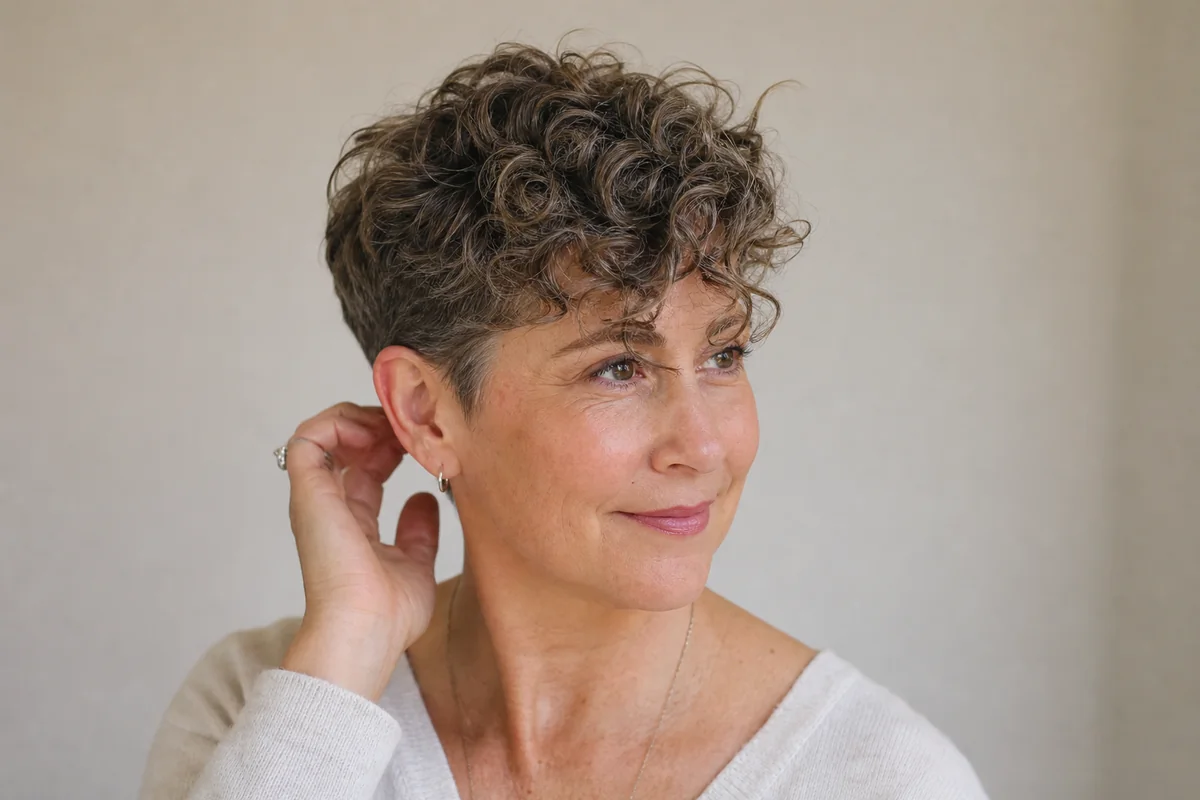
- Length
- 2 in on top, fringe 4 in stretched
- Texture
- Loose curly, 2C-3A
- Density
- Medium
- Face shapes
- Round, square, heart
- Daily effort
- 5-7 minutes
- Trim every
- 5-6 weeks for the fringe
A fringe on curls springs up by an inch or more once dry, so the length is judged dry and cut longer than it will look. The soft, curved fringe breaks the width of a round face without the hard line of a straight-cut bang.
Ask for: "A fringe that reaches my eyebrow when dry. Cut it long and check it dry, since curls lift."
3. Tapered Curly Crop on 3C Corkscrews
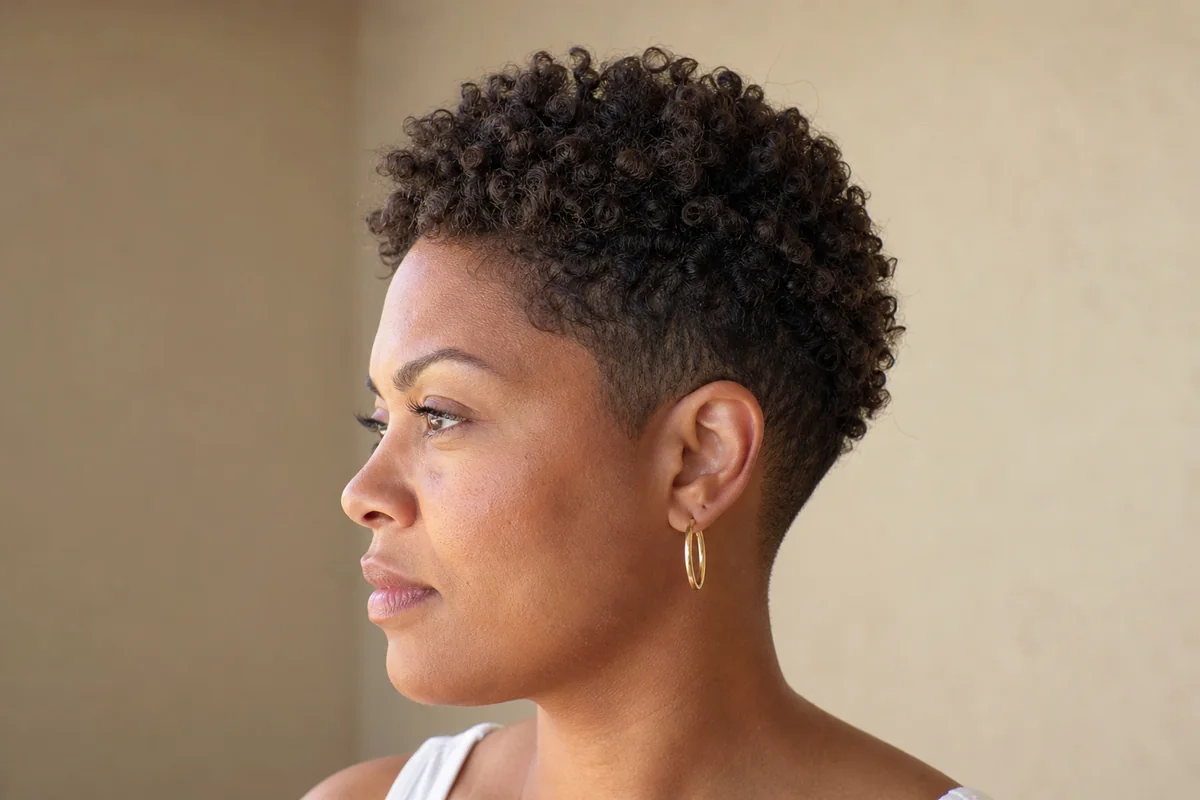
- Length
- 2 in on top, sides tapered to #2 at the nape
- Texture
- Curly, 3C
- Density
- Thick
- Face shapes
- Oval, round, diamond
- Daily effort
- 5 minutes
- Trim every
- 4-6 weeks
Thick corkscrews keep their own shape, so the cut only has to control the sides. A taper does that, and it opens the neck without removing any of the volume on top.
Ask for: "Shape the top dry at about 2 inches. Taper the sides and nape from a #3 down to a #2 at the neckline."
4. Soft Crop on 2C Wavy-Curly Hair

- Length
- 2-2.5 in on top, soft taper
- Texture
- Wavy-curly, 2C
- Density
- Fine to medium
- Face shapes
- Oval, heart, long
- Daily effort
- 5 minutes
- Trim every
- 5-7 weeks
Gray curls are often drier and wirier than the hair they replace, so a short crop that is trimmed often keeps the ends fresh. On fine hair, leave the top slightly longer, since 2C hair needs a little length before the wave shows.
Ask for: "A short crop with the top 2 to 2.5 inches, left long enough for the wave to show. Scissor-taper the nape."
5. Curly Pixie with a Soft Undercut
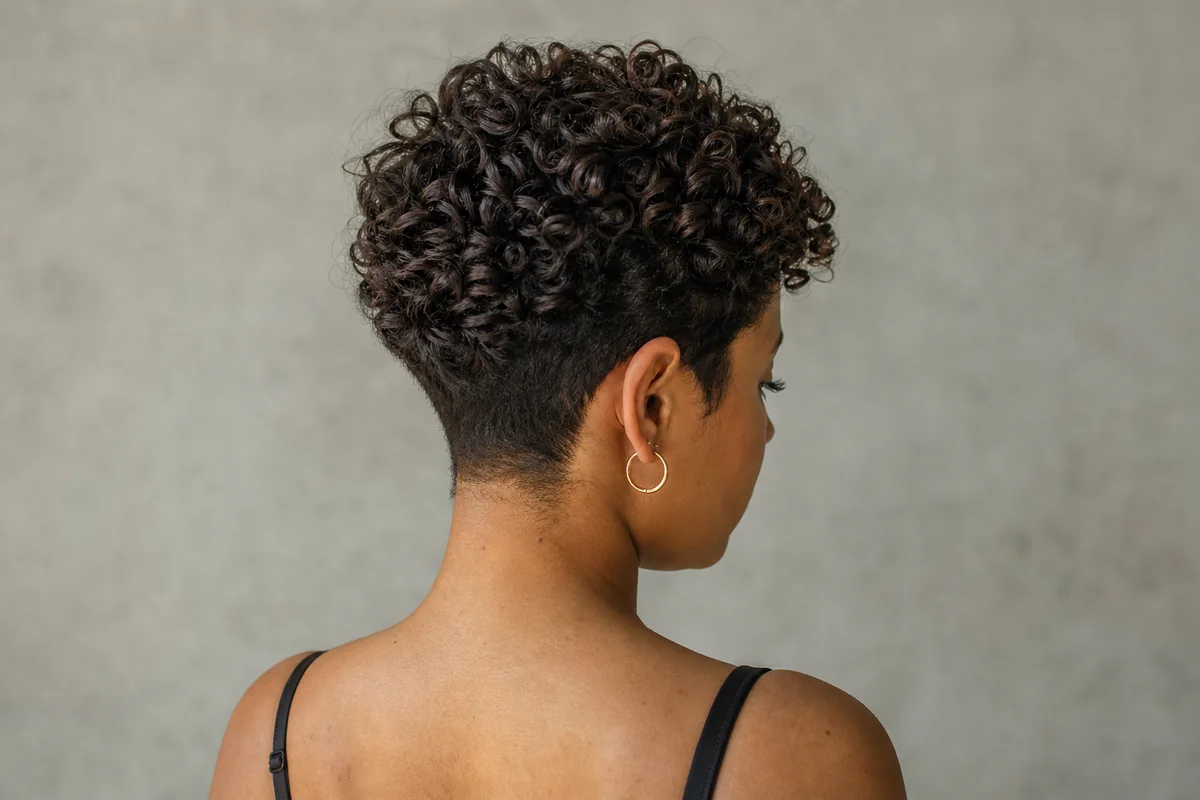
- Length
- 3 in on top, sides at #2-#3
- Texture
- Curly, 3B-3C
- Density
- Thick
- Face shapes
- Oval, square, round
- Daily effort
- 5 minutes
- Trim every
- 3-4 weeks for the undercut
The weight of thick curls is what makes a curly pixie look wide. Taking out the sides gives contrast: a clean outline below and all the volume above, the reverse of the helmet shape.
Ask for: "Clipper the sides and nape with a #3 and keep 3 inches of curls on top. Cut the top dry so the curls keep their spring."
Curly Bobs and Lobs
On curls, a bob is judged by the width of its hem, not by its length. A one-length curly bob forms a triangle, wide at the bottom and flat on top, and the cure is shaping the outline dry so the volume sits higher. The curly and coily bobs in the bob gallery show more of the cut; these six vary the length and the outline.
6. Jaw-Length Curly Bob with a Side Part

- Length
- Jaw when dry, about 3 in longer stretched
- Texture
- Curly, 3A
- Density
- Medium
- Face shapes
- Oval, heart, square
- Daily effort
- 5-8 minutes
- Trim every
- 8-10 weeks
A deep side part moves the weight to one side and lifts the crown, which keeps loose spirals from lying flat at the roots. Because 3A hair shrinks less than tighter curls, it is the easiest pattern to take to the jaw.
Ask for: "A bob that ends at my jaw when dry, about 3 inches longer wet. Cut my part first, then layer the crown for lift."
7. Inverted Curly Bob
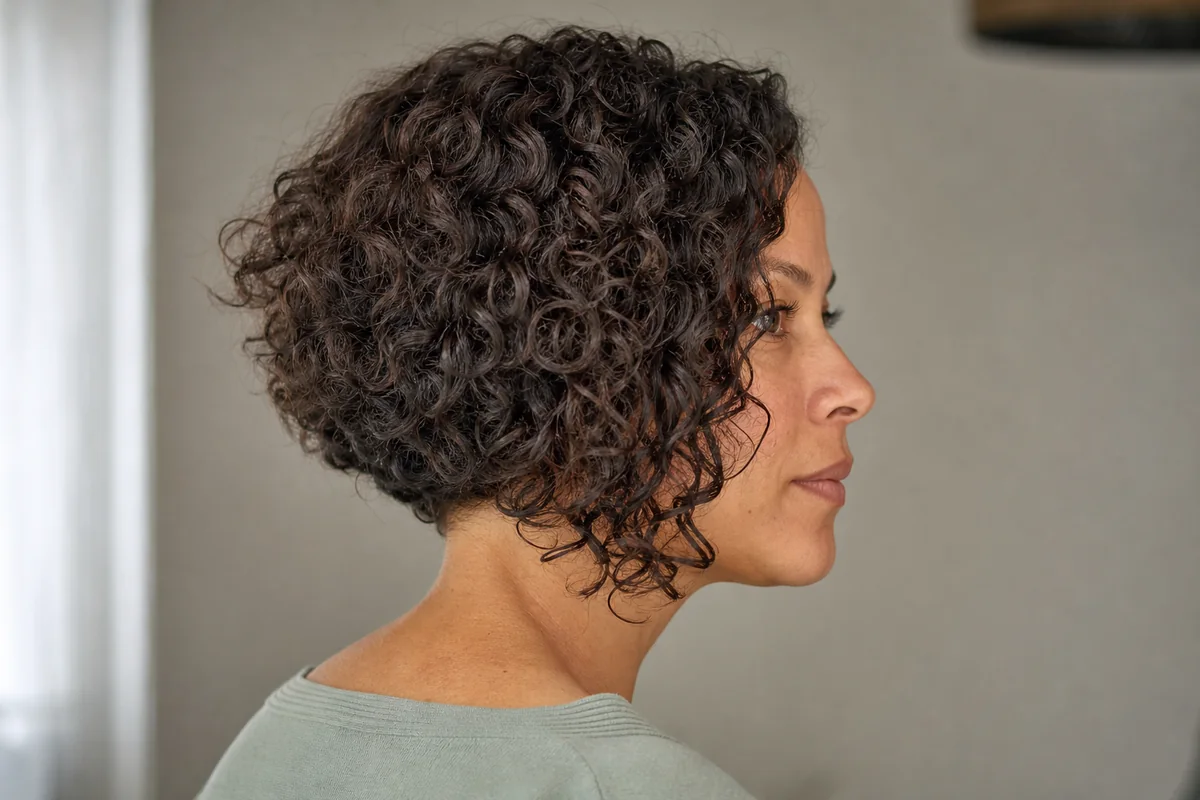
- Length
- Back at the nape, front at the chin dry
- Texture
- Curly, 3B
- Density
- Medium to thick
- Face shapes
- Round, oval, square
- Daily effort
- 5-8 minutes
- Trim every
- 6-8 weeks
Stacked curls at the back lift off the neck while the front lengths frame the face. The shape holds as it grows, because the longer front gains weight in the same place.
Ask for: "An inverted bob cut dry: short and stacked at the nape, chin length at the front when dry."
8. Asymmetrical Curly Bob

- Length
- Jaw on one side, chin on the other (dry)
- Texture
- Curly, 3C
- Density
- Thick
- Face shapes
- Oval, long, diamond
- Daily effort
- 5-8 minutes
- Trim every
- 6-8 weeks
The uneven hem works on corkscrews because the curl hides small differences and shows the planned ones. It is also a way to keep length on the side where hair grows fuller.
Ask for: "Cut each side dry to its own length, jaw on the left and chin on the right, and round the outline."
9. Curly Bob with a Tapered Nape
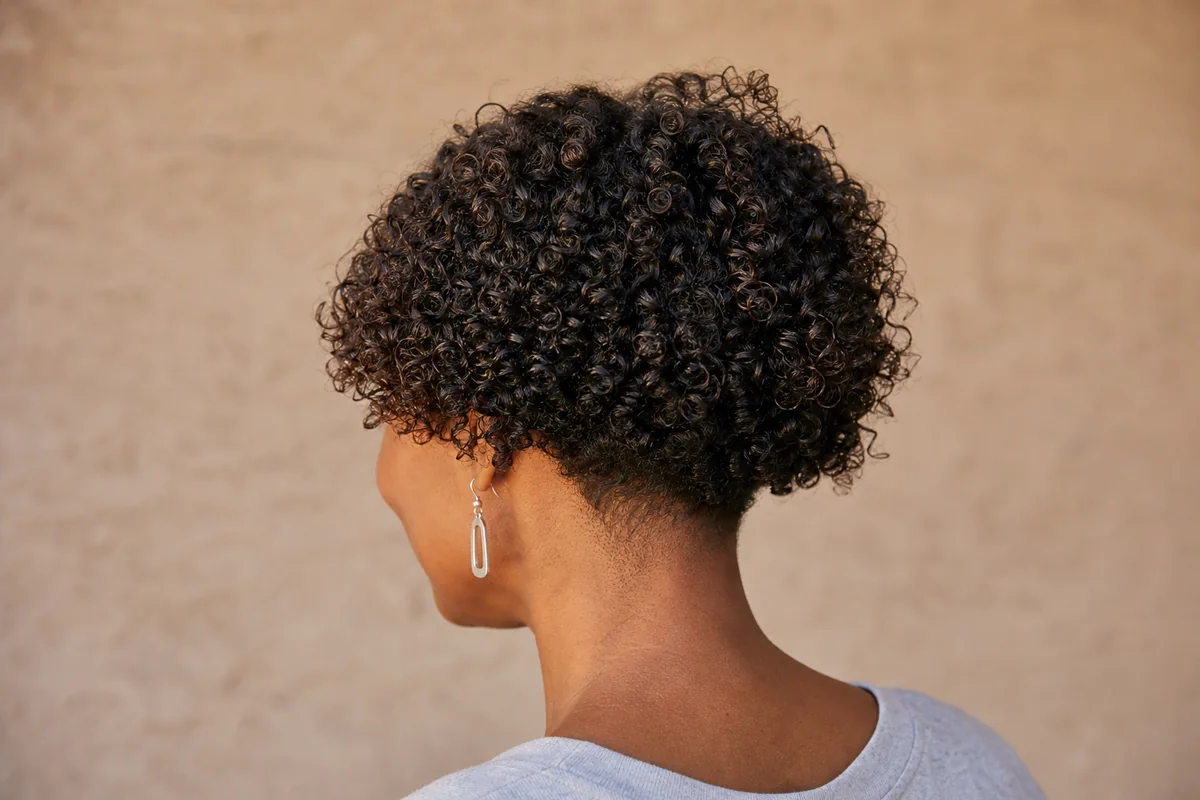
- Length
- Jaw dry, nape tapered to #3
- Texture
- Curly to coily, 3C-4A
- Density
- Thick
- Face shapes
- Oval, heart, long
- Daily effort
- 5-10 minutes
- Trim every
- 6 weeks
Thick coils at the back of a bob push outward. Tapering the nape removes that bulk without touching the length above, and the bob keeps its rounded shape.
Ask for: "A rounded bob at the jaw when dry, with the nape tapered to a #3 so it sits flat against the neck."
10. Curly Lob with Long Layers
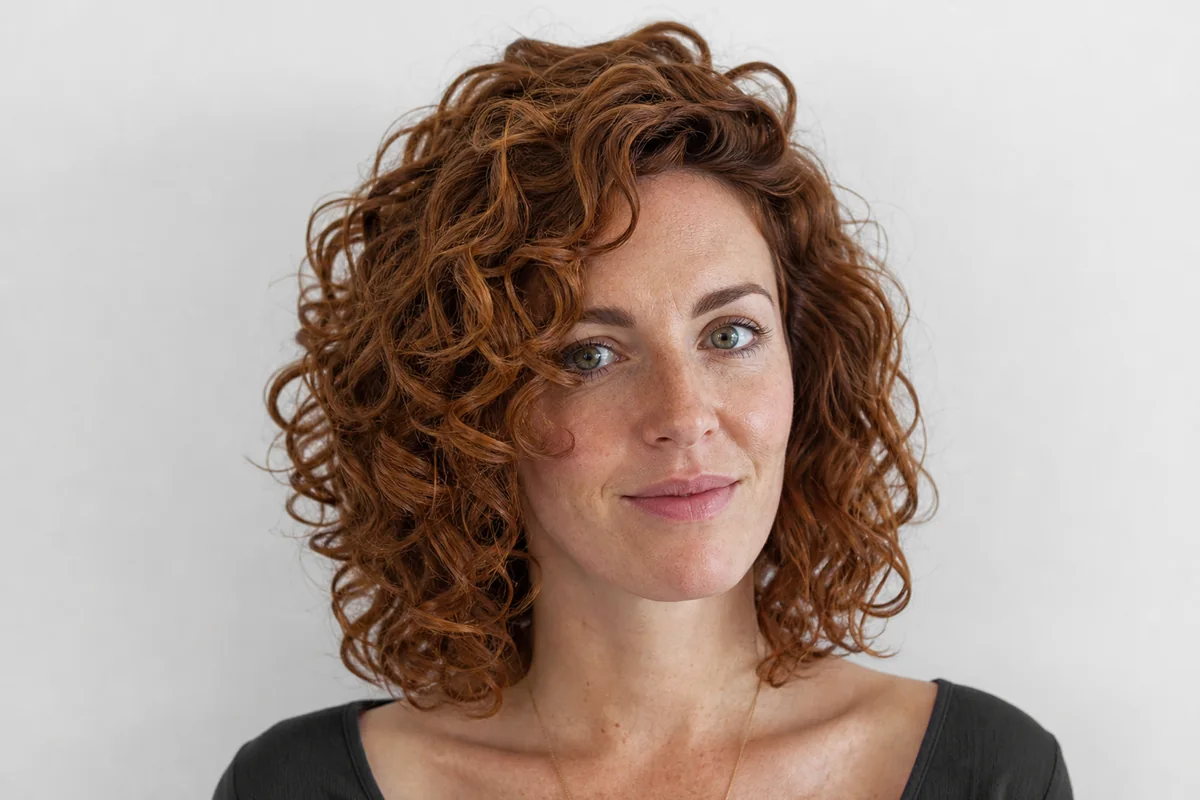
- Length
- Collarbone stretched, shoulder-grazing dry
- Texture
- Curly, 3A-3B
- Density
- Medium
- Face shapes
- Round, square, heart
- Daily effort
- 5 minutes
- Trim every
- 8-10 weeks
The longest of the bobs here, and the best first step for someone nervous about shrinkage. Long layers remove weight at the ends and the curls keep their bounce, so the shape does not turn into a pyramid. More lob options are in the long bob haircut guide.
Ask for: "A lob that grazes my shoulders when dry, with long layers cut curl by curl and no layers shorter than the chin."
11. Rounded Coily Bob
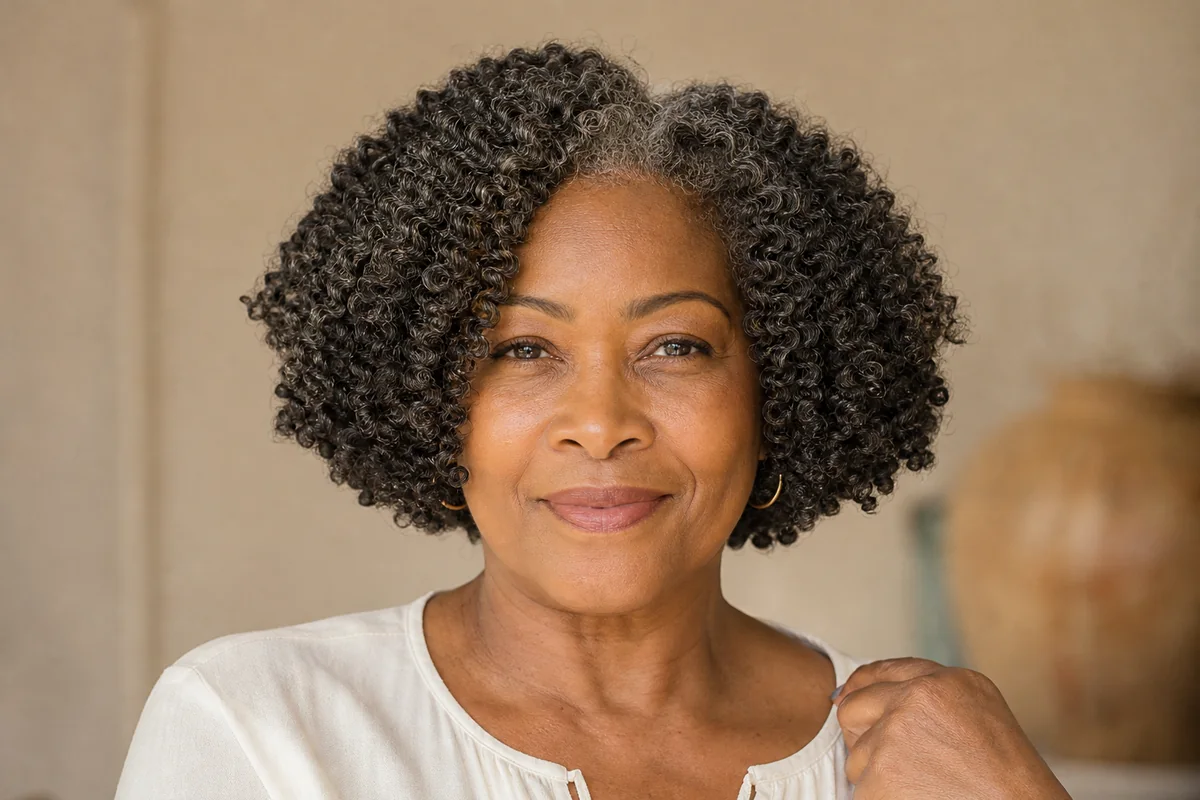
- Length
- Chin dry; collarbone or past when stretched
- Texture
- Coily, 4A
- Density
- Medium to thick
- Face shapes
- Oval, heart, diamond
- Daily effort
- 10 minutes, plus wash day
- Trim every
- 8-10 weeks
On coils the bob is shaped like a ball sitting at the chin, round from every angle. Twist-outs and finger coils extend the length for a day or two, which makes the planned dry length the one to specify.
Ask for: "A rounded coily bob cut dry in its natural state, chin length once it shrinks, with the nape cleaned up."
Layered and Shaggy Curly Cuts
Layers on curls are a shaping tool, because every curl lifts the layer above it. Short layers add rounded volume to a bob or crop, and long ones reduce a triangle. The curly shags in the shag guide cover the longer shapes, so this section stays at pixie-to-jaw length.
12. Curly Bixie with Ear-Covering Sides
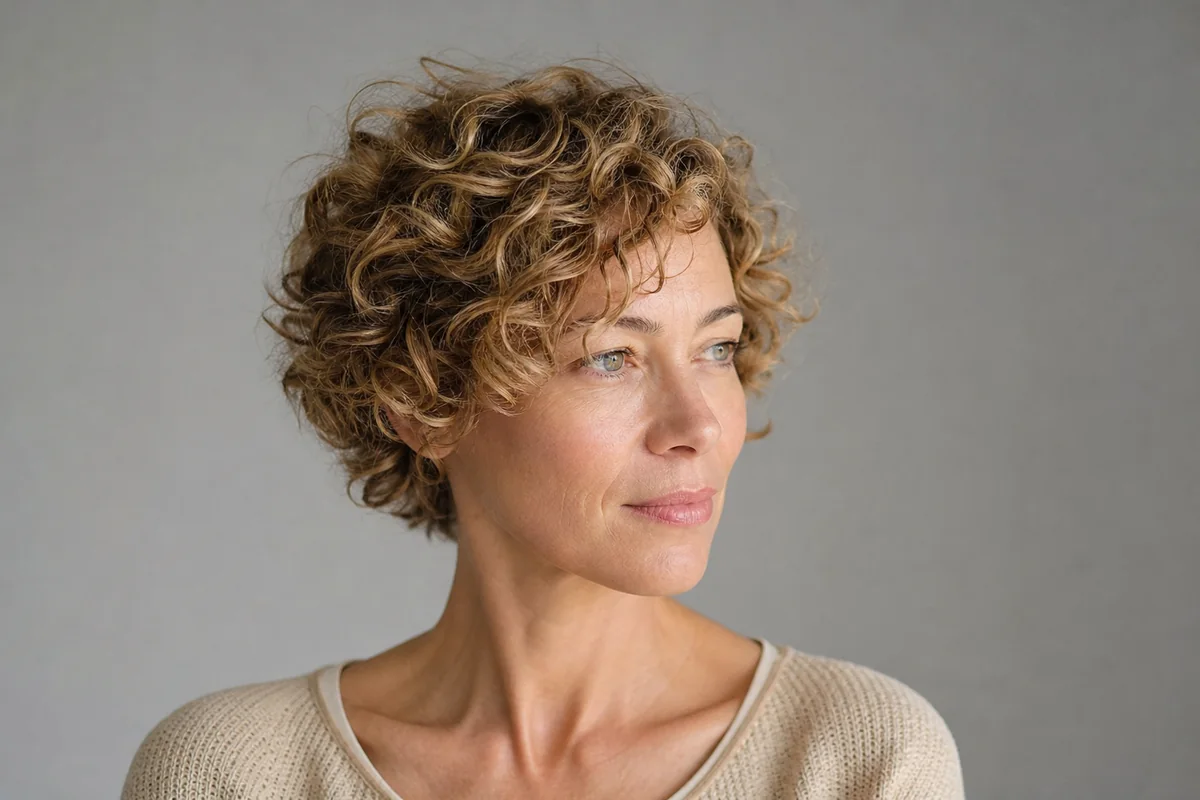
- Length
- Cheekbone at the sides, short nape
- Texture
- Curly, 3A-3B
- Density
- Medium
- Face shapes
- Oval, heart, long
- Daily effort
- 5 minutes
- Trim every
- 6-8 weeks
Curls cover the ears in a rounded wing rather than a straight edge, which makes this a softer option for readers who want more than a pixie. The bixie haircut guide explains where the length sits.
Ask for: "A bixie cut dry, sides to my cheekbone when dry, nape tapered, layers following the curl."
13. Curly Mixie with a Longer Nape
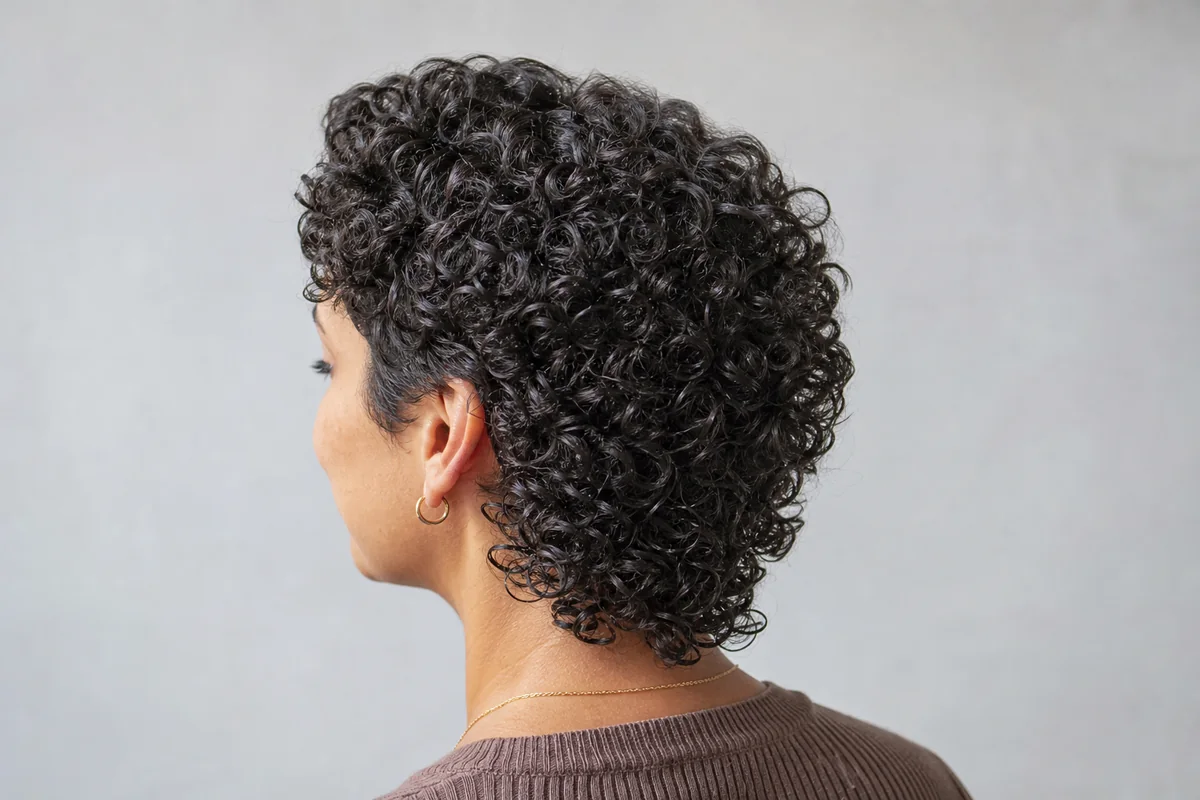
- Length
- 2.5 in on top, 4-5 in at the nape (dry)
- Texture
- Curly, 3B
- Density
- Thick
- Face shapes
- Oval, heart, square
- Daily effort
- 5-8 minutes
- Trim every
- 6-8 weeks
Thick curls can carry a nape longer than the top, and the length gives the cut its edge. It grows out well, since the longer back needs only a shaping trim. Straight-hair versions are in the shaggy pixie cut gallery.
Ask for: "A mixie cut dry: short rounded top, longer curls at the nape, connected so there is no gap."
14. Short Curly Cut with Micro Bangs

- Length
- Ear-length layers, bangs about 1.5 in dry
- Texture
- Loose curly, 3A
- Density
- Medium
- Face shapes
- Oval, long
- Daily effort
- 5-8 minutes
- Trim every
- 4-5 weeks for the bangs
Curly bangs spring up, which makes them the riskiest cut on the page. Cut dry and long, so they land at the brow once they are styled, and expect to book a bang trim between full cuts.
Ask for: "Bangs cut dry, curl by curl, to the top of my brow when dry. Leave them longer than you think."
15. Layered Curly Crop on Fine Curls
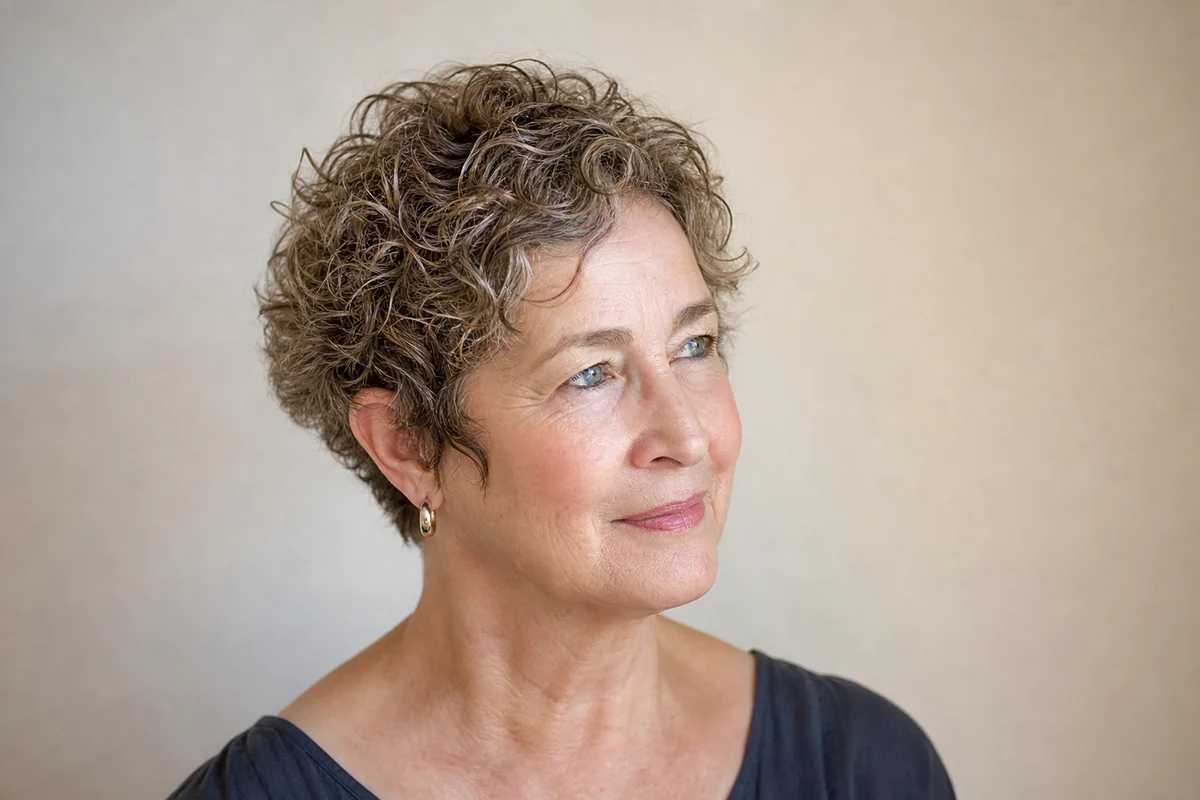
- Length
- 3 in on top, soft layers, tapered nape
- Texture
- Curly, 3A
- Density
- Fine
- Face shapes
- Oval, heart, square
- Daily effort
- 5 minutes
- Trim every
- 6-8 weeks
Fine curls form fewer rings and need support at the crown. Light layers lift the top without cutting the ends, and the density stays at the perimeter, so the cut reads as full, not thin.
Ask for: "Light layers on top for lift, dry cut, blunt ends and no thinning shears."
Coily Short Cuts and TWAs
On 4A-4C hair the cut is a sculpting decision more than a layering one, and the shape is drawn on the dry, natural hair. These five shapes cover the main options, from a TWA to a sculpted taper; pages on short haircuts for Black women and pixie cuts for Black women go deeper on these shapes.
16. TWA on 4C Coils
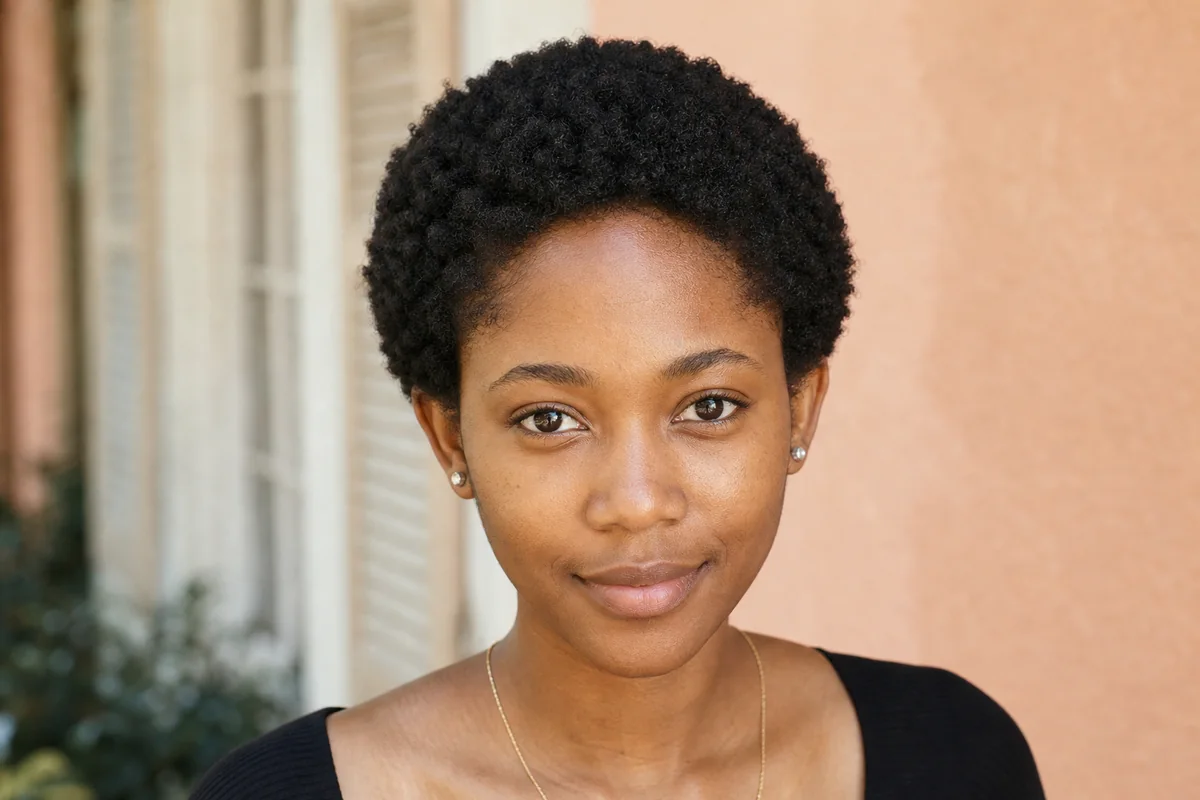
- Length
- 1-2 in, rounded
- Texture
- Coily, 4B-4C
- Density
- Medium to thick
- Face shapes
- Oval, heart, diamond
- Daily effort
- 2-5 minutes
- Trim every
- 4-6 weeks
A TWA is simply short natural hair, shaped to a round form from the hairline. The lowest daily effort on the page, but the shape grows out as an even halo, so shaping trims keep it looking planned.
Ask for: "A rounded TWA at 1.5 inches, cut dry in the natural state. Clean the hairline and neckline."
17. Tapered Coily Crop with a High Top
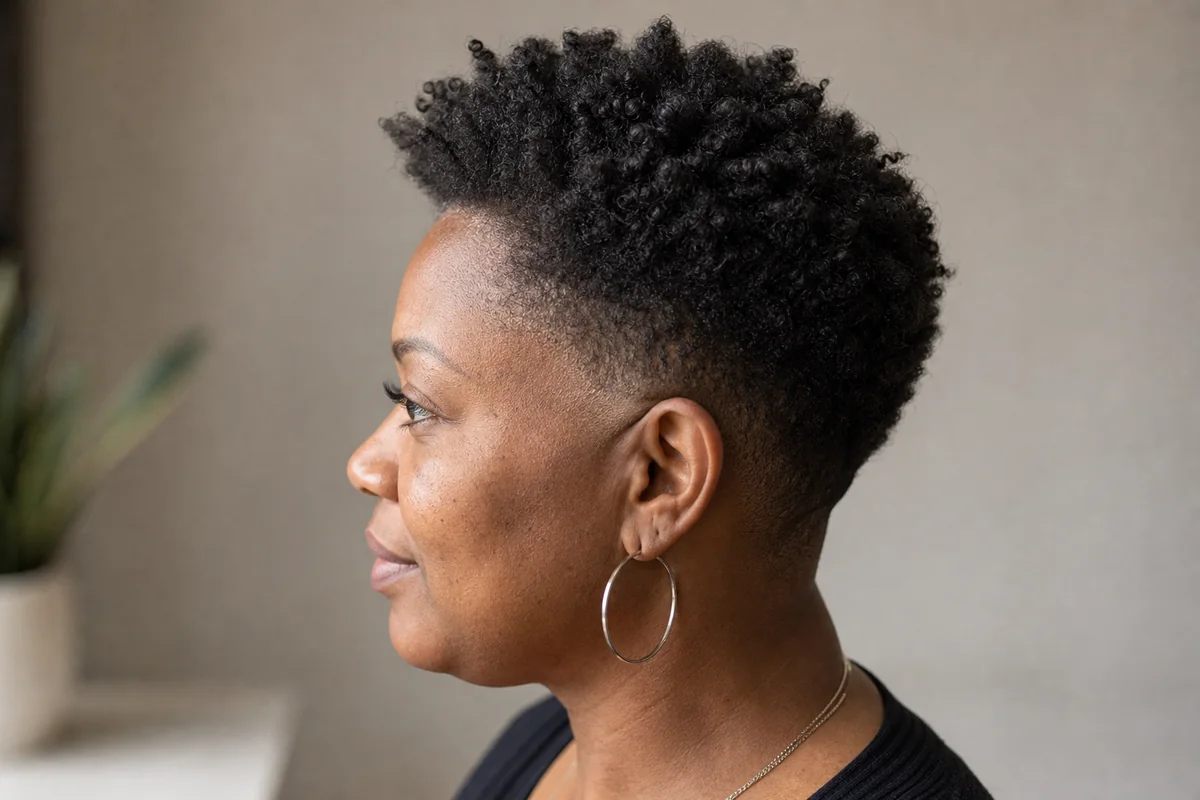
- Length
- 3 in on top, taper to #1 at the nape
- Texture
- Coily, 4A-4B
- Density
- Thick
- Face shapes
- Oval, round, long
- Daily effort
- 5 minutes
- Trim every
- 3-4 weeks
More height than a TWA, which lengthens a round face and makes room for finger coils or a twist-out on top. The fade needs the most upkeep; between cuts, a cleanup of the nape and ears keeps the contrast sharp.
Ask for: "3 inches of coils on top shaped dry, with the sides and nape faded from a #2 to a #1."
18. Short Coily Cut for Twist-Outs
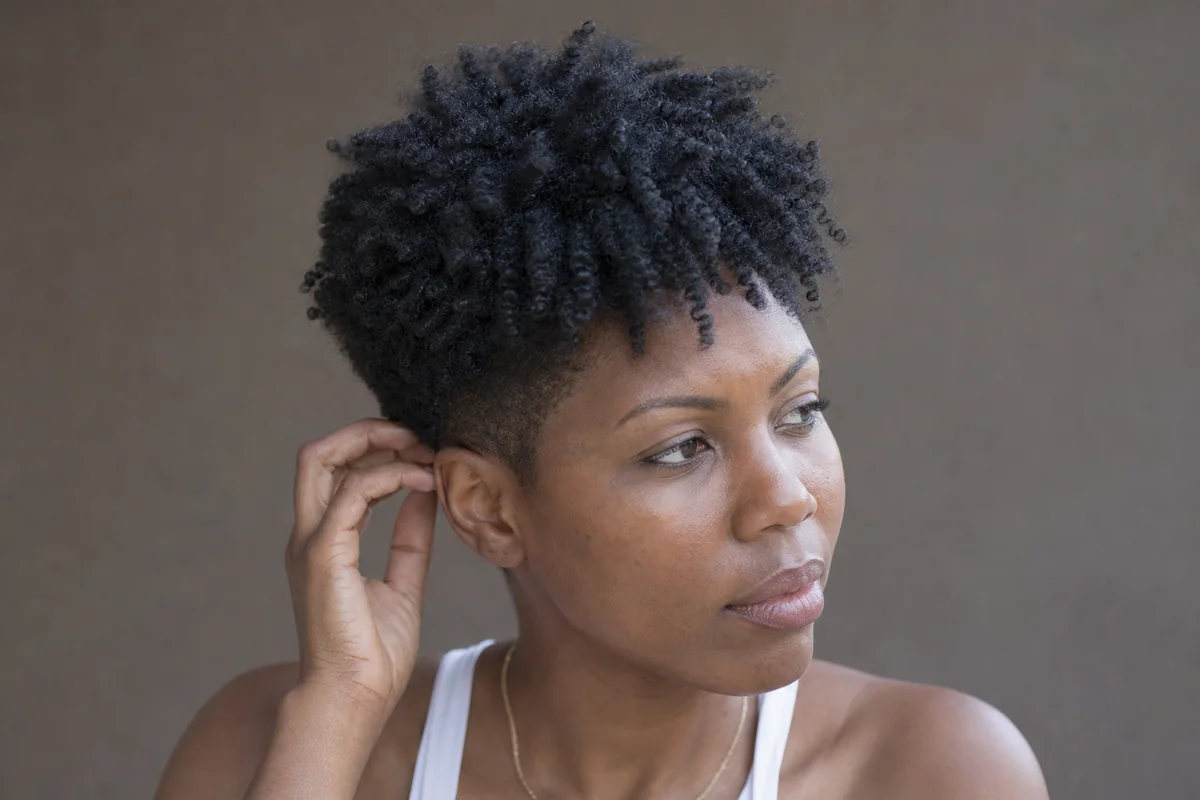
- Length
- 4-5 in stretched, about 2.5 in dry
- Texture
- Coily, 4B
- Density
- Thick
- Face shapes
- Oval, heart, square
- Daily effort
- 10 minutes plus setting
- Trim every
- 6 weeks
The cut is sized to hold a twist-out, so it keeps enough length on top for the twists to form. The difference between the stretched and dry length is wide, which is why this cut is planned in both measurements.
Ask for: "Enough length on top for twist-outs, about 4 inches stretched, and keep the sides tapered."
19. Sculpted Short Afro in Silver

- Length
- 2 in, rounded
- Texture
- Coily, 4C
- Density
- Medium
- Face shapes
- Oval, heart, long
- Daily effort
- 3-5 minutes
- Trim every
- 4-6 weeks
Silver coils are often drier and need a moisturizing leave-in more than any styling product. The clean hairline and shaped temples frame the face, and the round top lets the color show as the feature.
Ask for: "A short, rounded afro at about 2 inches, cut dry, with the hairline and temples cleaned."
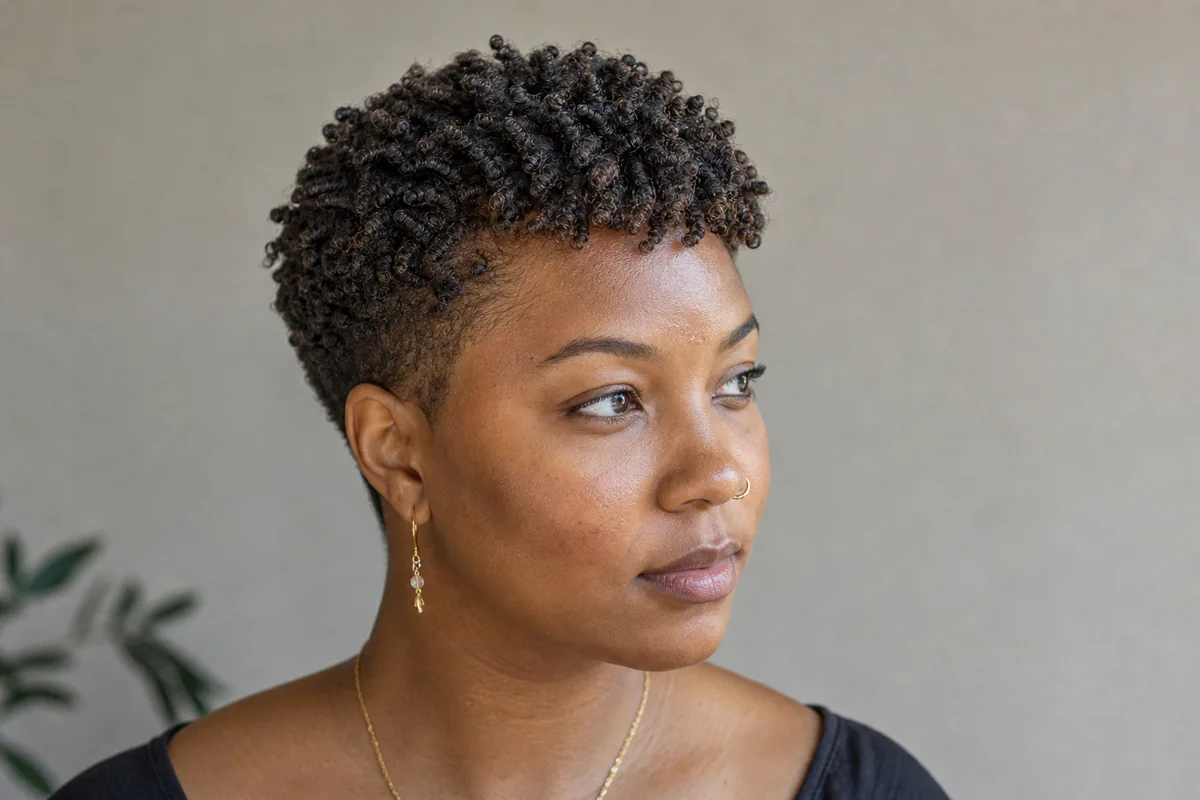
20. Coily Pixie with Defined Finger Coils
- Length
- 2.5 in on top, tapered sides
- Texture
- Coily, 4A
- Density
- Medium to thick
- Face shapes
- Oval, heart, round
- Daily effort
- 10-15 minutes for coils, 5 for a wash-and-go
- Trim every
- 4-5 weeks
Finger coils turn a coily pixie into a defined pattern; left undefined, the same cut is a soft, fuzzy crop. Both work, so the cut stays the same and the styling sets the finish.
Ask for: "A tapered pixie with 2.5 inches on top, cut dry, with enough length to finger coil."
Matching the Cut to Face Shape and Density
On curls, volume does the face-shape work that length does on straight hair. Round and square faces gain from height at the crown and tighter sides, while long and heart faces gain from width at the jaw, which makes a rounded bob or a fuller fringe useful. The general rules are in the full guide to short haircuts; for curls, add the dry-length allowance, since the width appears only after drying.
Density changes the plan more than curl type does. Thick curls need weight removed at the sides and nape (a taper, an undercut or longer layers), while fine curls need the perimeter kept dense and light layers only on top. Thinning shears are rarely needed on curls: the curl pattern already breaks up the edge, and thinning tends to make frizz.
What to Ask For and How to Choose a Stylist
Name the dry length, the method and the outline. A script that works on any of the looks above: "Cut it dry or check it dry, curl by curl. I want the length at ___ when it is dry, and it shrinks about ___ inches. Keep the outline rounded and take weight from the sides, not the top."
- Ask whether the stylist cuts curls dry, wet or both, and why.
- Ask to see photos of clients with the same curl pattern, not only photos of curly hair in general.
- Arrive with the hair in its natural, product-free state or styled as you wear it, as the stylist asks.
- Say how the hair behaves: where it shrinks most, where it springs up, and which part sits flat.
- Ask for the dry check at the end, with the hair styled the way you wear it.
Salon note: A first short cut on curls is safest one step longer than the goal. Curls can always be cut shorter at the next visit; they cannot be put back. With a crop or pixie, that means the top at 3 inches instead of 2, with the sides taken short.
Styling Short Curly Hair
Short curls are styled on soaking-wet hair, with the product raked in before the hair dries. Most routines take 5-10 minutes, and the shape holds for several days. The same steps apply from a 2C crop to a 4C bob, with heavier products for tighter curls.
- Start with soaking-wet hair. Curls that dry before product goes on set frizzy, so apply while the hair is dripping.
- Apply a leave-in conditioner. A light lotion for fine or looser curls, a richer cream for coils; use a nickel to quarter amount on a short cut.
- Add a styling product for hold. A gel for definition on 3A-3C curls, a curl cream or custard for 4A-4C coils; smooth it down the curl from root to tip.
- Dry with a diffuser or air-dry. A diffuser on low heat speeds the process; leave the hair alone until it is fully dry, or the curls break apart.
- Scrunch out the cast. Gel dries to a hard shell; once the hair is completely dry, scrunch it gently to release soft, defined curls.
On day two or three, refresh with a spray bottle of water and a little leave-in, and re-set only the sections that have flattened. A satin or silk pillowcase or a loose bonnet helps preserve the shape overnight. For a general routine across short hair, see the guide to styling short hair.
Maintenance and Growing Out Short Curls
Short curly hair needs a trim every 6-8 weeks to keep its shape, though curls hide a little overgrowth better than straight hair. Tapers and undercuts need the most upkeep, at 3-5 weeks, while rounded tops and bobs can stretch to 8-10 weeks. Daily effort is usually under 5 minutes for a wash-and-go, 10-15 for defined coils.
Growing out curls is slower to see than on straight hair, because shrinkage hides the new length: half an inch of growth a month can look like a quarter inch. Shape trims keep a crop or pixie round and the sides short, so the cut passes through a bixie and into a bob without a wedge shape.
When Short Curly Hair Is Not the Right Choice
- When no stylist nearby cuts curls well. A wet, straight-cut bob on 3B hair dries shorter and wider than planned. Travel for the first cut, or choose a longer, forgiving shape such as a lob.
- When wash-day routine is a barrier. Short curls rely on wet styling; skip the diffuser and they frizz. Reserve a wash-and-go for days when there are 10 minutes to set the hair.
- When the goal is a sleek, smooth look. Short curls can be straightened, but heat repeats damage and the shrinkage returns with humidity. A cut designed for straight hair is better chosen on straight hair.
- When a mixed pattern has no clear plan. Hair with 2C at the front and 4A at the nape needs a cut planned for each section; a one-pattern plan leaves one area wrong.
Short curly hair rewards a dry cut, a stretched-length plan and a stylist who has cut the same curl pattern before. Choose the shape by curl type from the table above, take two photos of your hair (wet and dry) to the consultation, and book the first cut one step longer than the goal.