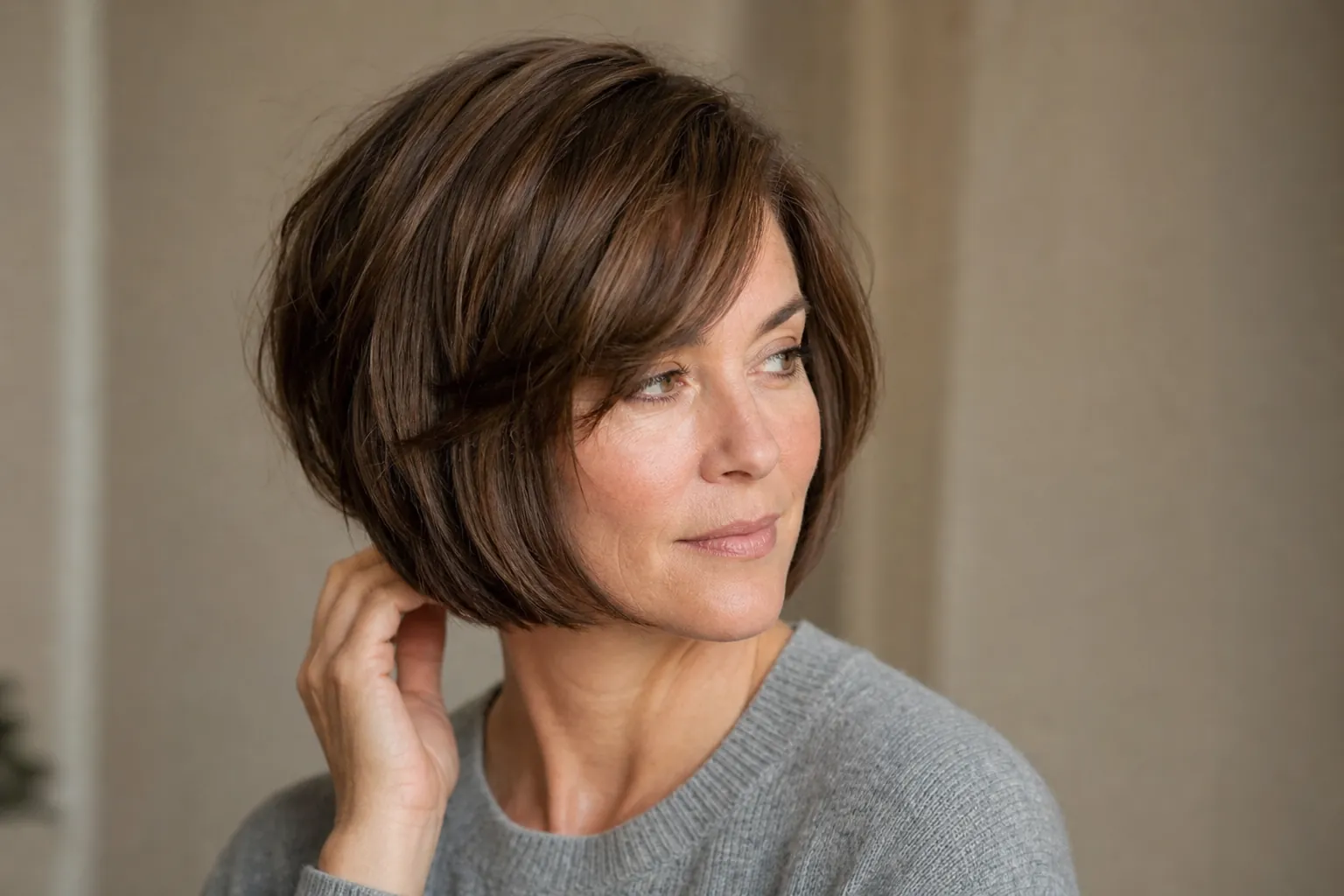

Short version: A long bob haircut, or lob, ends between the jaw and the collarbone, long enough to tie back and short enough to swing. What matters most is where the ends meet the shoulders: lobs that clear them stay smooth, while lobs that rest on them flip unless the back is cut a little shorter. Blunt lobs suit fine hair, thick hair needs weight removed inside, and curly and coily lobs are cut dry. Plan on a trim every 8-10 weeks.
What a Long Bob Haircut Is, and Where It Ends
A lob is a bob whose hem has dropped below the jaw but stops at or above the collarbone. It keeps a bob's single line at the ends, but the extra length pulls the hair flatter and slows the swing. Within the full set of length bands for short haircuts, it is the longest, and for many people the first step into short hair.
Shorter than the jaw, it is a bob; with its weight lifted into crown layers, it turns into a shag. The bob, lob and shag bob comparison sets those boundaries side by side. Within the lob range, the landmark matters more than the name, because the shoulders change how the ends behave.
| Lob length | Where the ends sit | Shoulder contact | Ties back | Trim every | Best on |
|---|---|---|---|---|---|
| Short lob | 1-2 in below the chin | None; about 4-5 months of growth before it touches | Half-up only | 8 weeks | Fine straight hair, round faces wanting length below the chin |
| Mid-neck lob | Halfway between chin and shoulders | None for 2-3 months | Short low ponytail | 8-10 weeks | Most textures; the easiest lob to keep smooth |
| Shoulder-grazing lob | Touching the tops of the shoulders | Constant; ends flip out or curl under | Yes | 8-10 weeks | Curls and heavy straight hair; flips most on fine straight hair |
| Collarbone lob | Front at the collarbone | Sides and back rest on the shoulders | Yes, easily | 8-10 weeks (curls 10-12) | Thick hair, waves, anyone growing toward longer hair |
Salon note: A level collarbone lob nearly always sits on the shoulders at the sides, because the tops of the shoulders are higher than the collarbone at the front. Ask for the back about half an inch to an inch shorter than the front if you want the ends to hang straight, or accept the bend and style into it.
Blunt and Angled Lobs
A blunt lob is cut to one length at the hem, so it keeps the most density at the ends of any lob. It is the default for fine and medium straight hair. The blunt bob guide covers the same cut at shorter lengths; here, the angle and the shoulders decide the shape.
1. Glass-Blunt Lob Above the Shoulders
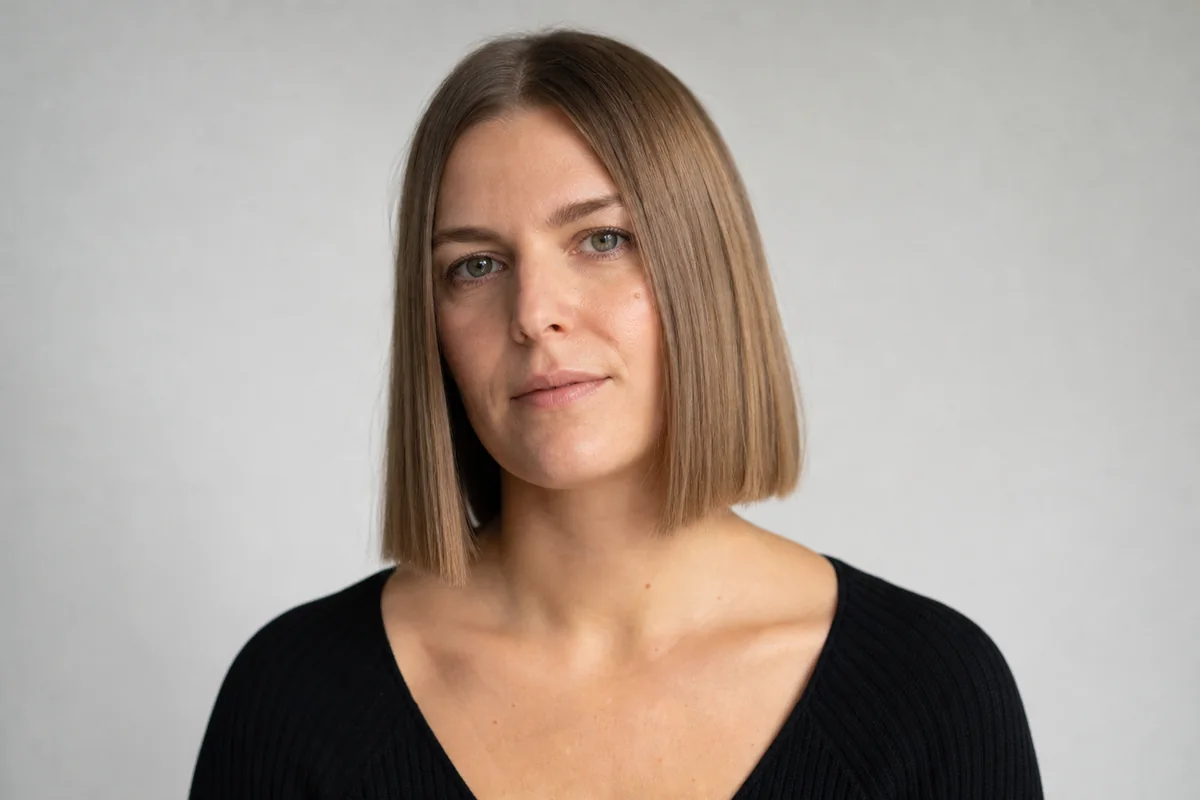
- Length
- About 1 in above the shoulders
- Texture
- Straight
- Density
- Fine to medium
- Face shapes
- Oval, heart, long
- Daily effort
- 10 minutes
- Trim every
- 8 weeks
Cut with no elevation and the ends left solid, fine hair looks twice as thick at the hem as it does in a layered cut. Stopping an inch clear of the shoulders buys about two months before the ends start to kick.
Ask for: "A one-length lob an inch above my shoulders when dry, ends cut solid, no layers, no thinning."
2. Angled Lob, Longer at the Front
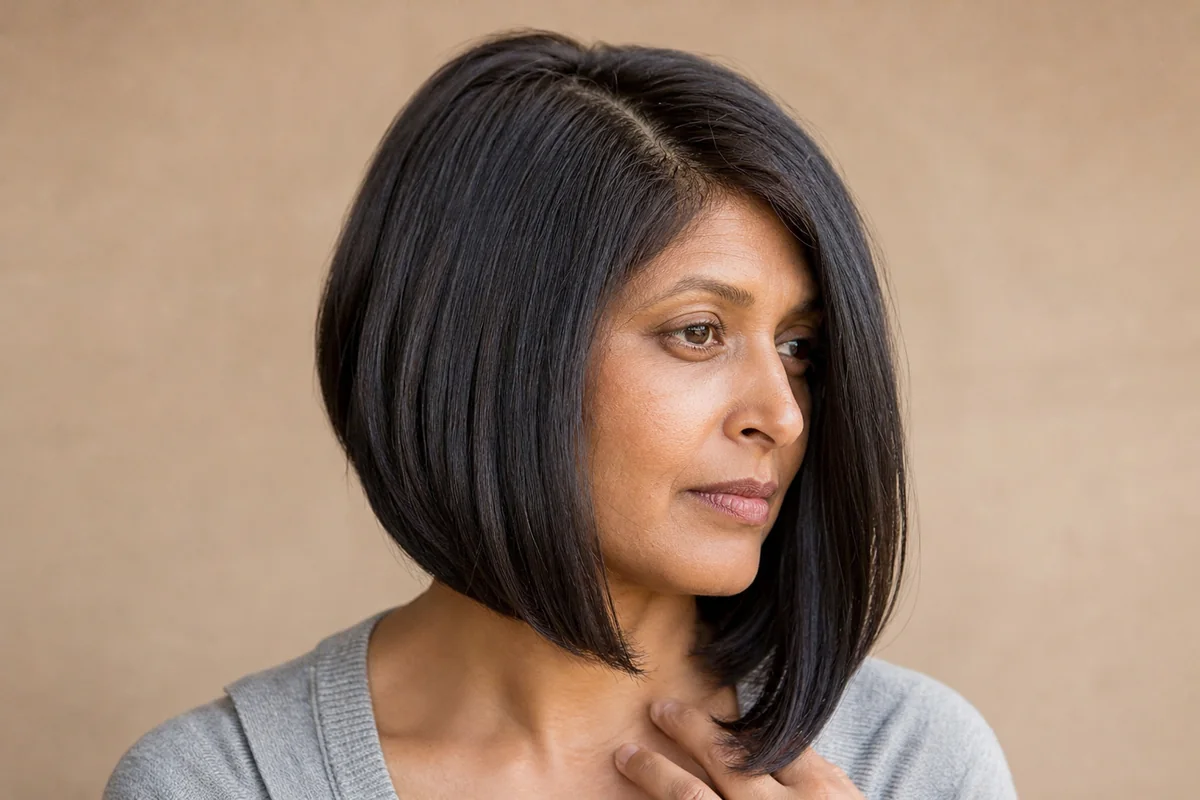
- Length
- Base of the neck at the back, collarbone at the front
- Texture
- Straight
- Density
- Medium to thick
- Face shapes
- Round, square, oval
- Daily effort
- 10-15 minutes
- Trim every
- 8 weeks
The slope keeps the back off the shoulders while the front stays long, which solves the collarbone flip on straight hair. As on shorter bobs, each extra inch of angle adds styling and earlier trims; at lob length, 1-2 inches is the range that still grows out evenly.
Ask for: "A lob with the back at the base of my neck and the front 2 inches longer, at my collarbone, no stacking."
3. Short Lob Tucked Behind One Ear
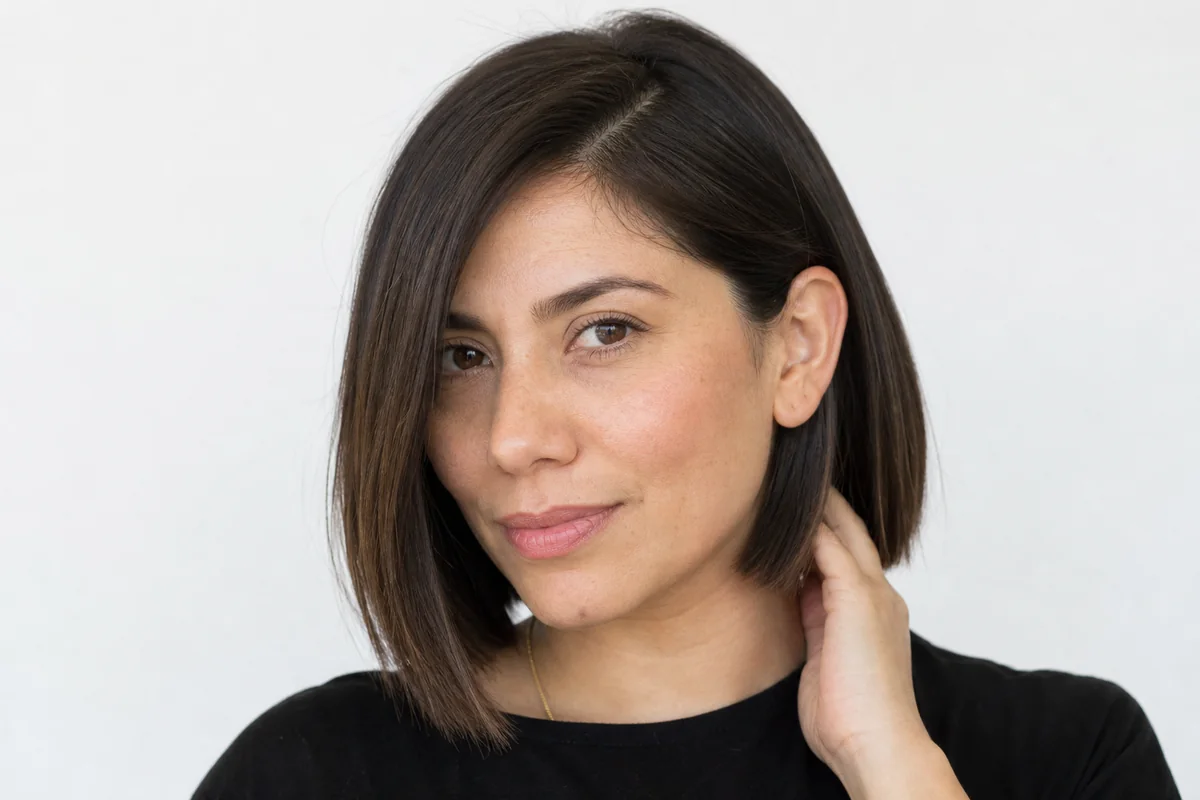
- Length
- 1-2 in below the chin
- Texture
- Straight to 2A wavy
- Density
- Medium
- Face shapes
- Round, heart, diamond
- Daily effort
- 5 minutes
- Trim every
- 8 weeks
Ending just past the chin, it sits below the widest part of a round face, and the tuck adds a strong diagonal.
Ask for: "A blunt lob 2 inches below my chin, long enough on one side to tuck behind my ear, checked dry."
4. Blunt Lob with Brow-Length Bangs

- Length
- Grazing the shoulders, bangs at the brow
- Texture
- Straight
- Density
- Medium to thick
- Face shapes
- Long, oval, heart
- Daily effort
- 10 minutes
- Trim every
- 8-10 weeks; bangs 3-5
Heavy bangs shorten a long face, and the solid hem balances them so the head does not look top-heavy. Skip it with a strong cowlick at the front hairline, which splits full bangs however they are cut.
Ask for: "A one-length lob grazing my shoulders with full bangs at my eyebrows when dry."
Layered, Textured and Shaggy Lobs
Layers move a lob's weight up from the hem, which is what thick hair needs and what fine hair can rarely afford. Long layers starting at the chin keep the outline; shorter crown layers turn the lob into a shag, and the short shag gallery covers that end of the range.
5. Long-Layered Lob for Thick Straight Hair
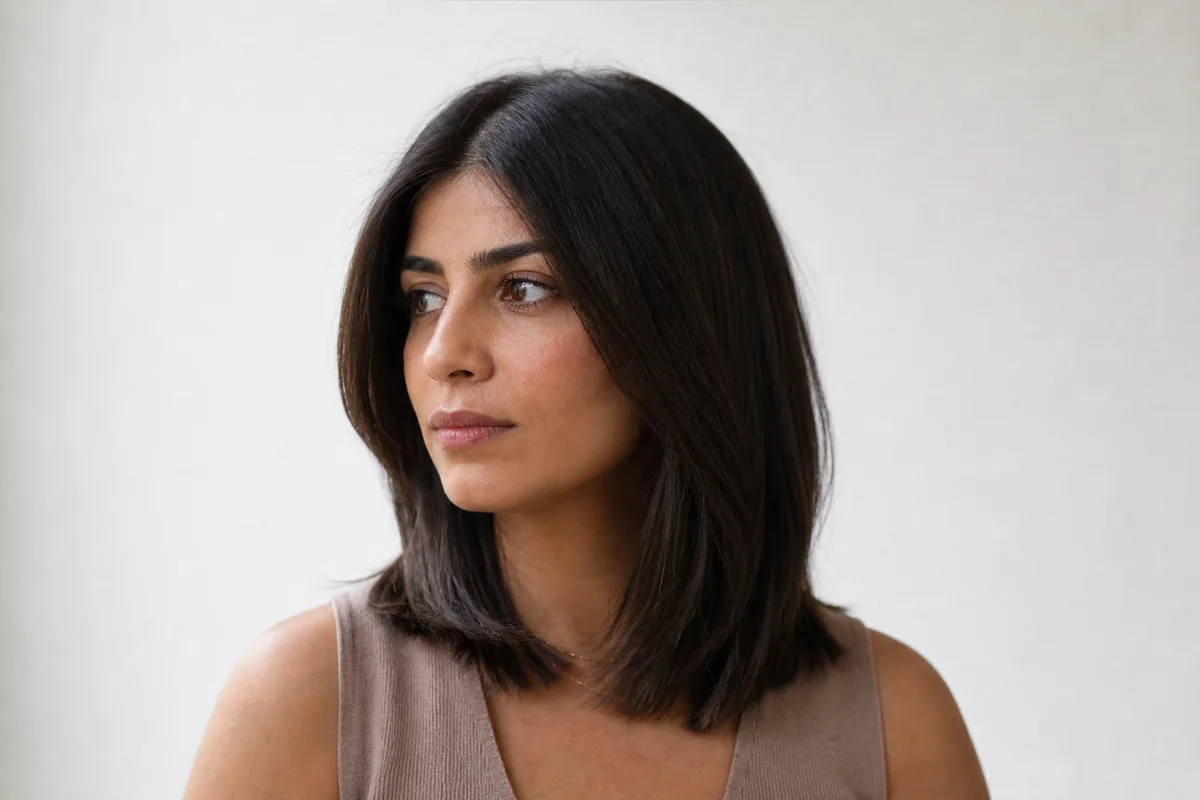
- Length
- Collarbone; layers from below the chin
- Texture
- Straight
- Density
- Thick
- Face shapes
- Square, oval, round
- Daily effort
- 10 minutes
- Trim every
- 8-10 weeks
Thick straight hair at the collarbone tends to form a triangle, wide at the ends and flat on top. Weight taken from the interior with slide cutting lets the ends fall in, while layers that start no higher than the chin keep the perimeter looking full.
Ask for: "A collarbone lob with long layers from below my chin and weight removed from the inside, not the ends."
6. Textured Lob with Point-Cut Ends
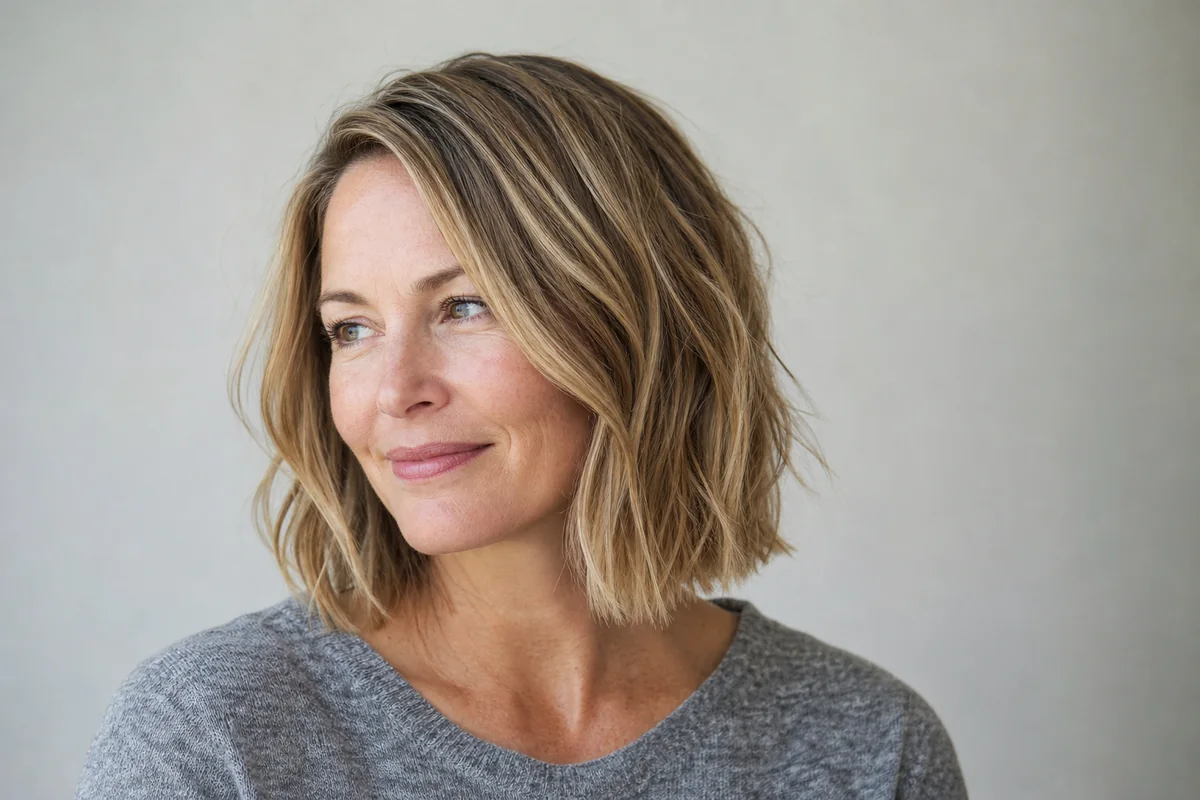
- Length
- Just above the shoulders
- Texture
- Straight to 2B
- Density
- Medium
- Face shapes
- Square, oval, diamond
- Daily effort
- 5-10 minutes
- Trim every
- 8-10 weeks
Point cutting snips into the ends at an angle, so the line softens without losing length. On waves that is the difference between a hem that bends together and one that flips as a block. Texture spray, 4-8 spritzes on dry hair, gives the finish.
Ask for: "A lob just above my shoulders with the ends point-cut, not razored, and no thinning shears on my waves."
7. Shaggy Lob with Crown Layers on 2C Waves
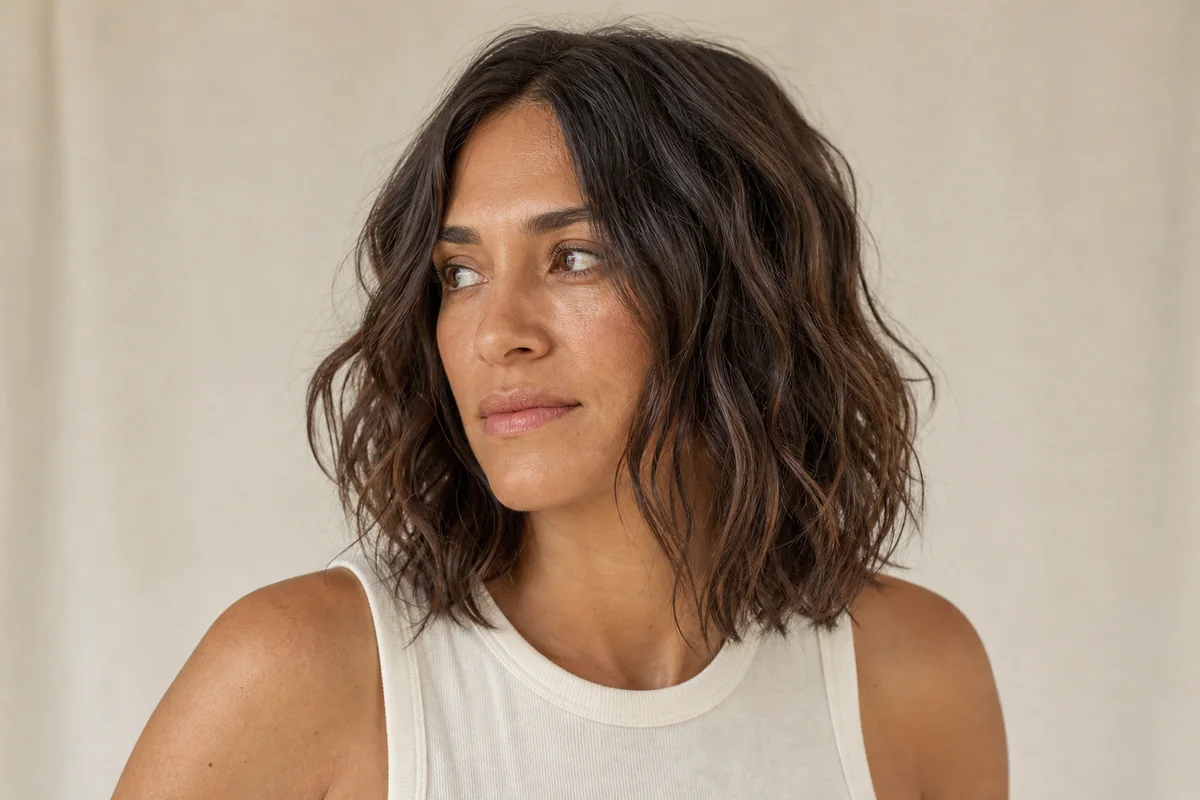
- Length
- Collarbone; crown layers about 5-6 in
- Texture
- 2B-3A
- Density
- Medium to thick
- Face shapes
- Long, heart, oval
- Daily effort
- 5 minutes plus air-drying
- Trim every
- 10 weeks
Short crown layers let 2C waves spring up instead of stacking at the bottom, so the shape widens at the cheekbones rather than the jaw. Fine hair loses too much in this cut; it suits thick waves that air-dry.
Ask for: "A shaggy lob at my collarbone with crown layers around 5 inches, cut on dry waves, no bangs."
8. Lob with Curtain Bangs and a Middle Part
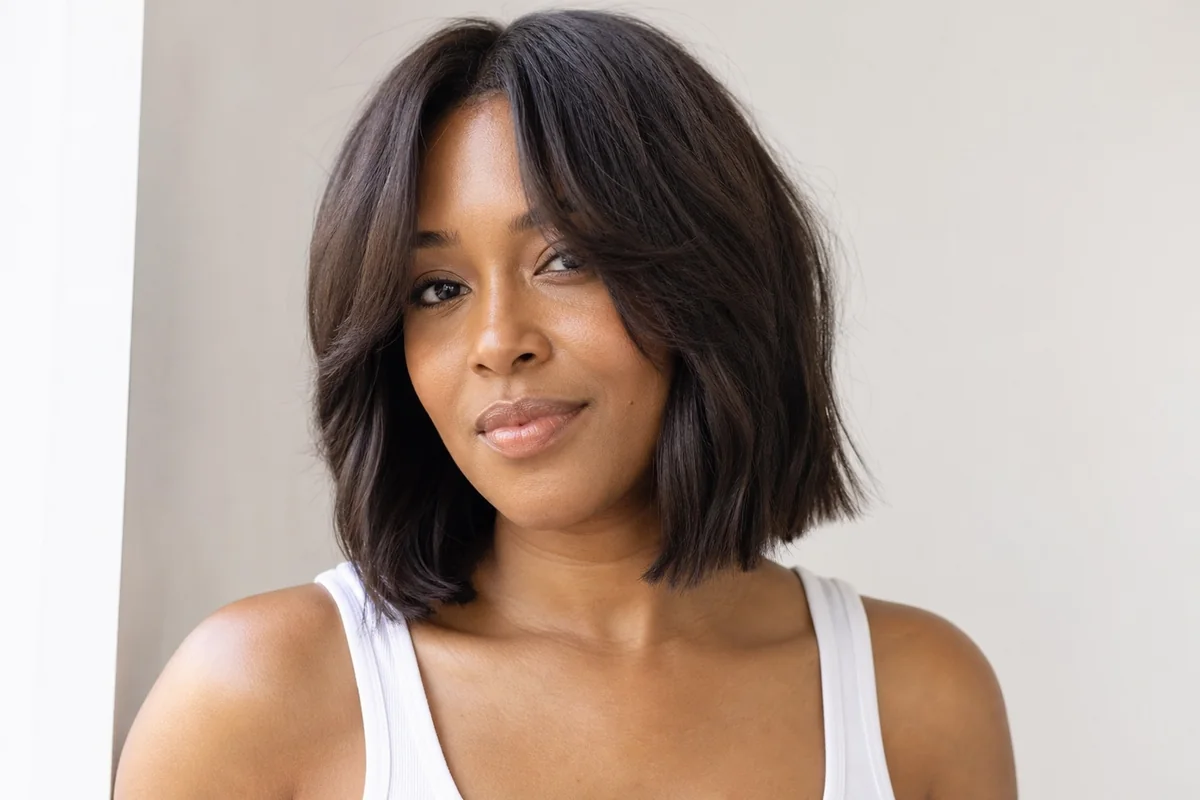
- Length
- Just above the shoulders; bangs at the cheekbone
- Texture
- Straight to 2B, or stretched
- Density
- Fine to medium
- Face shapes
- Long, square, diamond
- Daily effort
- 10 minutes
- Trim every
- 8-10 weeks; bangs 4-5
Curtain bangs start the face-framing at the cheekbone, which narrows a square jaw and breaks up the length of a long face. They grow out into face-framing layers rather than an awkward stage, the reason they are the least risky bang to try. The gallery of short hair with curtain bangs shows them at shorter lengths.
Ask for: "A lob above my shoulders with curtain bangs that hit my cheekbones dry, parted in the middle."
9. Lob with Face-Framing Layers from the Chin

- Length
- Collarbone; front layers from the chin
- Texture
- Straight to 2A
- Density
- Medium
- Face shapes
- Round, square, oval
- Daily effort
- 10 minutes
- Trim every
- 8-10 weeks
Layers only at the front keep the back solid, so the cut moves around the face without thinning the hem. Starting them at the chin, not the cheekbone, is safer on a first lob.
Ask for: "A collarbone lob, back one length, with face-framing layers starting at my chin and sweeping back."
Wavy, Curly and Coily Lobs
On waves, curls and coils, a lob is set by its dry length and its width, not its wet line. Curls do not flip at the shoulders, they spread, so the cut is shaped to control where the volume sits. Curly and coily lobs are cut dry, or checked dry, longer than the target; the guide to short curly hair goes deeper into shrinkage.
10. Air-Dried Beachy Lob on 2A Waves
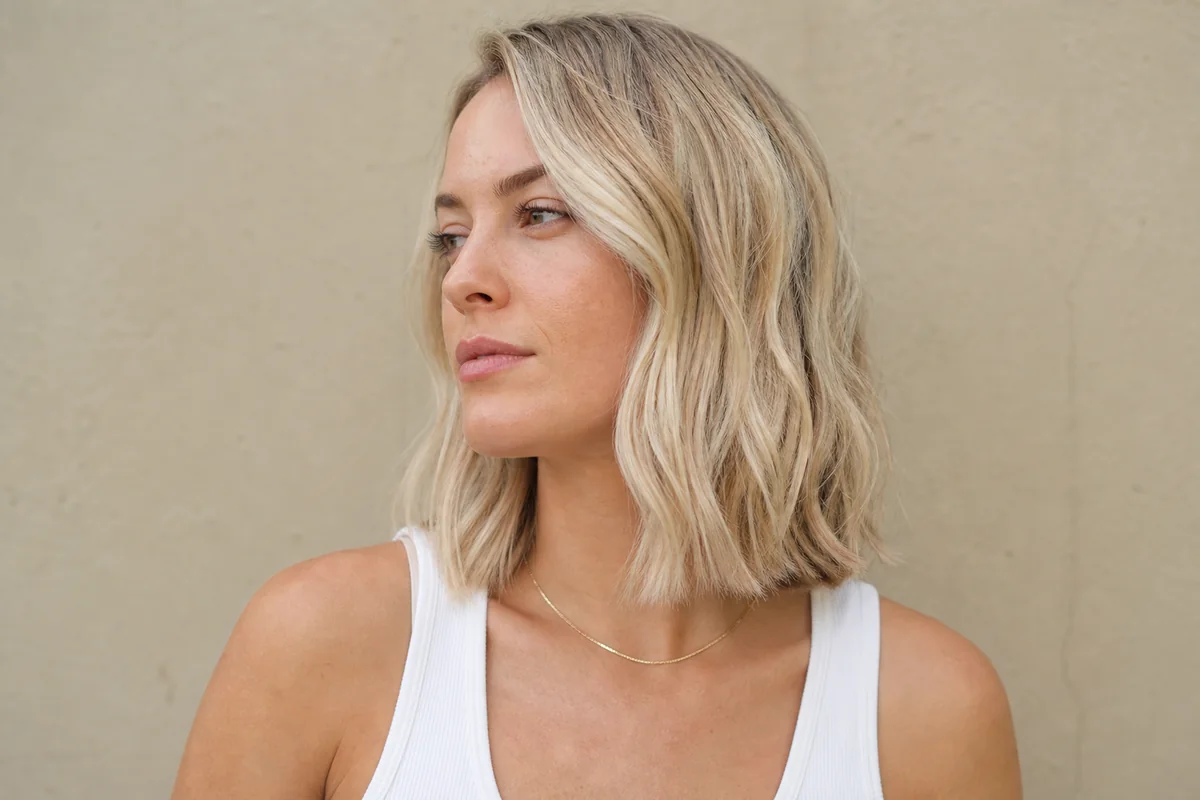
- Length
- Grazing the shoulders
- Texture
- 2A-2B
- Density
- Fine to medium
- Face shapes
- Oval, heart, long
- Daily effort
- 5 minutes plus air-drying
- Trim every
- 10 weeks
Loose waves bend anyway, so they hide the shoulder flip that fights straight hair at this length. Waves shrink up to about an inch, so cut it an inch longer than the target and check the hem dry.
Ask for: "A lob that grazes my shoulders once my waves dry, cut about an inch longer wet, soft ends, very few layers."
11. Curly Lob with Long Layers on 3B Curls

- Length
- Collarbone dry (well past the shoulders stretched)
- Texture
- 3A-3B
- Density
- Medium
- Face shapes
- Oval, long, square
- Daily effort
- 10 minutes plus diffusing
- Trim every
- 10-12 weeks
Cut curl by curl on dry hair, long layers through the sides stop the hem from fanning into a triangle while keeping the length that weighs 3B curls into shape. Curly hair at this length often measures well past the collarbone when stretched, so a wet cut to the collarbone can land at the jaw once it dries.
Ask for: "A curly lob cut dry, ending at my collarbone dry, long layers at the sides so it doesn't widen at the bottom."
12. Rounded Lob on 3C Curls
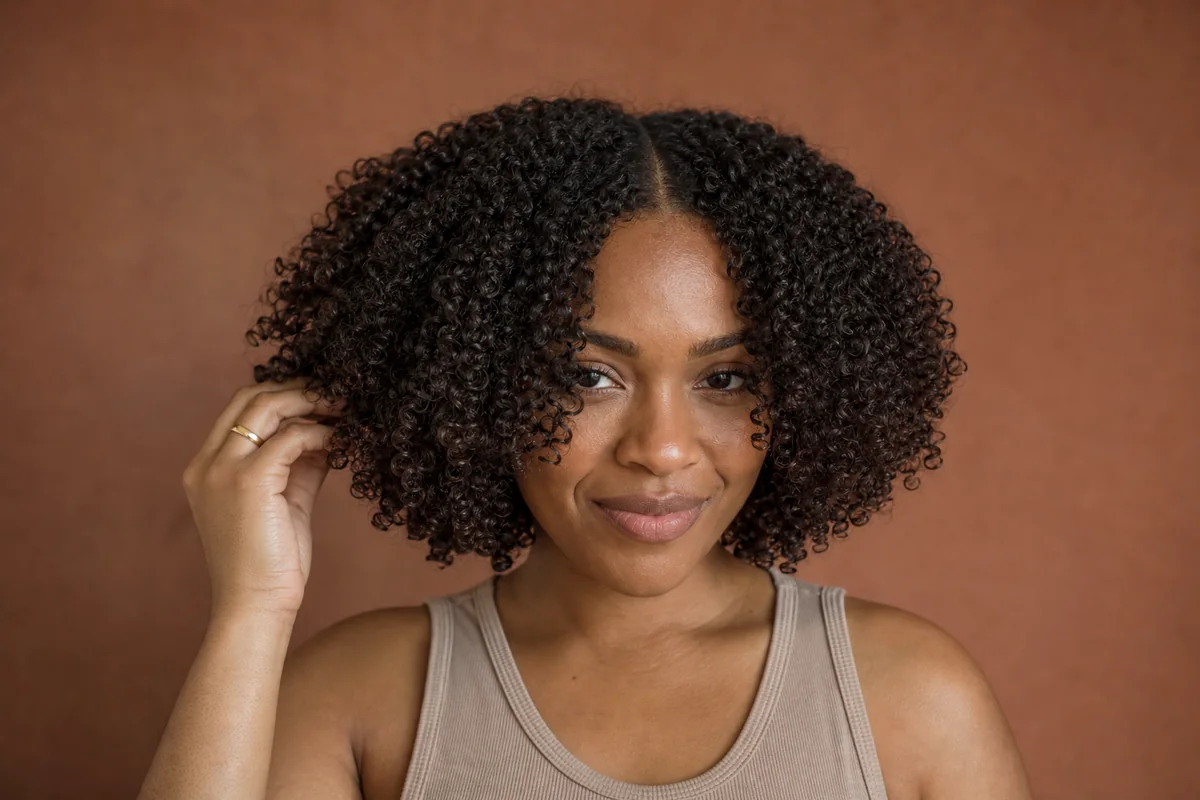
- Length
- Between chin and shoulders dry
- Texture
- 3B-3C
- Density
- Thick
- Face shapes
- Long, oval, heart
- Daily effort
- 10 minutes plus diffusing
- Trim every
- 10-12 weeks
Here the layers run higher, with crown layers cut well shorter than the hem, so thick 3C hair rounds out instead of sitting heavy at the shoulders. Gel or a curl cream applied to soaking-wet hair holds the definition.
Ask for: "A rounded curly lob cut dry, curls ending between my chin and shoulders, crown layers for an even shape."
13. Coily Wash-and-Go Lob on 4A Coils
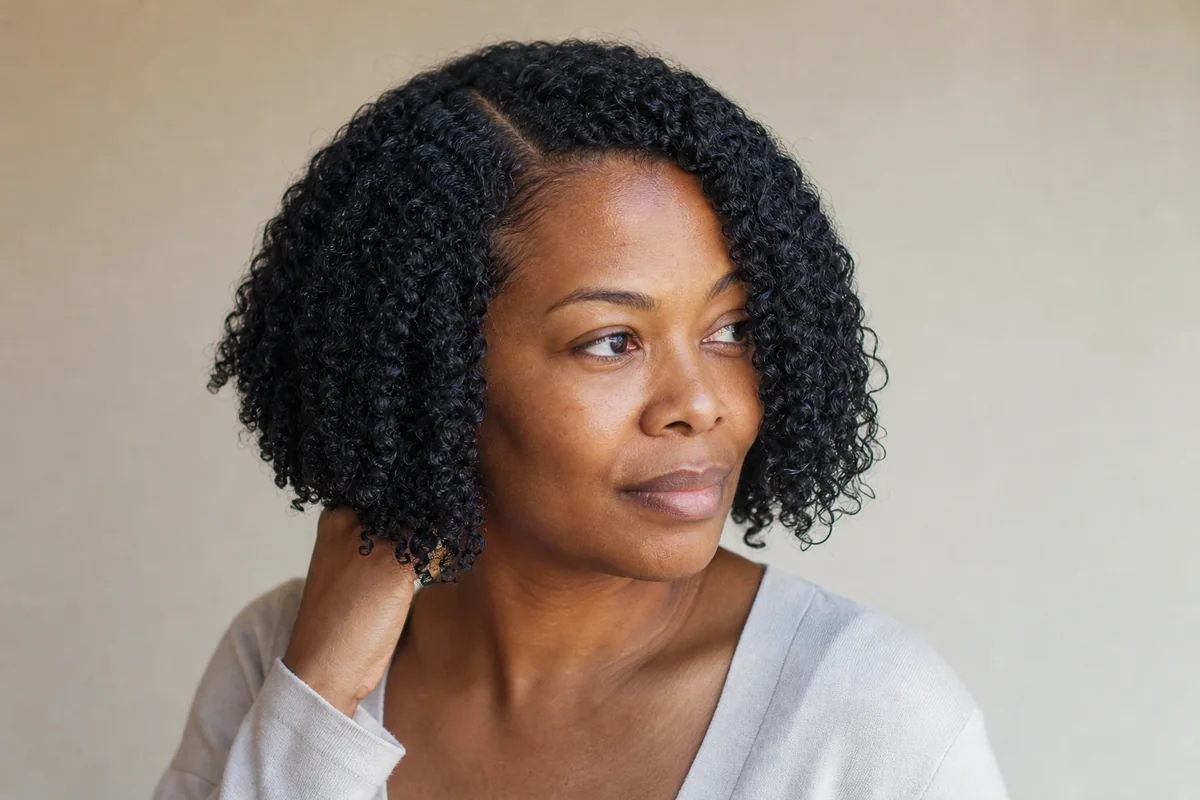
- Length
- Jaw to upper neck dry
- Texture
- 4A
- Density
- Medium to thick
- Face shapes
- Oval, heart, long
- Daily effort
- 5 minutes on refresh days; longer on wash day
- Trim every
- 10-12 weeks
Coils shrink the most of any texture, so a lob that sits at the jaw in its natural state may be past the shoulders stretched. A slightly longer front gives the shape direction and keeps the coils from rounding into a sphere. Book a stylist experienced with coily hair.
Ask for: "A coily lob shaped dry on my wash-and-go, ending at my jaw when dry, a little longer at the front."
14. Stretched Lob on 4B-4C Hair
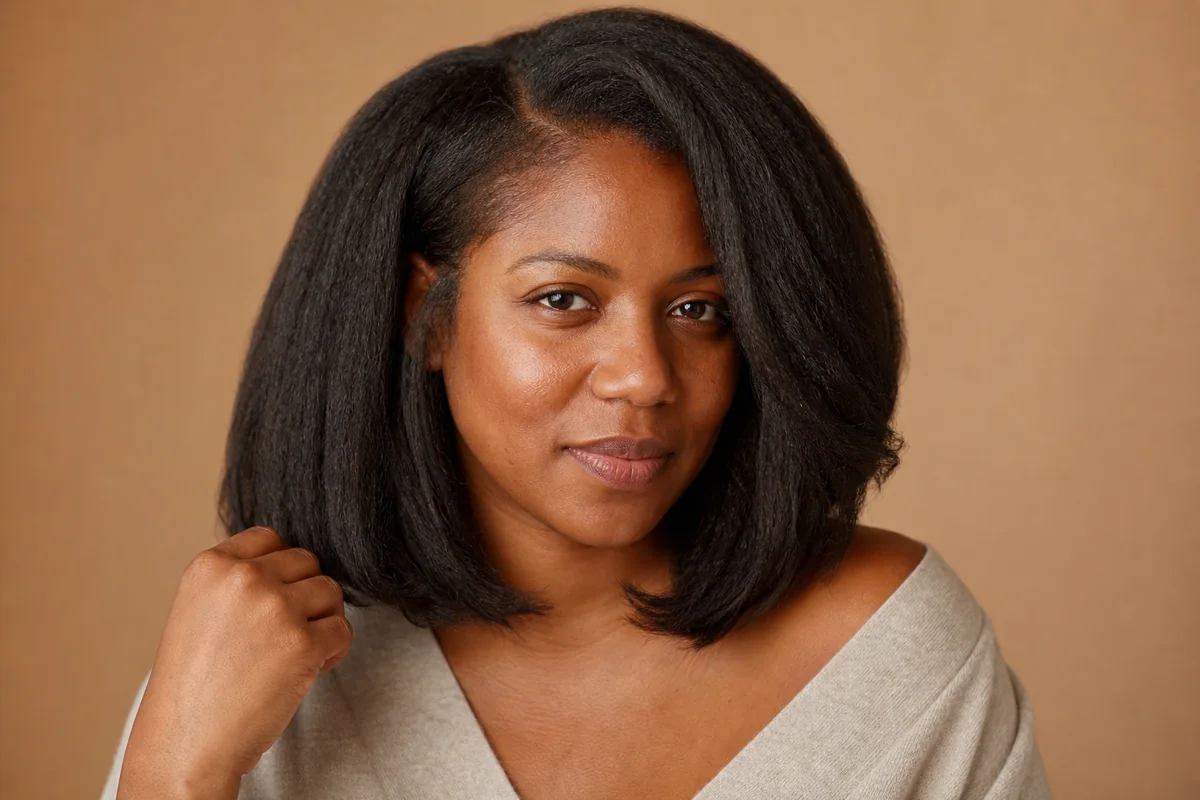
- Length
- Collarbone stretched; much shorter in its natural state
- Texture
- 4B-4C
- Density
- Thick
- Face shapes
- Oval, round, heart
- Daily effort
- 5 minutes between stretches; 45-90 minutes to stretch
- Trim every
- 10-12 weeks
Worn stretched, this lob is cut to sit well in that state, so ask whether it will also look balanced when the hair reverts. Banding, threading or braid-outs stretch without heat; blowouts are quicker but call for heat protectant and a moderate temperature every time.
Ask for: "A lob cut for wearing stretched, ending at my collarbone stretched, with the shape checked on my natural hair too."
15. Curly Lob with Dry-Cut Curly Bangs
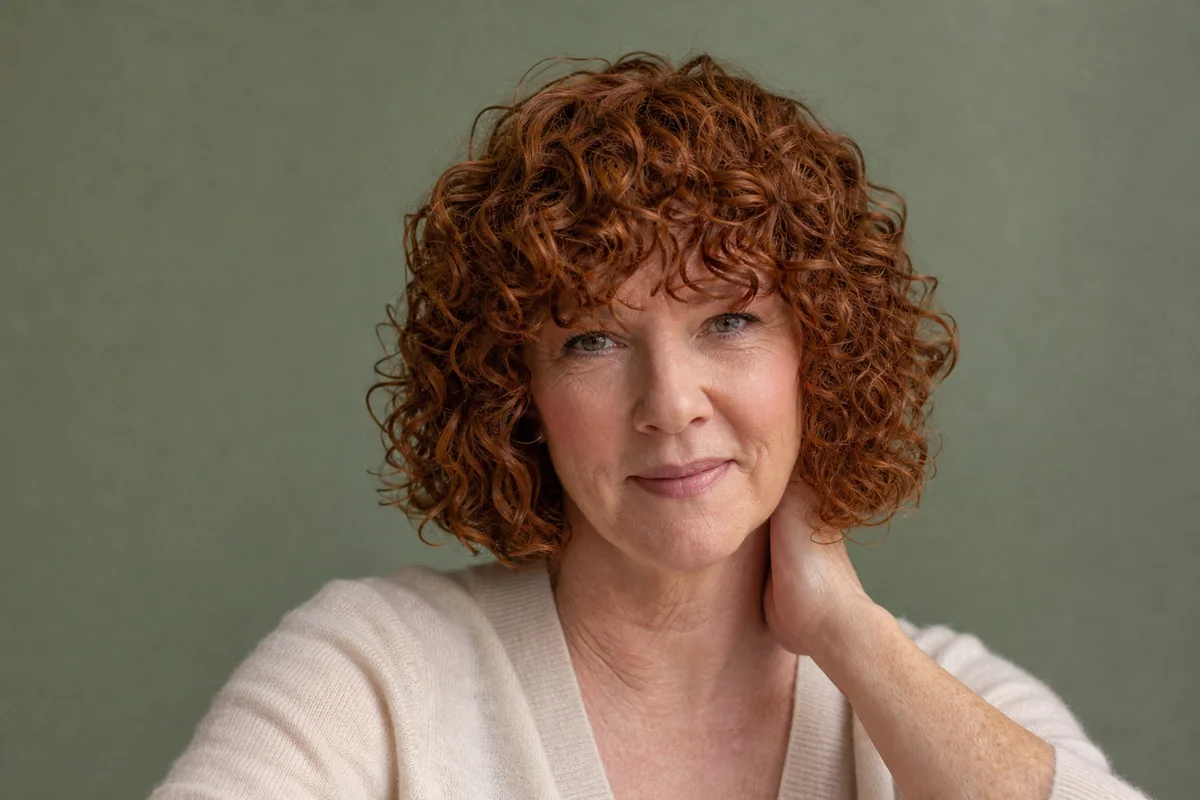
- Length
- Just above the shoulders dry; bangs at the brow dry
- Texture
- 2C-3B
- Density
- Medium
- Face shapes
- Long, oval, heart
- Daily effort
- 10 minutes plus diffusing
- Trim every
- 10 weeks; bangs 4-5
Curly bangs must be cut dry: wet, they look 2-3 inches longer than they will be, and a wet-cut curly fringe usually springs up to the hairline. Cut right, they shorten a long face with no blow-drying.
Ask for: "A curly lob just above my shoulders, and curly bangs cut dry to my eyebrows, one curl at a time."
Lobs for Fine, Thin and Gray Hair
Fine or thin hair usually looks fullest in a shorter, blunter lob, because every inch of length spreads the same number of strands thinner at the ends. Root lift matters more than layering. The guides to short hairstyles for thin hair and short cuts for women over 60 cover crown thinning and gray texture in depth.
16. Blunt Neck-Length Lob for Fine, Thin Hair
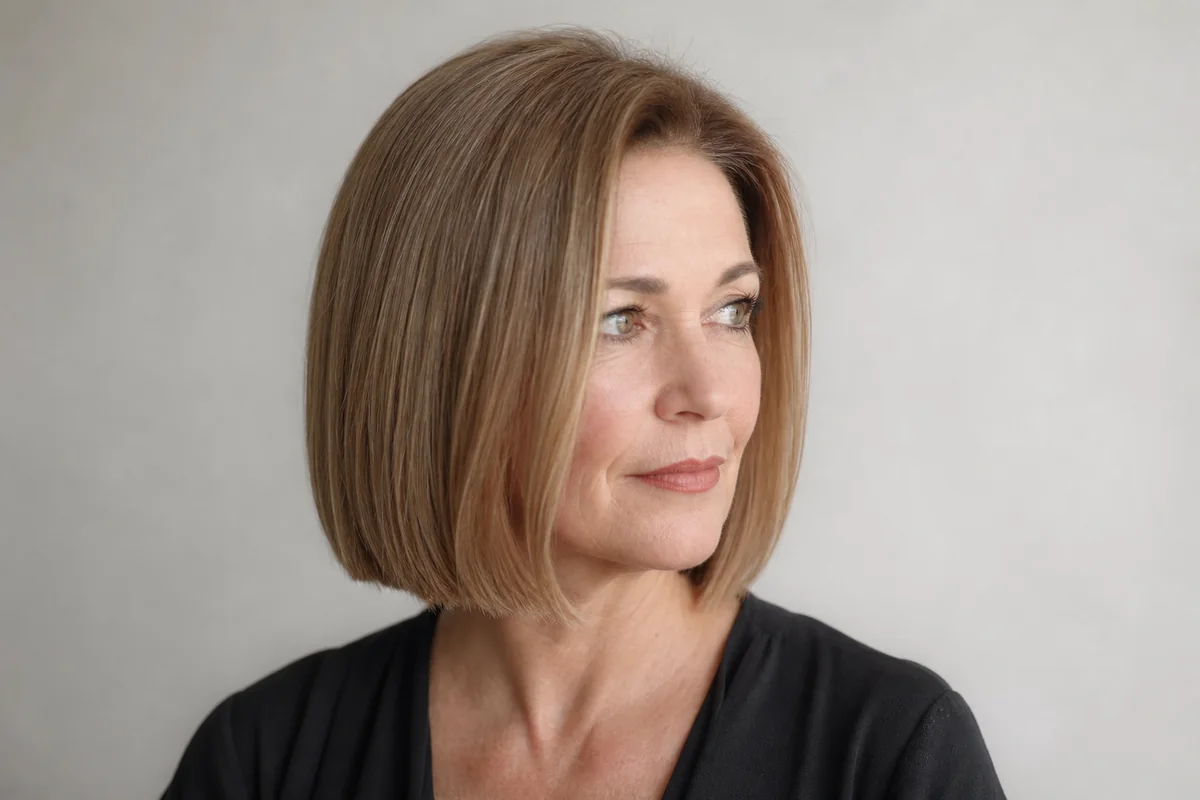
- Length
- Mid-neck
- Texture
- Straight to 2A
- Density
- Fine, thin
- Face shapes
- Oval, heart, long
- Daily effort
- 10 minutes
- Trim every
- 8 weeks
At mid-neck, fine hair still has enough weight to swing, but the ends stay solid instead of turning see-through at the collarbone. Volumizing mousse at the roots, about a golf ball, and a side part give the lift a longer cut takes away.
Ask for: "A blunt lob at mid-neck, cut with no elevation, nothing taken out of the ends, side part."
17. Silver Lob with a Soft Bevel

- Length
- Just above the shoulders
- Texture
- Straight; coarse gray
- Density
- Medium
- Face shapes
- Round, square, oval
- Daily effort
- 10-15 minutes
- Trim every
- 8 weeks
A bevel turns the ends slightly under, and on coarse gray hair that curve reflects light and reads polished rather than wiry. Use a round brush of about 1.5-2 inches and keep hot tools around 300-350°F, since gray hair often feels drier.
Ask for: "A lob just above my shoulders, slightly beveled under, with the ends kept solid so the gray looks smooth."
18. Low-Maintenance Level Lob That Grows Out Evenly
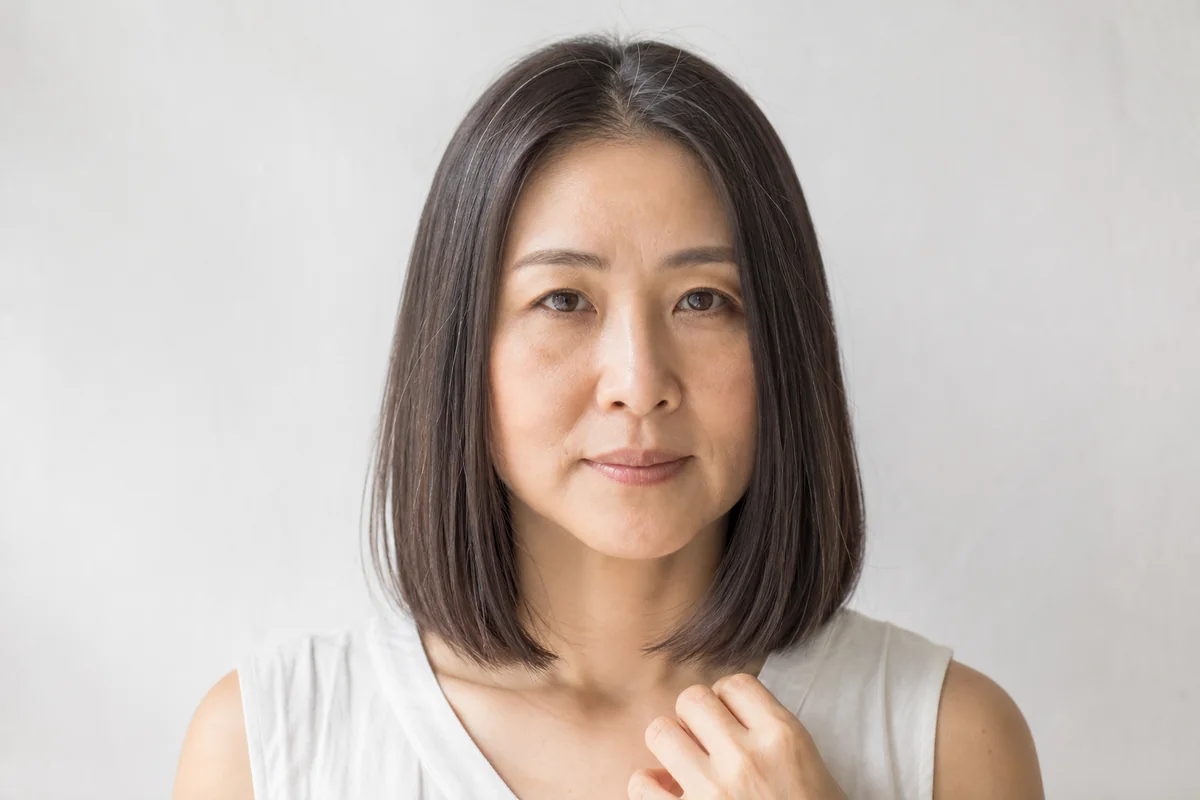
- Length
- Collarbone, level all round
- Texture
- Straight to 2B
- Density
- Fine to thick
- Face shapes
- Oval, round, square
- Daily effort
- 0-5 minutes
- Trim every
- 10-12 weeks
With no angle, no layers and no bangs, nothing grows out of proportion, which is what makes this the lowest-maintenance lob. Unstyled, it can look flat; it suits someone who ties hair back most days, and at this length there is enough hair for a low bun or short French twist.
Ask for: "A level lob at my collarbone, no layers, no angle, ends cut solid so it grows out evenly."
Long Bob Haircut Fit by Texture and Density
Texture sets where the hem is measured, and density sets how much weight comes out. Straight hair is measured as it is cut; curls and coils are measured dry, and their length stretched can be twice their dry length or more.
| Hair | Set the hem | Perimeter and layers | What goes wrong |
|---|---|---|---|
| Straight, fine | Mid-neck to just above the shoulders | Blunt; face-framing only, if any | Stringy, see-through ends at the collarbone; daily flip on the shoulders |
| Straight, thick | Collarbone, back slightly shorter | Interior weight removal, long layers from the chin | Triangle at the hem; flat crown |
| Wavy, fine | Just above to grazing the shoulders, about 1 in longer wet | Soft point-cut ends, few layers | Waves dragged straight by length; frizz from thinning shears |
| Wavy, thick | Collarbone, checked dry | Layers from the cheekbone or crown | Bottom-heavy bulk; waves stack at the jaw |
| Curly, 3A-3C | Dry length; 1-3+ in longer wet | Cut dry, curl by curl; layers that follow the curl | Triangle if cut one length; wet cut lands too short |
| Coily, 4A-4C | Dry length in the state you wear most | Shaped dry; front often longer for direction | Sphere shape; length that only works stretched |
Salon note: When fine hair at the collarbone looks thin, the fix is usually length, not layers. Taking a lob up from the collarbone to mid-neck can make the ends look noticeably thicker, while adding layers takes away the little weight the hem has.
Choosing a Lob for Your Face Shape
A lob already ends below the widest part of most faces, so on this cut the face-shape work happens at the front. The general edge-and-volume rules are on the hub; for a lob, the levers are where face-framing starts, the part and whether the front is longer than the back.
| Face shape | Where to end the front | Face-framing starts | Avoid |
|---|---|---|---|
| Round | Collarbone, front longer than back | Below the chin | Short lobs with rounded, curled-under ends at the jaw |
| Square | Collarbone or shoulder-grazing | Cheekbone, soft and point-cut | A blunt edge ending at the jaw corners |
| Long | Mid-neck to above the shoulders | Bangs or curtain bangs at the brow or cheekbone | Long, flat, center-parted collarbone lobs |
| Heart | Chin to mid-neck, fuller at the ends | Chin | Heavy crown volume with thin ends |
| Oval or diamond | Any lob length | Cheekbone (diamond) or anywhere (oval) | Height at the crown on a diamond face |
Curly and coily lobs shift each row: a curly lob that ends at the collarbone dry carries its width at the jaw or below, so round faces do well with longer fronts and fewer side layers.
What to Ask for at a Lob Appointment
Name the landmark, say whether the ends may touch your shoulders and describe the back, and the stylist has what a photo alone can't give. Lob photos hide the back and are often shot with the head tilted, so one image can mean mid-neck or collarbone.
- Landmark, dry. Chin plus inches, mid-neck, above the shoulders, grazing or collarbone. Curls and coils: say what that means dry.
- Shoulders. Clear of them, or resting on them with the flip accepted.
- Back. Level, or how many inches shorter than the front (about 1-2 at lob length).
- Weight. Ends kept solid (fine hair) or interior weight removed (thick hair).
- Layers. None, face-framing from the chin or cheekbone, or crown layers for a shaggier lob.
- Fringe. None, curtain bangs at the cheekbone or full bangs at the brow, checked dry.
A full script reads like this: "A lob ending an inch above my shoulders when dry, back about an inch shorter than the front, ends kept solid, face-framing from my chin, no bangs."
Salon note: Check the length with your head upright and shoulders relaxed, not tipped forward in the chair. A lob cut with the head bowed can land half an inch to an inch shorter at the back than it looked, which shows most on a level, blunt hem.
Styling a Lob Day to Day
Most lobs take 5-10 minutes on straight hair and mainly need the ends directed, under for polish or into a bend for texture. Product types and amounts for every short length are in the guide on how to style short hair.
- Prep damp hair. Mousse at the roots for fine hair, a nickel-sized amount of cream through the lengths for thick or frizz-prone hair, curl cream or gel on soaking-wet curls and coils.
- Rough-dry, then direct the ends. Dry until about 80 percent done, then use a 1.5-2 in round brush to turn the ends under or away from the face. Keep the dryer moving: in one lab study, drying at about 15 cm with continuous motion caused less surface damage than drying closer and hotter.
- Add bends with a flat iron. Twist the iron half a turn mid-length and glide off, leaving the last inch straight; it reads modern and hides the shoulder flip. Heat damages the cuticle and its proteins, and a lab study of flat-iron heat on virgin hair saw breakdown begin near 392°F (200°C), so keep fine, gray or lightened hair around 300-350°F.
- Diffuse or air-dry curls. Diffuse on low heat with the hair cupped, or air-dry without touching until set; scrunch out the cast once fully dry.
- Finish. 4-8 spritzes of texture spray for grit, or 1-2 drops of light oil on the ends of coarse or coily hair.
Tip: If a shoulder-grazing lob flips out by noon, bend the ends the other way on purpose. A planned bend reads as styled; a random flip reads as overdue.
Lob Maintenance and Growing It Out
A lob needs a trim every 8-10 weeks, and curly or coily lobs can often go 10-12, because a longer hem hides growth better than a bob's. Hair grows about half an inch a month on average, though growth rate differs between people and origins, so a lob cut an inch clear of the shoulders reaches them in about two months.
| Starting point | Months | What happens | What to cut |
|---|---|---|---|
| Chin bob to short lob | 2-4 | Ends pass the jaw, the bob line softens | Even the back if it was graduated |
| Chin bob to collarbone lob | 6-8 | Ends reach the shoulders and flip | Keep the back slightly shorter until it passes the shoulders |
| Short lob to collarbone lob | 4-6 | Shoulder contact begins around month 4-5 | Dust the ends only; reshape face-framing |
| Collarbone lob past the shoulders | 4-6 | The lob becomes mid-length hair | Blend layers so the ends don't thin out |
Angled and layered lobs need the most attention while growing, since the short back and short layers grow at the same rate as the long front. Stop cutting the angle and let the back catch up; a level hem returns in roughly two to four months on a 1-2 inch slope.
When a Lob Is Not the Right Choice
A lob is the safest short cut, but its length works against some hair and some goals.
- You want lift at the crown on fine hair. Lob length pulls fine hair flat. A chin bob or a pixie gives height; the pixie cuts sorted by nape finish show how short works on fine hair.
- Your hair is fine and straight, and you hate the flip. Shoulder-grazing lengths flip daily. Go to mid-neck or an angled lob with a shorter back.
- Your hair is thick and the salon won't remove weight inside. A collarbone lob turns triangular. Find a stylist who slide-cuts the interior, or go shorter with a hidden nape undercut.
- You want the look of a short cut. A lob reads as a shorter version of long hair, not as short hair. If the point is a new shape, a bob makes more of a change.
- Your curls have never been cut dry. A wet-cut curly lob can land 2-3 inches shorter than expected. Book a stylist who cuts curls dry, or ask for a first cut that stays long.
The right long bob haircut comes down to the landmark, the shoulders and the back: decide whether the ends should clear your shoulders, and whether the back is level or slightly shorter. Save one front and one back photo, measure where your ends sit today with your head upright, and read your script from the what-to-ask list at the appointment.