
Short version: The strongest fine hair short bob haircuts are blunt or only softly graduated, end between the jaw and the chin, and keep one solid hem with little or no layering underneath. Fine strands get their fullness from the edge, so the cut protects the edge and builds lift at the crown and back. Straight, wavy, fine curly and coily hair each take a different length and cutting method. Expect a trim every 6-8 weeks and 8-12 minutes of drying.
Fine Hair Short Bob Haircuts: Blunt, Graduated or Stacked
Fine means each strand is narrow, not that there are few of them, so a bob on fine hair behaves differently from a bob on coarse hair of the same density. Narrow strands are light and bend easily. They fall flat at the root and separate at the ends unless the hem is cut to one clean line. Within the wider world of short haircuts for women, this page covers bobs for fine strands with average or high density; if the scalp shows through at the part, short hairstyles for thin hair sorts fine strands, low density and thinning first and then the cuts.
Every bob comes down to the same three decisions: how the edge is cut, how much weight is built at the back, and what happens inside the crown. The graduation, stacking and angle section of the bob hub defines the terms. Here, each is judged by what it does to a fine strand. The bob section has the other bob pages. The 15 looks are grouped that way, and the tables after them cover hem height, texture, fringe, drying and trims.
Blunt Bobs on Fine Hair
A blunt bob gives fine hair its densest possible edge, because every strand ends at the same height and the ends stack into a visible line instead of thinning out. The trade-off is that the line shows everything: a hem that grows uneven, a split end or a stray strand reads at once. The four looks below differ in how high the hem sits and how it is finished.
1. Jaw-Length Blunt Bob with a Center Part

- Length
- Hem level with the jawline, one length
- Texture
- Straight
- Density
- Fine strands, medium to high density
- Face shapes
- Oval, heart, long
- Daily effort
- 8-10 minutes
- Trim every
- 6-8 weeks
The jaw is the most forgiving landmark on fine hair: the hem sits against the face and the weight lies in a line, not a fan. A center part works here because the hair on both sides falls the same way, so there is no heavy side to flatten the other.
Ask for: "A blunt bob at the jawline, no layers, no texturizing. Cut it wet with no elevation, then check the line dry."
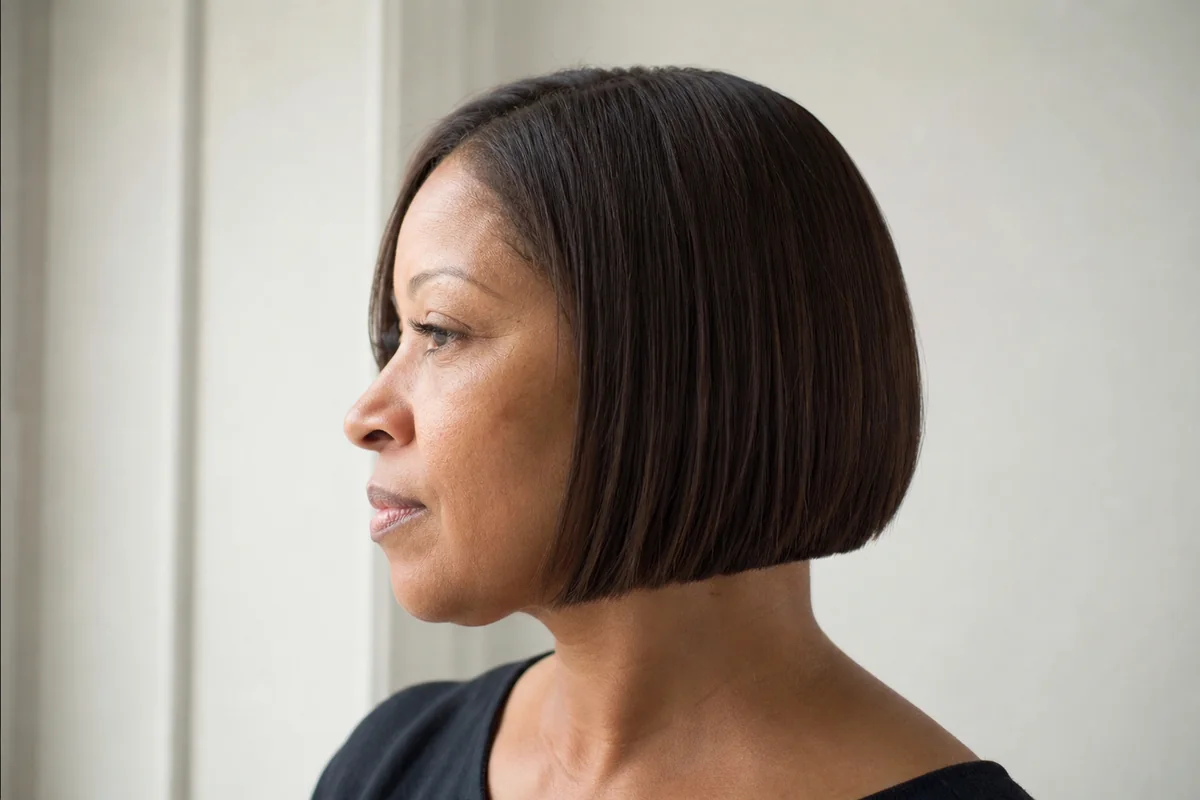
2. Earlobe Blunt Bob with a Clean Nape
- Length
- Hem at the earlobe, nape just above the hairline
- Texture
- Straight, or smoothed curls
- Density
- Fine strands, medium to high density
- Face shapes
- Oval, heart, diamond
- Daily effort
- 8-10 minutes
- Trim every
- 5-6 weeks
This is close to the highest a hem can sit on fine hair before it starts to lift off the neck. It suits hair dense enough that the nape stays covered, and it rewards a smooth finish, since fine strands this short pick up static and flyaways quickly.
Ask for: "A blunt bob at the earlobe with the nape cut to follow my hairline, not tapered. Leave the ends one length."
3. Blunt Bob with a Longer Front

- Length
- Back at the jaw, front about 1 in longer, to the chin
- Texture
- Straight to slightly wavy
- Density
- Fine strands, medium density
- Face shapes
- Round, square, oval
- Daily effort
- 8-10 minutes
- Trim every
- 6-8 weeks
One inch of angle slims the sides of a rounder or squarer face while the hem stays blunt and dense. Steeper angles use shorter hair at the back, which is the part of a fine bob with the least hair to spare, so keep it gentle.
Ask for: "A one-length bob, about an inch longer at the front than the back. Keep the whole hem blunt."
4. Blunt Bob with Point-Cut Ends

- Length
- Chin, ends softened about 1/4 in deep
- Texture
- Straight
- Density
- Fine strands, high density only
- Face shapes
- Square, round, diamond
- Daily effort
- 8 minutes
- Trim every
- 6 weeks
Point cutting removes a little density at the very edge, so this finish belongs only on fine hair that has plenty to give. It takes the hardness off a blunt line near a squarer jaw. Skip it where the hem already looks see-through at the ends, since it can only make that more visible.
Ask for: "A blunt chin bob, then point cut the last quarter inch only. No thinning shears, no razor."
Graduated and Stacked Bobs on Fine Hair
Graduation builds weight at the back, which is where fine hair most needs it, and the hem stays one length. Stacking is the same idea cut shorter and tighter at the nape. Both give a fine bob the rounded shape that a one-length cut can't hold, at the price of a trim every 5-7 weeks, since the back loses its shape first.
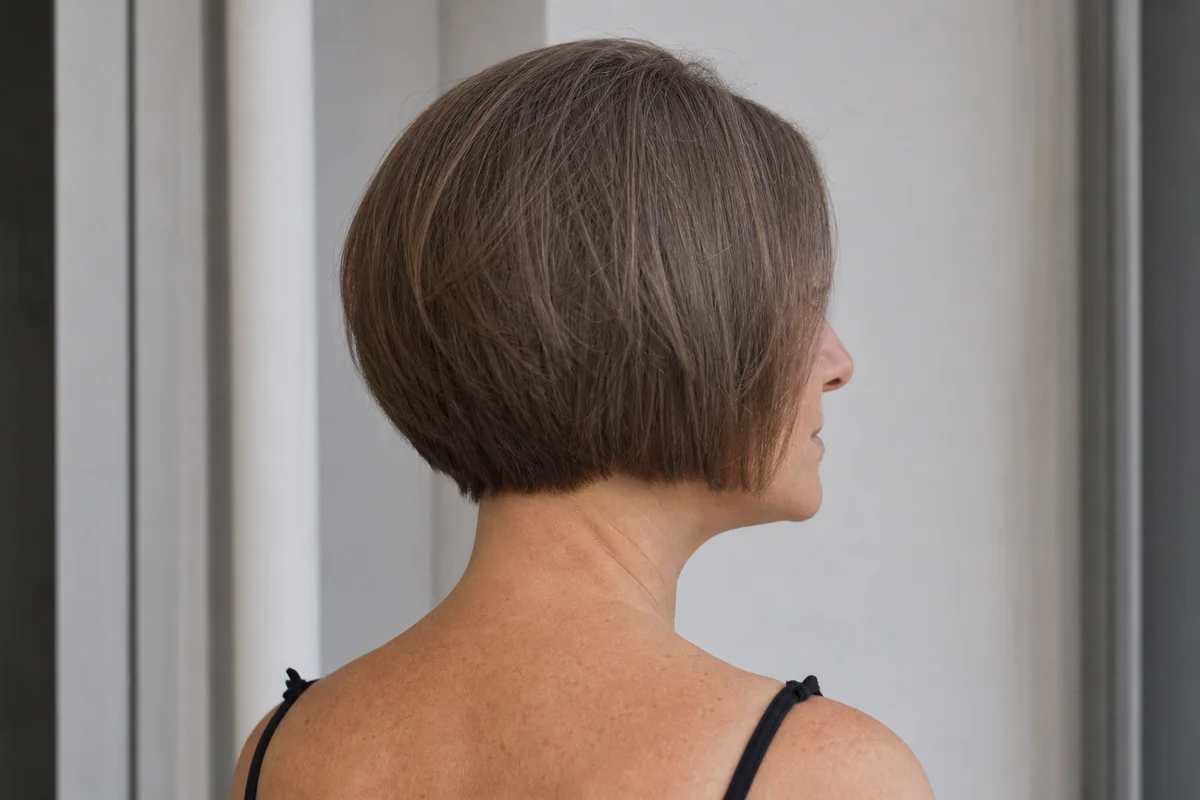
5. Low-Graduation Bob with a Solid Hem
- Length
- Jaw, about 1 in of graduation at the nape
- Texture
- Straight to wavy
- Density
- Fine strands, medium density
- Face shapes
- Oval, long, square
- Daily effort
- 8-10 minutes
- Trim every
- 5-7 weeks
The graduation here is held low, at roughly 30-45 degrees of elevation, and stops well above the hem. That puts a soft rounded bulk in the back without breaking the bottom line, which is the version of graduation fine hair tolerates best.
Ask for: "Low graduation through the back, about an inch of build at the nape, and leave the outer hem completely solid."
6. Short Stacked Bob with a Three-Row Stack
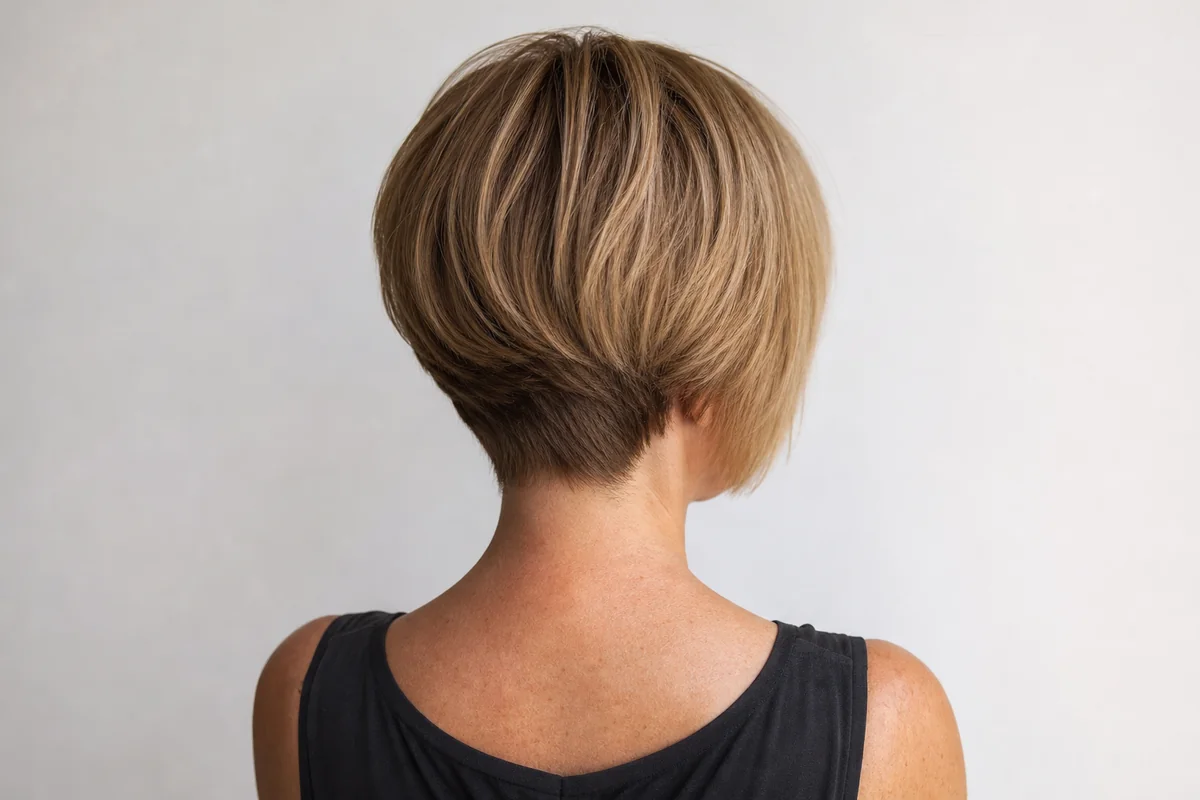
- Length
- Back 1.5-2 in above the hairline, front to the chin
- Texture
- Straight
- Density
- Fine strands, medium density
- Face shapes
- Oval, round, heart
- Daily effort
- 10-12 minutes
- Trim every
- 5-6 weeks
A stack stands in for the volume that fine hair lacks at the back of the head, with each short tier propping up the one above it. Keep it to about three rows: a deeper stack on fine hair removes the length that carries the hem. Anyone with a nape whorl should say so before cutting starts.
Ask for: "A stacked bob with three short rows, tapered at the nape, front at the chin. Cut the stack by hand, not clippered."
7. Funky Stacked Bob with a Clippered Nape
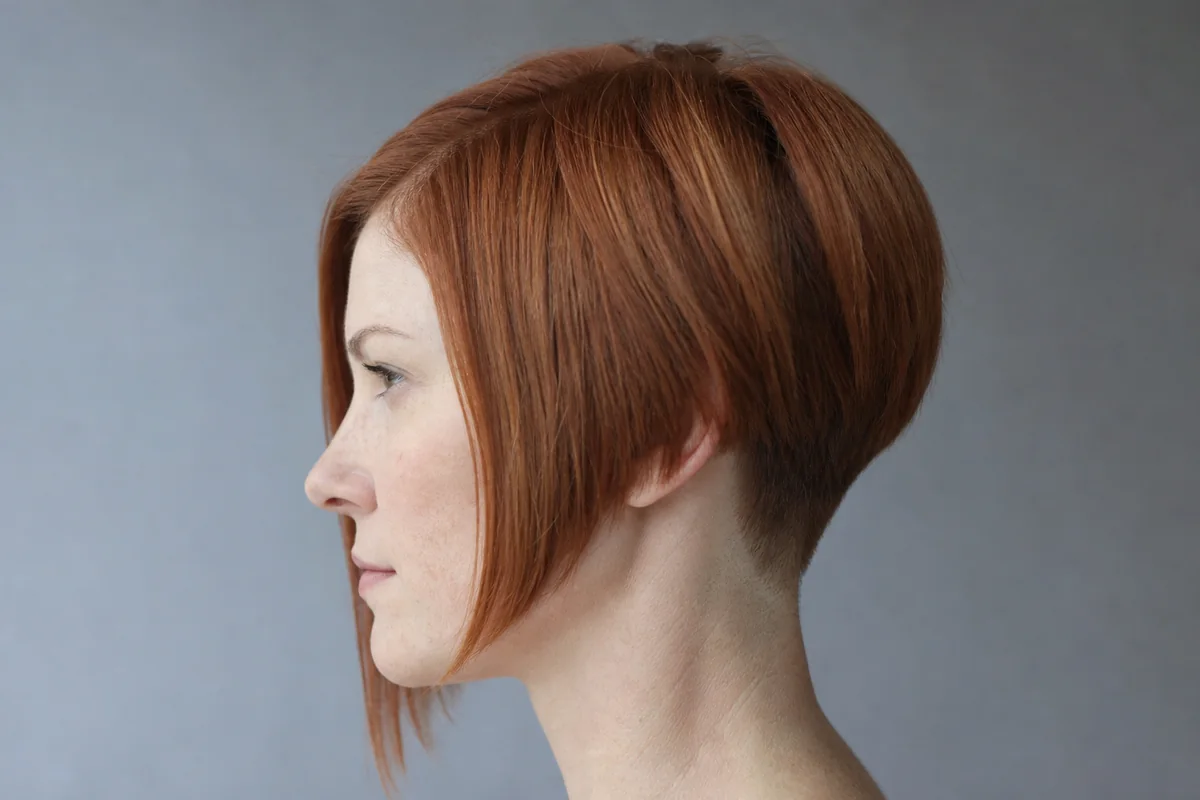
- Length
- Nape #3 guard, front to the chin
- Texture
- Straight to wavy
- Density
- Fine strands, medium to high density
- Face shapes
- Oval, heart, diamond
- Daily effort
- 10 minutes
- Trim every
- 5 weeks, nape cleanup at 2-3
The shape for anyone who wants an edge. The clippered nape sits under the stack, so the contrast comes from short back against long front, and fine hair carries it well because there is so little bulk to hide. It costs the most upkeep on the page: the nape fuzzes within weeks, as in the pixie guide's nape section.
Ask for: "A stacked bob with the nape clippered to a #3 and blended up, front at the chin on a slant. Book the cleanup now."
Layered, Choppy and Fringed Bobs on Fine Hair
Layers help fine hair only when they stay inside or on top, and a visible layer through the hem removes the strands that make the edge look dense. These five looks add movement and shape in different places. For how long, short, surface and internal layers differ, see short layered haircuts.
8. Internal-Layer Bob with a Blunt Hem

- Length
- Chin, hidden pieces 3-4 in inside the crown
- Texture
- Straight to wavy
- Density
- Fine strands, medium to high density
- Face shapes
- Oval, long, square
- Daily effort
- 8-10 minutes
- Trim every
- 6-8 weeks
Shorter pieces cut inside the crown sit under the top layer of hair. They push the roots up and keep the outside intact, so the lift is invisible and the hem keeps its weight. It is the quietest way to add shape to a fine bob and the easiest to get wrong: ask the stylist to stay above the hem, with a deep margin.
Ask for: "A blunt chin bob with a few internal layers in the crown only. Nothing visible, nothing through the hem."
9. Choppy Bob with Crown Layers and a Full Hem

- Length
- Jaw, crown layers about 3 in
- Texture
- Straight to slightly wavy
- Density
- Fine strands, medium density
- Face shapes
- Round, oval, heart
- Daily effort
- 10 minutes
- Trim every
- 6 weeks
The choppy finish comes from point-cut ends on a short crown section and a light texture spray worked through the mid-lengths, not from cutting into the hem. Done that way, the top looks lively while the outline still reads as full. A comb-through with the fingers is all the styling it needs.
Ask for: "A jaw bob with short, point-cut layers across the crown only, about 3 inches, and the perimeter left blunt."
10. Pixie-Bob Hybrid with a Short Back and Chin-Length Front

- Length
- Back 1-1.5 in at the nape, front to the chin
- Texture
- Straight to wavy
- Density
- Fine strands, medium density
- Face shapes
- Oval, round, heart
- Daily effort
- 8-10 minutes
- Trim every
- 5-6 weeks
This sits between a stacked bob and a bixie: the back is as short as a pixie's but the front stays long enough to curve round the face. Shortening the back moves the weight forward, which lifts the crown and keeps the front dense on fine strands.
Ask for: "A short, tapered back, about an inch and a half at the nape, with the sides and front left to the chin. Keep the front one length."
11. Bob with a Wide Blunt Fringe

- Length
- Chin, fringe at the brow
- Texture
- Straight
- Density
- Fine strands, high density
- Face shapes
- Long, oval, heart
- Daily effort
- 10 minutes
- Trim every
- Fringe 3-4 weeks, bob 6-8
A fringe borrows hair from the crown, so on fine hair the section must stay narrow: a triangle about 1.5-2 inches deep at the part, no wider than the outer brow corners. A fringe cut deeper thins the bob behind it. This look needs high density, and it shortens a long face.
Ask for: "A blunt fringe at the brow from a narrow triangle section, about two inches deep, so the rest of the bob keeps its weight."
12. Bob with a Soft Curtain Fringe

- Length
- Jaw, fringe sweeping to the cheekbones
- Texture
- Straight to wavy
- Density
- Fine strands, medium density
- Face shapes
- Round, square, heart
- Daily effort
- 8-10 minutes
- Trim every
- Fringe 4-5 weeks, bob 6-8
Curtain fringes ask for less hair than a blunt one, because they thin toward the edges and blend into the sides. That makes them the safer fringe for medium density. The grow-out is easy too, since the ends just join the face-framing length. The curtain bangs guide has the cut-by-cut detail.
Ask for: "A jaw bob with curtain bangs parting in the middle, cut from a small section, ending at the cheekbone. Keep the hem blunt."
Wavy, Curly and Coily Fine Bobs
Fine strands in a wave, curl or coil change the cut more than they change the shape: the hair shrinks, the hem moves up, and the fine, fragile strand needs a cutting method that protects the pattern. Curl shape is set at the follicle, so the cut works with the pattern and doesn't try to change it. More on curl-pattern cutting is in short curly hair.
13. Wavy Fine Bob Cut Dry at the Jaw

- Length
- Jaw when dry, hem gently curved
- Texture
- Wavy (2A-2C)
- Density
- Fine strands, medium density
- Face shapes
- Oval, heart, long
- Daily effort
- 5-8 minutes
- Trim every
- 6-8 weeks
Waves draw up as they dry, often by half an inch to an inch, so a hem set at the jaw when wet can end near the earlobe. Cutting dry, or at least checking dry, shows the true length. A slightly curved hem follows the wave instead of fighting it.
Ask for: "A bob at the jaw cut dry, hem slightly curved, no layers. Leave it half an inch longer than I want and refine from there."
14. Fine Curly Bob Cut Dry with Minimal Layers
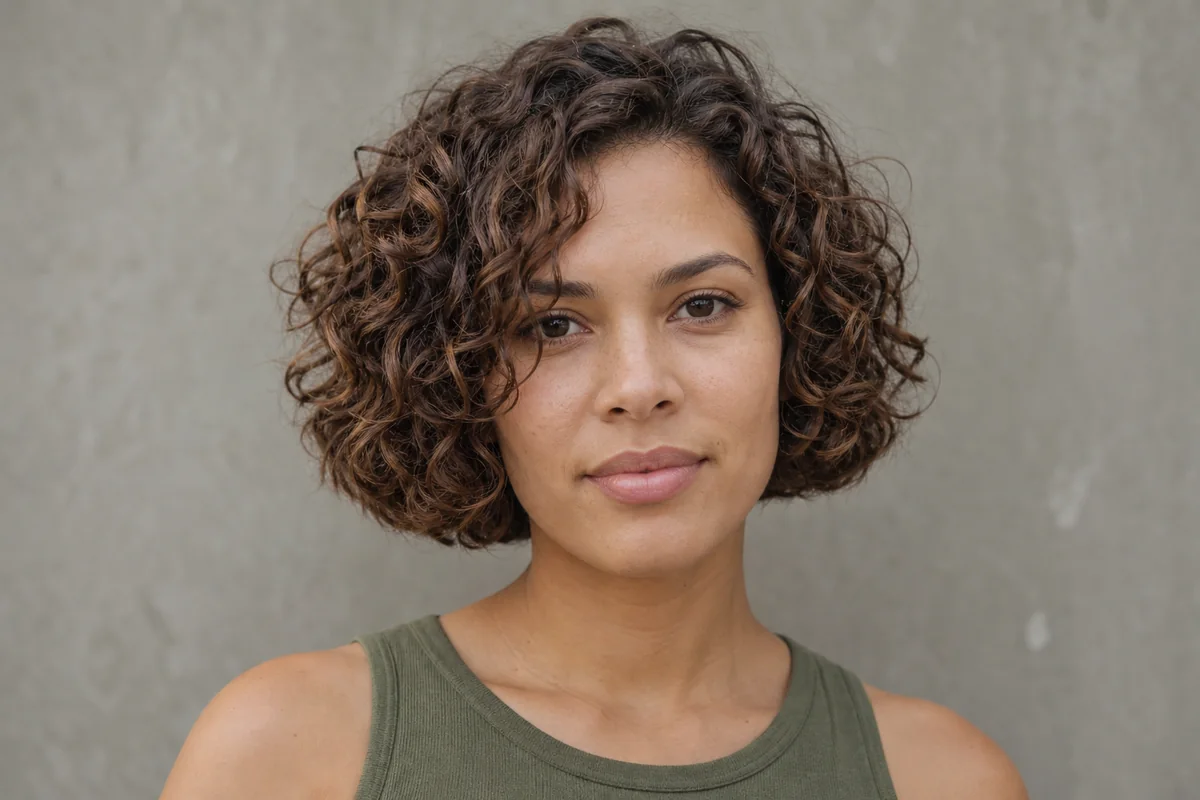
- Length
- Chin when stretched, near the jaw when dry
- Texture
- Curly (3A-3B)
- Density
- Fine strands, medium density
- Face shapes
- Oval, long, heart
- Daily effort
- 10-15 minutes
- Trim every
- 8 weeks
Fine curls are looser and softer than thick ones, so they separate easily at the ends and show gaps when cut with many layers. A few long layers around the face and a curved, even hem keep the shape dense. Allow 2-3 inches of shrinkage from stretched length to dry.
Ask for: "Cut dry, curl by curl, and leave 2-3 inches for shrinkage. Few, long layers; keep the hem rounded and even."
15. Rounded Coily Bob on Fine-Stranded 4A Hair
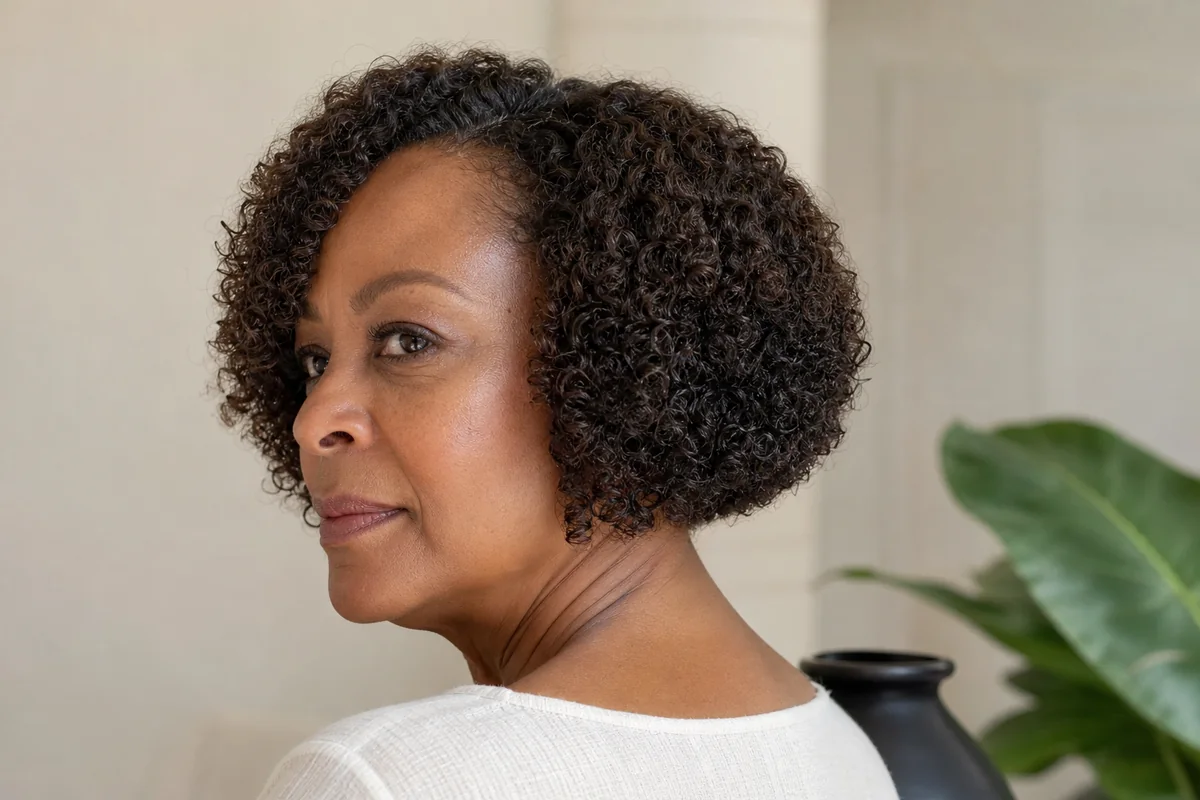
- Length
- Jaw when stretched, near the earlobe when dry
- Texture
- Coily (4A)
- Density
- Fine strands, medium to high density
- Face shapes
- Oval, heart, long
- Daily effort
- 10-15 minutes
- Trim every
- 8-10 weeks
Fine strands in a tight coil are easy to break and shrink sharply, so the cut works on the shape of the whole mass, not on single lines. Cut in the state you wear most days, and keep the outline rounded and the nape tapered lightly.
Ask for: "A rounded bob cut in my usual wear state, stretched length to the jaw. Shape the outline by hand and taper the nape lightly."
How High the Hem Can Sit Before Fine Hair Looks Sparse
On fine hair, the hem can rise to about the earlobe before it begins to look sparse, and the limit depends on density and on the nape. Stylists who cut short bobs generally treat the jaw and chin as the safest zone, because the weight lies along the edge there. Higher up, fine strands lift away from the neck and the scalp shows at the nape and around the ears.
| Hem landmark | What it does on fine hair | Where it goes wrong |
|---|---|---|
| Mid-neck | Looks fullest from behind and swings at the neck | Ends can flick out on the collar; cut the back slightly shorter than the front |
| Chin | Densest line, weight rests on the jaw | Can pull the face down on a long face |
| Jaw | The default: dense line, easy volume at the crown | A level hem exactly at a square jaw reads hard |
| Earlobe | Adds lift, shows the nape; the highest hem most fine hair holds | Nape shows scalp on lower density; static |
| Above the earlobe (ear bob) | Behaves like a pixie, with sides that cover the ear | Shape collapses within weeks; see the bixie if you want it this short |
Salon note: A hem that looks full at the salon and sparse by week five has usually been cut too high, not cut badly. Fine hair grows in a straight line down, so a hem set at the lowest point you like looks best across the whole cycle, and the next trim can bring it up.
Blunt, Graduated, Stacked or Layered: Which Cut Fits Fine Hair
Choose by the problem to solve: a blunt cut for a thin-looking edge, graduation or stacking for a flat back, internal layers for a flat crown. The table puts each method against what it does to a fine strand.
| Method | What it does on fine hair | Best for | Watch for | Looks |
|---|---|---|---|---|
| Blunt | Keeps the densest edge; no lift at the root | Wispy ends, straight hair | Flat crown; uneven growth shows | 1-4 |
| Low graduation | Rounds the back, hem stays whole | Flat back of head | A bulge if the hem is also layered | 5 |
| Stacked | Adds height at the back with a short nape | Flat nape, wanting an edge | Fast growth; needs frequent trims | 6, 7, 10 |
| Internal layers | Lifts the crown; invisible from outside | Flat crown, medium to high density | Cut too low, it thins the hem | 8 |
| Surface layers | Visible movement on top | Fine, straight hair that falls limp | Razor or thinning shears | 9 |
The counter-intuitive part is that more layers rarely make fine hair look fuller. Each layer removes the strands that made the edge look solid, which is why the table keeps them on top or inside.
The Role of a Fringe on a Fine Hair Bob
A fringe adds the look of density at the front and uses hair from the crown to do it, so how much it helps depends on how much hair there is to spare. A blunt fringe makes the bob look thicker and needs high density. A curtain fringe uses less hair and suits medium density. Anyone with a widow's peak, a cowlick at the hairline or a receding temple should check the short hair with bangs guide before committing, because the front hairline decides how a fringe falls.
On wavy and curly fine hair, cut the fringe dry and leave it longer, since it shrinks the most. On coily hair, cut it in the state it is worn.
Bob Length by Fine Texture
Texture decides how much longer the bob is cut than the length you want to see. The numbers are guides; a stylist should check against how that hair dries.
| Fine texture | Where to cut the hem | Method | Layering |
|---|---|---|---|
| Straight | Jaw to chin | Wet, line checked dry | None, or internal in the crown |
| Wavy (2A-2C) | Jaw; leave 1/2-1 in extra | Dry, or wet then checked dry | Minimal, longer layers only |
| Fine curly (3A-3C) | Chin when stretched; 2-3 in extra | Dry, curl by curl | A few long face-framing layers |
| Fine-stranded coily (4A-4C) | Jaw when stretched; shape in the wear state | Dry, in the state worn most | A taper that keeps top and front dense |
A bob in a longer chin-length version slides toward the lob, which is covered in long bob haircuts; fine hair at the collarbone usually looks thinner than the same hair at the jaw.
What to Ask For at a Fine Hair Bob Appointment
Describe the hem, the back and the crown separately, because "fine hair bob" doesn't tell a stylist where to remove or keep weight. Bring one photo of the shape and one of what you don't want. Then say it in these terms:
- Name the landmark. "The hem at the jaw" is exact; "short" isn't.
- Say what stays whole. "A solid hem, no layers through the ends, no thinning shears."
- Describe the back. Blunt, about an inch of graduation, or stacked in three rows.
- Allow the crown help. "A few internal layers in the crown if the top will stay flat."
- Ask for a dry check. The line is checked dry before you leave.
Salon note: Thinning shears and razors are the tools most often behind a fine bob that went wrong. On fine strands they cut at several heights at once, which fuzzes the ends and thins the edge. Ask for scissors, and point cutting only on the last quarter inch where a look calls for it.
Root Lift and Drying Technique for a Bob
Fine hair holds a bob's shape when it is dried upward at the root and turned under at the end, and where the dryer points matters more than the product. Allow 8-12 minutes. Wet fine hair is fragile, so use a wide-tooth comb with conditioner on, working from the ends up. Lab testing on hair tresses found that drying with a dryer held 15 cm away and kept moving caused less damage than air drying, while higher temperatures damaged the surface more (Lee et al., Ann Dermatol 2011).
- Blot, then prep. Press the water out with a towel and work a lightweight volumizing mousse or root spray into the roots only.
- Rough-dry the roots. Lift the crown up and away from the scalp, drying until the hair is about 80 percent dry.
- Section the crown. Clip the top away and dry the back in a few sections.
- Use a round brush. A barrel about 1.5-2 inches wide lifts the roots; hold the dryer at roughly 15 cm and keep it moving.
- Turn the ends under last. Roll the brush under at the hem, then cool the hair to set it.
- Flip the part. Dry the roots in the opposite direction for lift, then comb the part back.
For wavy and curly hair, skip the brush: apply a light cream or gel, then use a diffuser on low heat, with the head tipped. For coily hair, stretch with a wide-tooth comb on damp hair, or leave the pattern alone and shape it by hand. Heavy oils and waxes weigh fine strands down; look for light mousses and sprays.
Tip: Dry shampoo at the roots on day two restores lift without a second blow-dry, and rinsing it out the next wash keeps the scalp clean.
Low-Maintenance Fine Bobs and Trim Timing
A fine hair bob lasts 6-8 weeks before the hem loses its line, and shorter, more shaped cuts need visits sooner. Low maintenance on fine hair means a cut that dries into shape with little effort, plus a trim schedule you will really keep. The low-maintenance short haircuts page separates daily minutes from weeks between trims.
| Cut | Daily minutes | Trim every | Visits a year | What slips first |
|---|---|---|---|---|
| Blunt jaw bob (looks 1, 3) | 8-10 | 6-8 weeks | 6-9 | The line, then the part |
| Earlobe bob (look 2) | 8-10 | 5-6 weeks | 9-10 | The nape |
| Low-graduation bob (look 5) | 8-10 | 5-7 weeks | 7-10 | The rounded back |
| Stacked bob (looks 6, 7, 10) | 10-12 | 5-6 weeks, nape cleanup at 2-3 | 9-10 | The tapered nape |
| Internal-layer bob (look 8) | 8-10 | 6-8 weeks | 6-9 | Crown lift |
| Wavy or curly bob (looks 13-15) | 5-15 | 8-10 weeks | 5-6 | The curve of the hem |
The lowest-effort version for fine straight hair is a blunt jaw bob that air-dries with a side part and a little mousse; it asks for a visit every 8 weeks and little else.
Salon note: A fine hair bob grows out gracefully if the hem stays blunt, because it only gets longer, not shaggier. Stacked and clippered shapes are the exception: book the cleanup at the end of the cut. A part that is widening, or more hair than usual in the brush each wash, is a question for a dermatologist, not a trim.
When a Short Bob Is Not the Right Choice for Fine Hair
- Very low density. If the scalp shows at the part or crown when the hair is dry, an ear-length bob can look sparser. Try a longer front, a deep side part and a hem at the chin, or start from the thin-hair guide above.
- A strong nape whorl. A short, tapered back lifts at the whorl. Choose a graduated jaw bob, or leave the back longer.
- Wanting wash-and-go with no heat. Fine hair that falls limp needs at least a quick dry at the root. A pixie that stands up on its own may suit you better.
- Heavily layered hair you want to keep. Layers cut elsewhere need months to grow out before a blunt hem looks even; plan for 3-4 trims.
- Hair cut in a rush. A one-length hem shows every hurried line. Book a stylist who will check it dry.
The best fine hair short bob haircuts keep one solid hem at the jaw or chin, add lift through a low graduation or a few hidden layers, and leave the ends alone. Match the length to your texture, bring the landmark and the words from the scripts above, and book your next trim for 6-8 weeks out before you leave the chair.