
Short version: A French bob is a short, blunt-edged bob that ends between the cheekbone and the jaw, usually with a fringe, and is worn undone rather than smoothed flat. It suits straight to wavy hair of fine to medium density most easily; thick, curly and coily hair wear it well when weight is removed from the inside or the hem is shaped dry. Plan on a trim every 6-8 weeks, the fringe every 3-5, and about 5 minutes of styling most mornings.
What Makes a Bob a French Bob
A French bob is defined by where it ends and how it is finished: a one-length perimeter that sits higher than a classic chin bob, a blunt edge that is softened rather than razor sharp, and a fringe that skims the brows. Within the wider family of bob haircuts, it is the cut that gives up length to gain attitude, so the hem and the fringe do nearly all of the work.
Three choices shape it: the landmark where the hem lands, the fringe, and how much of the finish is left to the hair's own texture. The eighteen looks below are grouped by those choices, followed by tables for length, fringe, texture and face shape.

French Bob vs Blunt Chin Bob vs Italian Bob
The French bob is the shortest and loosest of the three, the Italian bob is longer and fuller, and a blunt chin bob is the plain reference point with no fringe requirement and no undone finish. Labels overlap in magazines, so a stylist needs a landmark and a finish, not a name.
| Cut | Hem lands | Edge and weight | Fringe | Finish |
|---|---|---|---|---|
| Micro bob | Above the earlobe | Blunt, very short, shows the nape | Often a short blunt fringe | Sleek or tousled |
| French bob | Cheekbone to jaw, often earlobe to mouth corner | Blunt with a softened edge, light interior shaping | Brow-grazing, micro or curtain; part of the look | Undone, air-dried or finger-dried |
| Blunt chin bob | At the chin | Sharp, even perimeter, weight at the hem | Optional; any style | Smooth, polished |
| Italian bob | At or just below the jaw to the chin | Rounded, fuller, light internal layers, short front corners | Usually none, or a side sweep | Voluminous, bouncy blow-dry |
The practical split is upkeep and volume. A French bob needs a shorter trim interval than an Italian bob because a half inch changes it more, and it asks for texture, while the Italian bob asks for density and a blow-dry. A bob that ends below the jaw and grazes the shoulders has moved on to the long bob.
Classic French Bobs
A classic French bob keeps one length and a soft blunt edge, and its character comes from the landmark: the nearer the cheekbone, the more graphic it looks. These four set the range from sleek to slightly rounded.
1. Classic French Bob at the Earlobe with a Brow Fringe

- Length
- At the earlobe, fringe at the brows
- Texture
- Straight
- Density
- Medium
- Face shapes
- Oval, heart, long
- Daily effort
- 5-8 minutes
- Trim every
- 6 weeks, fringe at 3-4
This is the reference version, and the earlobe is the safest landing for a first French bob: short enough to read as French, long enough to tuck. A little rough drying at the ends keeps the blunt edge from looking stiff.
Ask for: "A one-length bob at the earlobe, blunt edge softened by point cutting, fringe just touching my brows, checked dry."
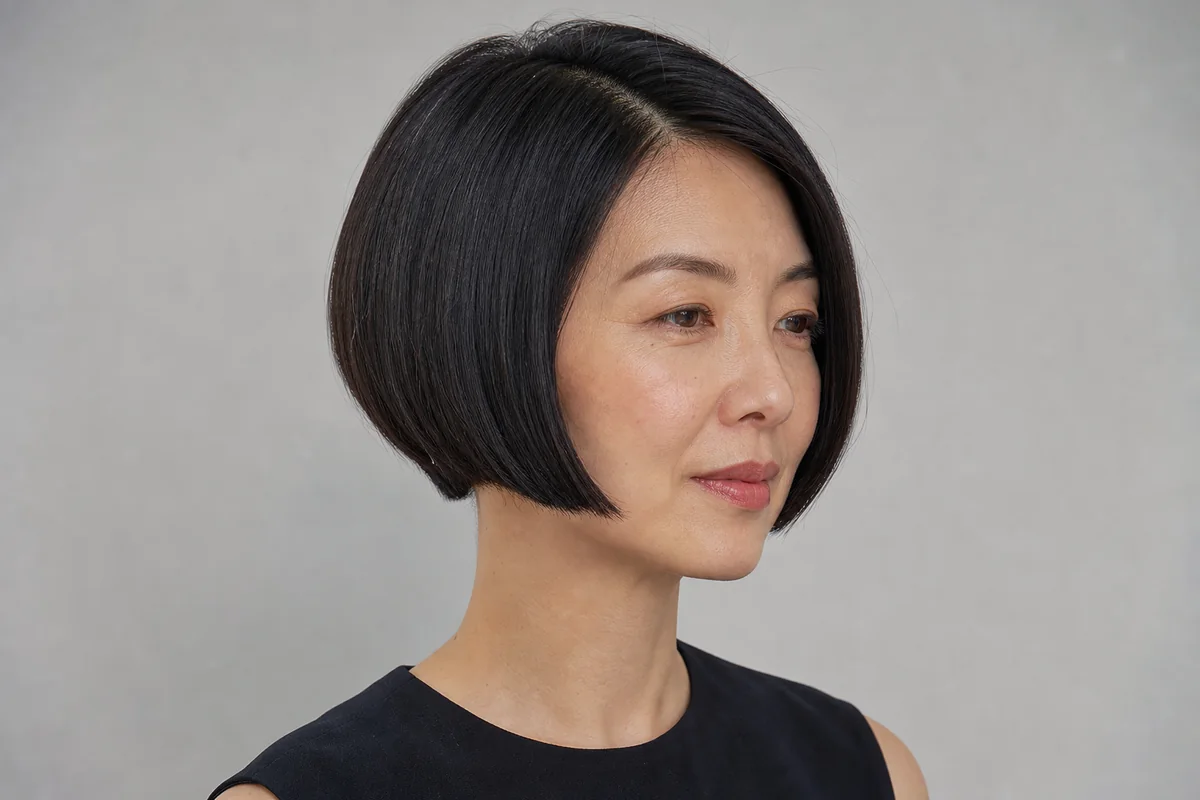
2. Sleek Cheekbone French Bob Without a Fringe
- Length
- At the cheekbone, no fringe
- Texture
- Straight
- Density
- Medium to thick
- Face shapes
- Oval, long
- Daily effort
- 10 minutes
- Trim every
- 5-6 weeks
A French bob does not require bangs; the side part replaces them. Sleek and cheekbone-short leaves no length to forgive an uneven hem, which is why it is the version that most often needs a trim before week six.
Ask for: "A blunt bob that ends at my cheekbone, no fringe, a deep side part, cut with the head level."
3. Jaw-Skimming French Bob Tucked Behind One Ear

- Length
- At the jaw, fringe at the brows
- Texture
- Straight
- Density
- Fine to medium
- Face shapes
- Oval, square, heart
- Daily effort
- 5 minutes
- Trim every
- 6-8 weeks
Tucking one side shows the jaw and gives a short bob an asymmetry that needs no cutting. The jaw is the shortest landing that still tucks, so readers who push hair behind their ears all day should not go higher.
Ask for: "A bob that grazes my jaw, long enough to tuck behind my ear, with a light fringe, edges softened but not layered."
4. French Bob with a Soft Taper at the Nape
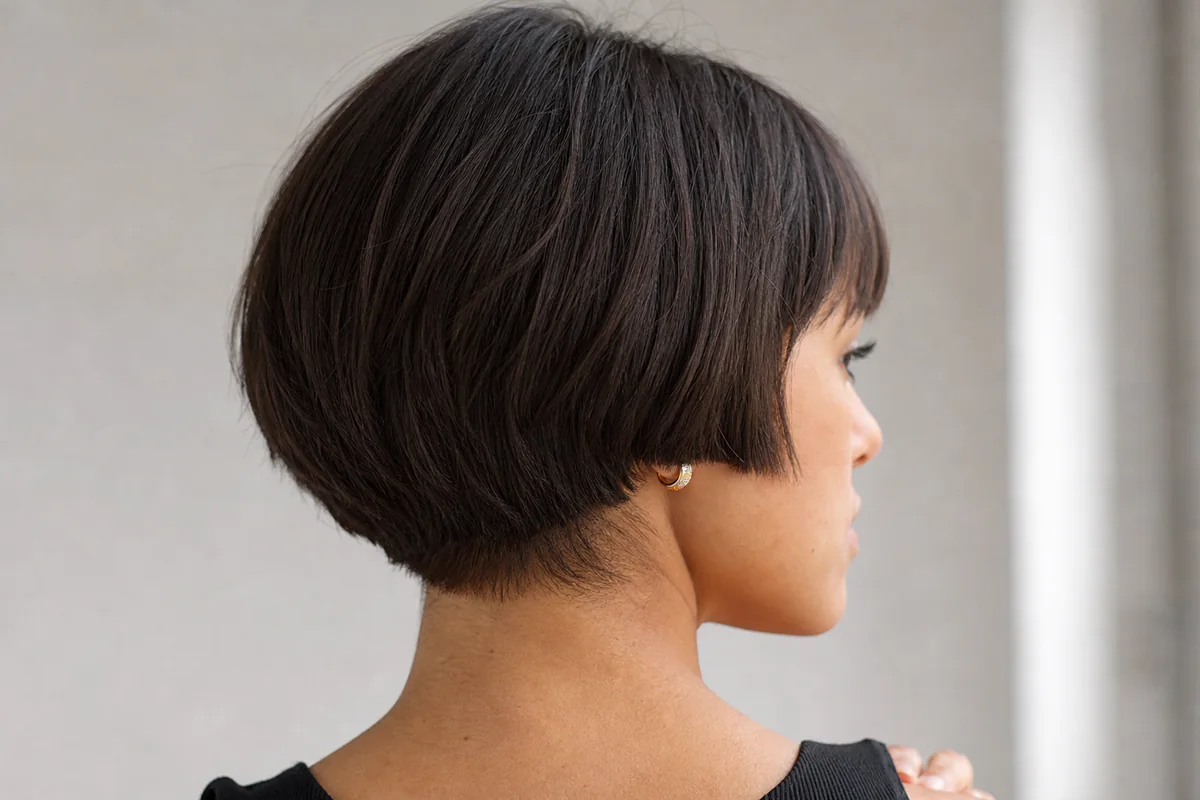
- Length
- Cheekbone to jaw at the sides, tapered nape
- Texture
- Straight to wavy
- Density
- Medium to thick
- Face shapes
- Oval, long, round
- Daily effort
- 5 minutes
- Trim every
- 5-6 weeks
Shortening the back by about half an inch and softening the nape stops the cut from sticking out behind the neck. The taper is scissor-cut, not clippered, so the grow-out has no stubbly stage.
Ask for: "A French bob with the back about half an inch shorter than the sides and a soft scissor taper at the nape, no clippers."
French Bobs with a Fringe
The fringe is what most people picture when they say French bob, and it is the part with the shortest life: a fringe grows into the eyes in about three weeks. The fringe options are compared in a table after the looks; curtain bangs on short hair have their own guide.
5. French Bob with a Micro Fringe

- Length
- Cheekbone, fringe above the brows
- Texture
- Straight
- Density
- Fine to medium
- Face shapes
- Oval, long, diamond
- Daily effort
- 5-10 minutes
- Trim every
- 3 weeks for the fringe
The micro fringe is the high-maintenance end of the cut: it sits about two fingers above the brows, shows every regrowth day and needs a trim at the first sign of the edge touching the brow. It also shortens a long face and exposes a high forehead.
Ask for: "A micro fringe about two finger-widths above my brows, cut straight across dry, tapering into the cheekbone bob."
6. French Bob with Wispy Bangs on Fine Hair

- Length
- At the jaw, wispy bangs at the brows
- Texture
- Straight
- Density
- Fine
- Face shapes
- Oval, square, heart
- Daily effort
- 5 minutes
- Trim every
- 4-5 weeks for the bangs
On fine hair, a thin bang section borrows fewer strands from the top, so the hem stays full. The trade-off is that wispy bangs separate on humid days and greasy roots show sooner, so a tiny amount of dry shampoo at the front is the daily fix.
Ask for: "Wispy bangs cut from a small triangle at the front, brow length, and keep the back of the bob blunt."
7. French Bob with Curtain Bangs

- Length
- At the jaw, curtain bangs to the cheekbone
- Texture
- Wavy
- Density
- Medium
- Face shapes
- Square, round, heart
- Daily effort
- 8 minutes
- Trim every
- 5-6 weeks for the bangs
Curtain bangs grow out gracefully into face-framing pieces, which makes them the lowest-regret fringe for a French bob. They also soften a square jaw better than a straight horizontal fringe.
Ask for: "A French bob at the jaw with curtain bangs that start at the brow and blend into the cheekbone, cut dry on my natural wave."
8. French Bob with a Long Side-Swept Fringe
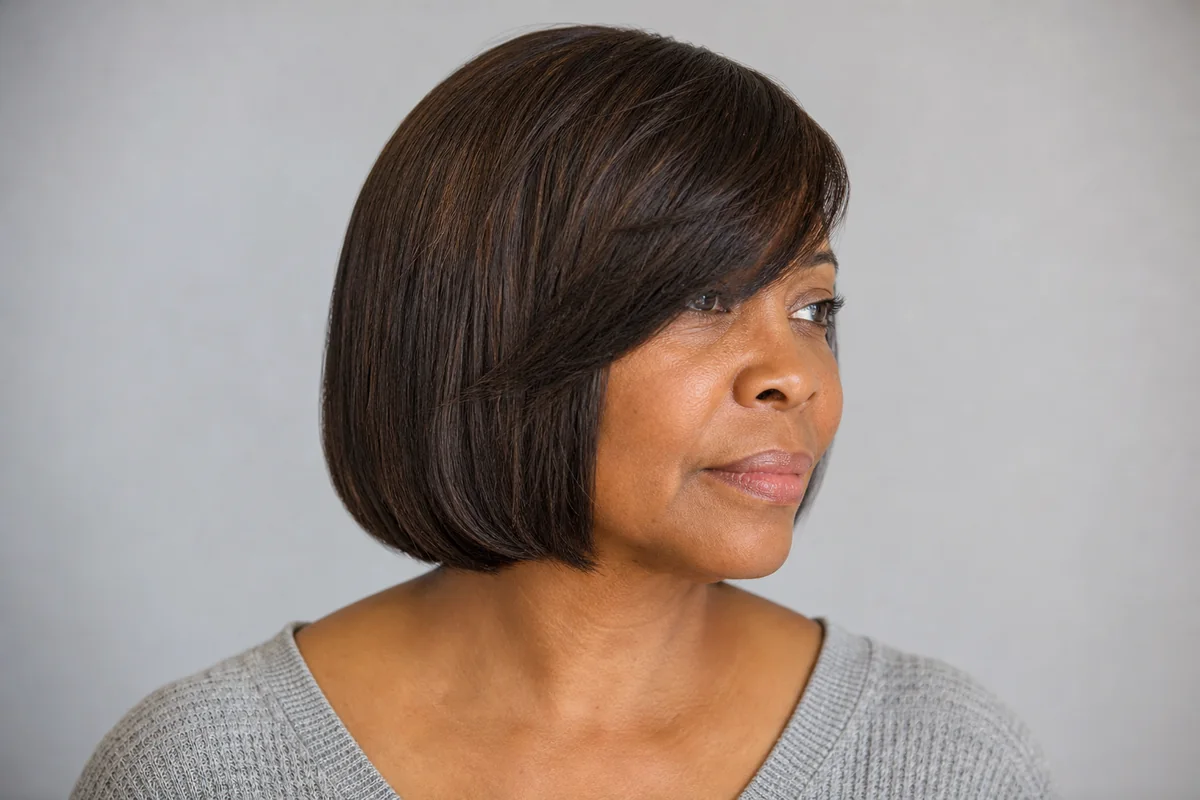
- Length
- Just below the jaw, long fringe to the cheekbone
- Texture
- Straight
- Density
- Medium
- Face shapes
- Round, square, diamond
- Daily effort
- 8-10 minutes
- Trim every
- 6-8 weeks
A round face is widest at the cheeks, so ending the hem on the cheekbone adds width at the worst point. Dropping the hem to just below the jaw and sweeping the fringe diagonally draws the eye down and across instead.
Ask for: "A French bob that ends just below my jaw, with a long fringe that sweeps from a side part to my cheekbone."
9. French Bob with a Blunt Fringe on Thick Hair

- Length
- At the jaw, full fringe at the brows
- Texture
- Straight
- Density
- Thick
- Face shapes
- Oval, long
- Daily effort
- 10 minutes
- Trim every
- 5-6 weeks, fringe at 3
Thick hair makes a dense fringe, so the section is cut deeper than for fine hair and its inside is thinned slightly to keep it from forming a visor. Without that, the sides and fringe bulk out together.
Ask for: "A full brow-length fringe with the underneath thinned, and weight removed from inside the sides so they hang close to my jaw."
French Bobs for Fine, Wavy and Thick Hair
A French bob changes with density as much as with texture: fine hair uses the blunt edge to look fuller, wavy hair supplies the undone finish for free, and thick straight hair needs its interior thinned or the sides push outward. These four show each case.
10. Air-Dried Wavy French Bob

- Length
- At the jaw, fringe at the brows
- Texture
- 2B to 2C wavy
- Density
- Medium to thick
- Face shapes
- Oval, heart, square
- Daily effort
- 5 minutes
- Trim every
- 6-8 weeks
Waves give a French bob the bend that straight hair has to fake with a spray. Cut on dry hair, the hem sits where it will actually land; wet, waves spring up as much as an inch higher.
Ask for: "A French bob cut dry, leaving the hem a touch longer than my target since my waves spring up, and a fringe checked in its dry shape."
11. Blunt French Bob for Fine Hair with Fuller Ends

- Length
- At the earlobe, brow fringe
- Texture
- Straight
- Density
- Fine
- Face shapes
- Oval, heart, diamond
- Daily effort
- 5-8 minutes
- Trim every
- 6 weeks
Fine hair gets its fullness from a solid edge, not from layers. A French bob cut a touch shorter than the jaw keeps the ends densest, and a root spray lifts the top without adding weight.
Ask for: "A blunt bob at the earlobe with no layers and only the edge softened, and a fringe that follows the same line."
12. French Bob for Thick Straight Hair with the Interior Thinned
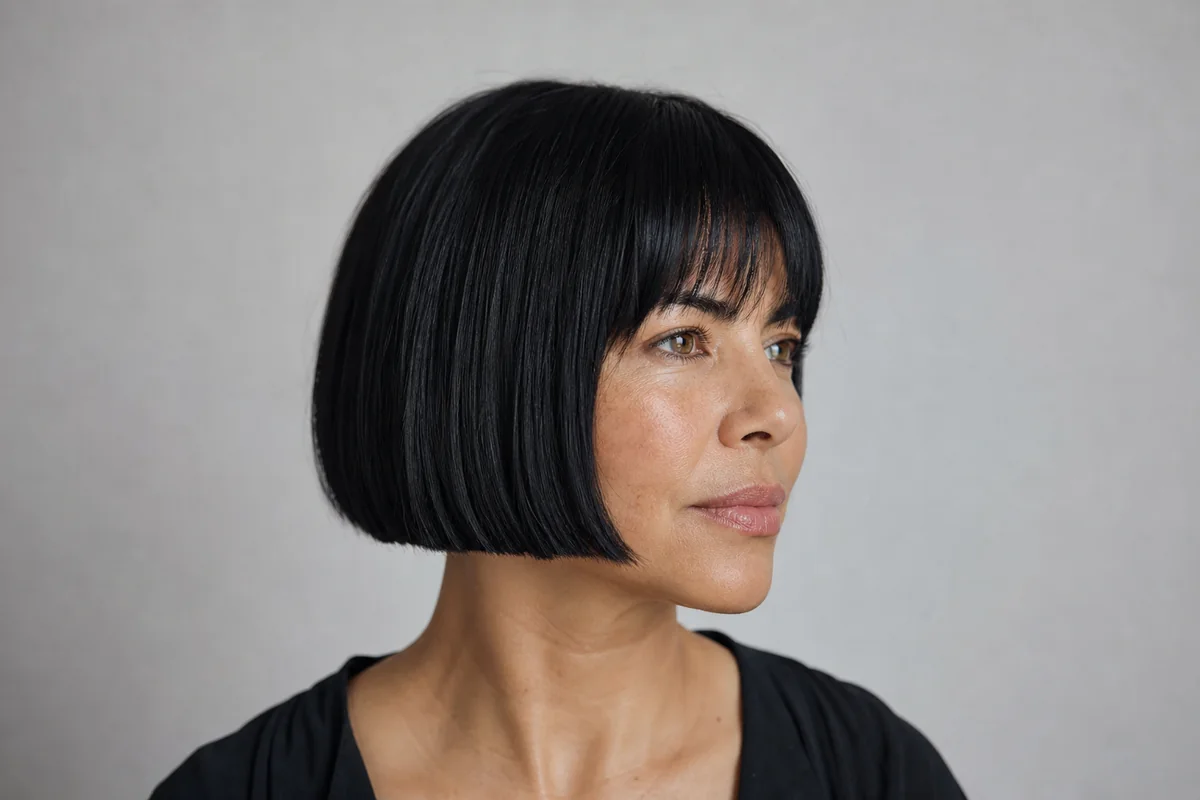
- Length
- At the jaw, brow fringe
- Texture
- Straight
- Density
- Thick
- Face shapes
- Long, oval, heart
- Daily effort
- 10 minutes
- Trim every
- 5-6 weeks
Thick straight hair cut above the jaw tends to flare, because the hem has nothing weighing it down. Removing bulk from the inside, not the ends, lets the bob keep its blunt line and still lie flat.
Ask for: "A French bob at the jaw with slide cutting through the inside and the outer edge left blunt, no graduation at the back."
13. Textured French Bob with Point-Cut Ends

- Length
- Cheekbone to jaw, loose fringe
- Texture
- Straight to 2A wavy
- Density
- Medium
- Face shapes
- Oval, round, square
- Daily effort
- 8 minutes
- Trim every
- 6 weeks
Point cutting breaks the edge into small steps so strands separate instead of falling as one sheet. It turns the clean French bob into the looser, more lived-in version, and a dry texture spray does the rest.
Ask for: "A French bob with the ends point cut, not razored, so the edge looks soft but still reads as a line."
Curly and Coily French Bobs
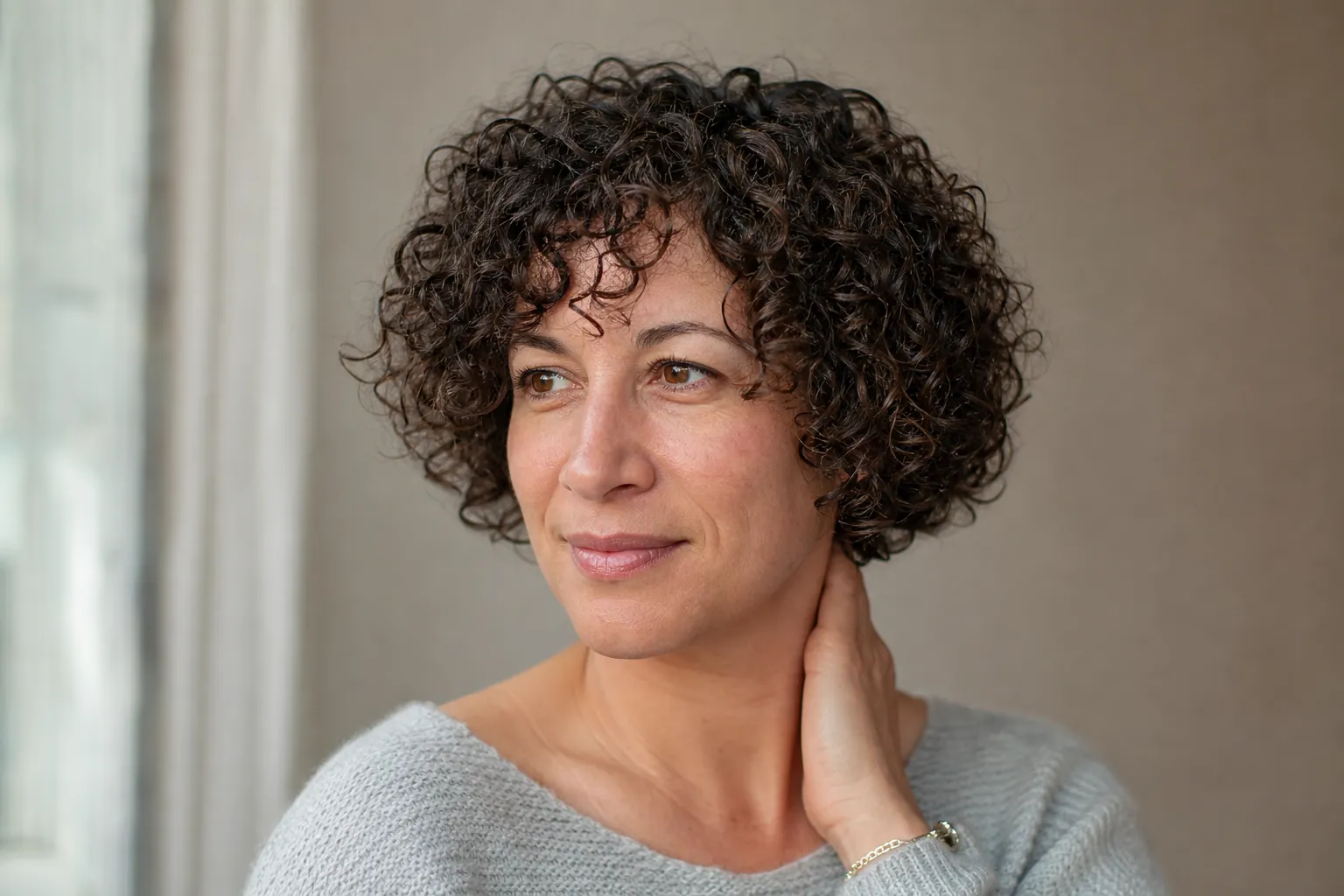
Curls shrink, so a curly French bob is cut longer than it will sit and shaped dry; a bob at the jaw when stretched can spring to the cheekbone or higher once the curl closes. The guide to short curly haircuts covers shrinkage by curl pattern in full.
14. Curly French Bob at the Jaw with a Curly Fringe

- Length
- At the jaw dry, curly fringe at the brow
- Texture
- 3A to 3B curly
- Density
- Medium
- Face shapes
- Oval, heart, long
- Daily effort
- 10 minutes, mostly drying time
- Trim every
- 8 weeks, fringe at 4-6
A curly fringe is cut longer than where it will sit, since a bang that touches the brow wet will spring to mid-forehead. The French look here is a rounded hem, not a blunt line: curls cut to a flat edge turn into a triangle.
Ask for: "A curly French bob cut dry, curl by curl, with the hem a little longer than where I want it to spring to, and a fringe left long."
15. 3C Curly French Bob with a Rounded Hem
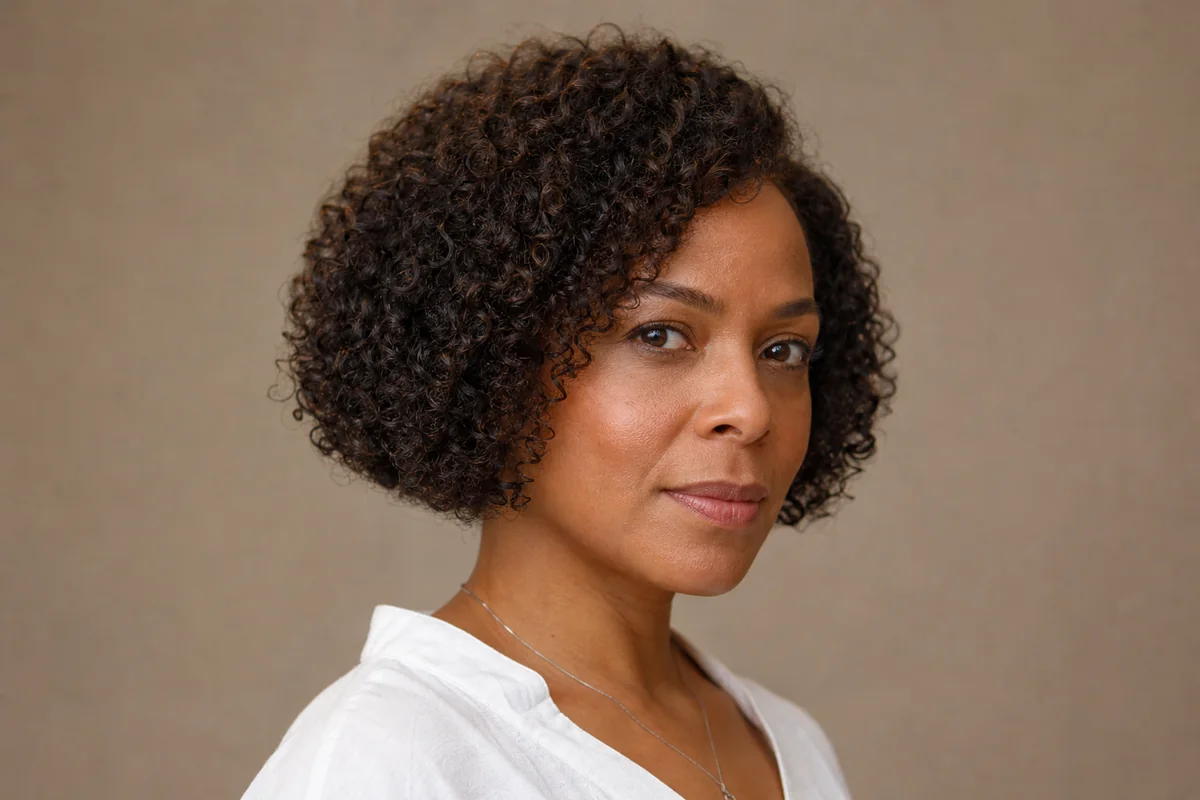
- Length
- Cheekbone to jaw, rounded hem
- Texture
- 3B to 3C curly
- Density
- Thick
- Face shapes
- Oval, long, heart
- Daily effort
- 10-15 minutes
- Trim every
- 8 weeks
Tight curls need a rounded outline, not a straight one, and the width of the hem matters more than its length. A short French bob on thick 3C curls also costs less in styling than a long one because there is less hair to detangle.
Ask for: "A short rounded bob shaped dry, hem width balanced from side to side, no flat blunt line, and no thinning shears."
16. Coily French Bob Shaped Dry
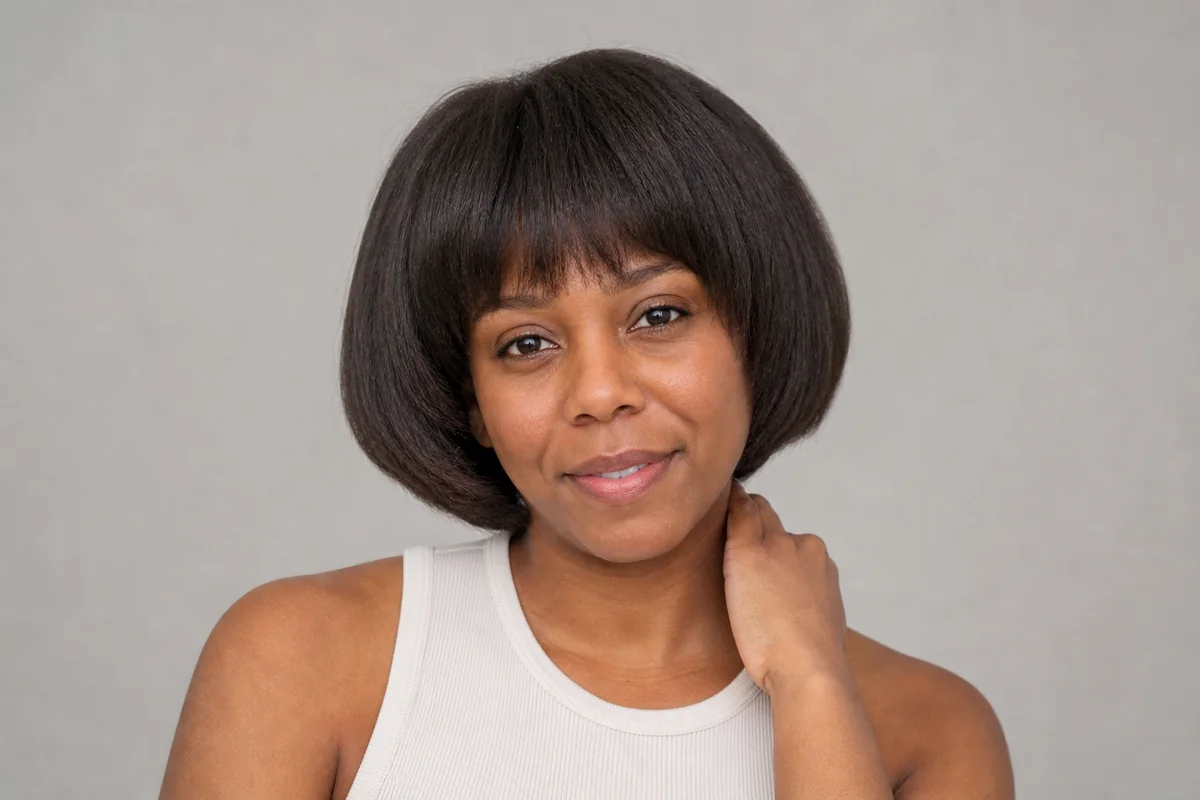
- Length
- At the jaw stretched, higher natural
- Texture
- 4A to 4C coily
- Density
- Medium to thick
- Face shapes
- Oval, heart, square
- Daily effort
- 10-15 minutes
- Trim every
- 8 weeks
Coily hair shrinks the most, so a bob that sits at the cheekbone in its natural state may measure at the jaw or below when stretched. Decide which state you wear it in before the appointment, because the cut will be shaped for that one.
Ask for: "A rounded bob shaped dry in the state I wear it, with a stretched length at my jaw, and a stylist who cuts coily hair regularly."
Silver and Sleek French Bobs
A French bob works on gray and silver hair when the edge stays blunt and the finish stays matte, and the same cut can move from undone to polished without changing the hem. Two more versions close the gallery.
17. Silver French Bob with a Soft Fringe

- Length
- At the jaw, soft brow fringe
- Texture
- Straight to wavy
- Density
- Medium
- Face shapes
- Oval, round, square
- Daily effort
- 5 minutes
- Trim every
- 6-8 weeks
Gray hair can feel wirier than it used to, and a blunt hem with a little styling cream keeps the line from frizzing. A violet-toned shampoo once a week counters yellowing, and the matte finish suits a bob that is meant to look undone.
Ask for: "A French bob at the jaw for gray hair that is a little wiry, blunt edge, soft fringe, and cut so it holds without much product."
18. Sleek French Bob with a Flat-Iron Bend

- Length
- At the jaw, curved brow fringe
- Texture
- Straight
- Density
- Medium
- Face shapes
- Oval, heart, long
- Daily effort
- 10-12 minutes
- Trim every
- 6 weeks
The same cut can be polished for evenings. A flat iron run once under each end and flipped inward gives a gentle bend, and keeping the heat in the 300-350°F range protects the blunt edge from drying out.
Ask for: "A French bob at the jaw with a slightly curved fringe, and show me how to bend the ends in with a flat iron."
Where a French Bob Ends: Cheekbone to Jaw
A French bob ends between the cheekbone and the jaw, and each landmark changes how short it feels, how much it shows the neck and how it grows. Because sources use cheekbone, jaw and chin as if they were one length, asking by landmark is safer than asking by name.
| Landmark | Look | Tuck behind the ear | Trim every | Best on |
|---|---|---|---|---|
| Cheekbone | Most graphic, shows neck and jaw | No | 5-6 weeks | Straight, fine to medium; long and oval faces |
| Earlobe | The classic landing | Barely | 6 weeks | Straight to wavy, all densities |
| Mouth corner | Softer, a touch longer in front | Yes | 6-8 weeks | Wavy, thick; square and heart faces |
| Jaw | Longest French bob, borders on a chin bob | Yes | 6-8 weeks | Curly and coily, round faces |
Above the cheekbone it is a micro bob, and below the jaw it is a chin or Italian bob. The full length-band table for short hair shows where each sits next to pixies and bixies, and the bixie guide covers the ear-length hybrids.
Salon note: Short bobs are checked with the head level and the chin neutral. If a bob is cut with the head tilted forward, the back comes out shorter than planned, so ask for the hem to be checked when sitting upright.
Fringe Options for a French Bob
A French bob fringe is chosen by where it ends and how much it separates, and the shorter it is, the more often it needs a trim. Each option below is cut dry, so it lands where it will sit.
| Fringe | Ends at | Trim every | Suits | Think twice if |
|---|---|---|---|---|
| Micro | Two fingers above the brows | 3 weeks | Long faces, fine straight hair | You have a cowlick at the hairline |
| Brow-grazing blunt | At the brows | 3-4 weeks | Oval, long, heart; straight to wavy | Your hair is very curly |
| Wispy | At the brows, thin | 4-5 weeks | Fine hair, square jaws | You have oily roots or live in humidity |
| Curtain | Brow to cheekbone | 5-6 weeks | Wavy hair, round and square faces | You want a flat horizontal line |
| Side-swept | Cheekbone | 6-8 weeks | Round and diamond faces, grow-out | You want the cut to look graphic |
Cowlicks at the front hairline can pull a fringe off to one side, and a stylist will check how the hair falls dry before choosing the length.
French Bob Fit by Texture and Density
Every texture can wear a French bob, but each needs a different cutting method. Hair shape is programmed in the hair bulb, which is why a bend that comes free on wavy hair has to be added with a spray on straight hair and shrinks on curls.
| Fine | Medium | Thick | |
|---|---|---|---|
| Straight | Earlobe or jaw, solid blunt edge, no layers | Cheekbone to jaw, point-cut edge | Jaw, interior thinned, no flare |
| Wavy (2A-2C) | Jaw, light texture, no layers | Mouth corner to jaw, cut dry | Mouth corner, weight removed inside, cut dry |
| Curly (3A-3C) | Jaw dry, rounded, short fringe long | Jaw dry, rounded hem | Rounded hem, shaped curl by curl, no thinning shears |
| Coily (4A-4C) | Rounded, shaped dry, fringe left long | Rounded, stretched length at the jaw | Rounded, shaped dry, cut by a stylist with coily experience |
Shrinkage is roughly up to an inch on wavy hair, 1-3 inches or more on curls and often more on coils, so a French bob cut wet on curls can land at the cheekbone or above. Straight hair does not shrink, and a wet cut is reliable.
Salon note: A French bob on thick straight hair usually fails at the sides, where the hair juts outward. Removing weight inside the section, before touching the edge, fixes it; graduation at the back makes it worse.
Choosing a French Bob for Your Face Shape
End the hem above or below the widest part of the face, never on it, and let the fringe do the rest. Because a French bob is short, the hem sits at the cheekbones or jaw, where most faces are widest.
| Face shape | Hem | Fringe | Avoid |
|---|---|---|---|
| Oval | Any landmark | Any | Nothing in particular |
| Round | Just below the jaw | Long side-swept or curtain | A cheekbone hem, which adds width at the cheeks |
| Square | Mouth corner, soft edge | Curtain or wispy | A straight horizontal fringe that echoes the jaw |
| Heart | Jaw, to add width at the narrow chin | Wispy or side-swept | A cheekbone hem with a heavy fringe |
| Long | Cheekbone to earlobe | Brow-grazing or micro | A jaw hem with no fringe |
| Diamond | Jaw, with a soft edge | Side-swept | A micro fringe that narrows the forehead further |
What to Ask for at Your French Bob Appointment
Describe the French bob by its hem landmark, the fringe length and the finish, and bring a photo that shows the back. The word "French" alone can produce anything from a micro bob to a chin bob.
- The landmark: "ends at my earlobe", "grazes my jaw" or "at the corner of my mouth".
- The edge: "blunt but softened by point cutting", not "texturized" on fine hair.
- The fringe: length in fingers above the brows, and whether it is cut dry.
- The back: "a half inch shorter than the sides, tapered nape" or "one length all around".
- The texture: "cut dry" for wavy, curly or coily hair, and the state you wear it in.
Salon note: A whorl at the nape pushes a short back upward or sideways. If the nape hair grows in a swirl, a stylist will leave the back about half an inch longer instead of tapering it, then check how it falls dry.
Watch out: Start a half inch longer than you think you want. A French bob can be cut shorter at the next appointment, but length cannot be put back.
Styling a French Bob Undone
A French bob is styled to look as if it was barely styled, which in practice means rough-drying, a light texturizing product and a few minutes of work at the ends. Plan on about 5 minutes for wavy hair and 5-10 for straight.
- Dry most of the way. Rough-dry with fingers at the roots so the hair does not lie flat, or let wavy and curly hair air-dry, which keeps the bends.
- Add texture to the ends. On straight and fine hair, 4-8 spritzes of dry texture spray or a little sea salt spray; on curly and coily hair, a dime of cream or gel scrunched in.
- Set the bend. A small round brush of about 1-1.5 inches turns the ends under, or a flat iron run once under each end bends them slightly. Keep fine or lightened hair around 300-350°F.
- Place the fringe. Dry it first, with a small brush, flat against the forehead, then loosen it with the fingers.
- Finish with a hint of dry shampoo. A short blast at the roots lifts a short bob and refreshes a fringe that gets oily by the afternoon.
Tip: On the second day, a damp fringe re-dried flat resets it more reliably than more product does.
French Bob Maintenance and Growing It Out
A French bob needs a trim every 6-8 weeks, with the fringe every 3-5, because short hair shows growth out of proportion to its length. Hair grows about half an inch a month on average, though it varies by person and scalp area, as a study of more than 2,000 adults from 24 ethnic groups found.
| Stage | Time | What it looks like | Ask for |
|---|---|---|---|
| Between trims | Weeks 4-8 | Hem drifts toward the jaw, fringe past the brows | A fringe trim only, 10-15 minutes |
| To a chin bob | About 2-4 months | The back lengthens first, the hem looks heavy | Take bulk from inside, keep the edge |
| To a lob | About 6-8 months more | Ends reach the shoulders and flip | Let it lengthen, shape the ends each trim |
A one-length French bob grows out more gracefully than a graduated one, and the rest of the bob family shows where each length leads. If the bob follows a pixie, soften the nape as described in the pixie nape options.
When a French Bob Is Not the Right Choice
- Very thick, straight hair you will not thin or style: the sides push out into a bell. A longer bob or a layered cut weighs less.
- Curly or coily hair you wear both stretched and natural: the length changes by inches between the two. Pick one state and cut for it, or go a half step longer.
- A strong cowlick at the front hairline: a short fringe will not lie down. Try curtain bangs or a side sweep.
- Hair you want to pull back: at the cheekbone to jaw, only a clip or a half-up will hold. Wait until it reaches the chin or choose a lob.
- A very low tolerance for trims: the fringe alone needs a visit every 3-5 weeks. A longer bob forgives more.
If you are between a French bob and a bixie, the deciding factor is the nape: a bixie keeps it short, and a French bob grows it out together with the rest.
A French bob is a short bob with a blunt edge softened by texture, ending between the cheekbone and the jaw. Choose the landmark first, then the fringe, and tell the stylist how you wear your hair when it is dry. Bring a photo that shows the back, and ask for the hem to be checked dry.